






 Choose language
- Spiders
- ANIMALS
- Arachnids (Arachnida)
- Spiders (Araneae)
- Tarantulas (Mygalomorphae)
- Psednocnemis spp.
- Diplura spp.
- Spinosatibiapalpus spp.
- Acanthogonatus spp.
- Acanthoscurria spp.
- Amazonius spp.
- Ami spp.
- Anquasha spp.
- Aphonopelma spp.
- Aspinochilus spp.
- Augacephalus spp.
- Avicularia spp.
- Birupes spp.
- Bonnetina spp.
- Brachypelma spp.
- Bumba spp.
- Caribena spp.
- Ceratogyrus spp.
- Chaetopelma spp.
- Chilobrachys spp.
- Chromatopelma spp.
- Cilantica spp.
- Citharacanthus spp.
- Coremiocnemis spp.
- Cyclosternum spp.
- Cyriocosmus spp.
- Cyriopagopus spp.
- Davus spp.
- Dolichothele spp.
- Encyocratella spp.
- Ephebopus spp.
- Euathlus spp.
- Eucratoscelus spp.
- Eupalaestrus spp.
- Fufius spp.
- Gorgyrella spp.
- Grammostola spp.
- Guyruita spp.
- Hapalopus spp.
- Haploclastus spp.
- Haplocosmia spp.
- Haplopelma spp.
- Harpactira spp.
- Heteroscodra spp.
- Heterothele spp.
- Holothele spp.
- Homoeomma spp.
- Hysterocrates spp.
- Idiothele spp.
- Iridopelma spp.
- Kochiana spp.
- Lampropelma spp.
- Lasiocyano spp.
- Lasiodora spp.
- Lasiodorides spp.
- Linothele spp.
- Lyrognathus spp.
- Megaphobema spp.
- Monocentropus spp.
- Neischnocolus spp.
- Neoholothele spp.
- Neostenotarsus spp.
- Nhandu spp.
- Omothymus spp.
- Ornithoctoninae spp.
- Ornithoctonus spp.
- Pamphobeteus spp.
- Pelinobius spp.
- Phormictopus spp.
- Phormingochilus spp.
- Phrixotrichus spp.
- Poecilotheria spp.
- Psalmopoeus spp.
- Pseudhapalopus spp.
- Pseudoclamoris spp.
- Pterinochilus spp.
- Selenocosmia spp.
- Sericopelma spp.
- Tapinauchenius spp.
- Taksinus spp.
- Tapinauchenius spp.
- Theraphosa spp.
- Theraphosidae spp.
- Theraphosinae spp.
- Thrigmopoeus spp.
- Thrixopelma spp.
- Tliltocatl spp.
- Typhochlaena spp.
- Urupelma spp.
- Vitalius spp.
- Xenesthis spp.
- Ybyrapora spp.
- True Spiders (Araneomorphae)
- Velvet Spiders (Eresidae)
- Macrothele spp.
- Liphistius spp.
- Tarantulas (Mygalomorphae)
- Scorpions (Scorpiones)
- Spiders (Araneae)
- Insects - for feeding
- Arachnids (Arachnida)
- Scorpions
- Accessories
- Books
- Centipede
- Millipede
- Cockroaches
- New products
- Products on sale
Currency

€32.00
Regular price:
€40.00

€42.50
Regular price:
€50.00
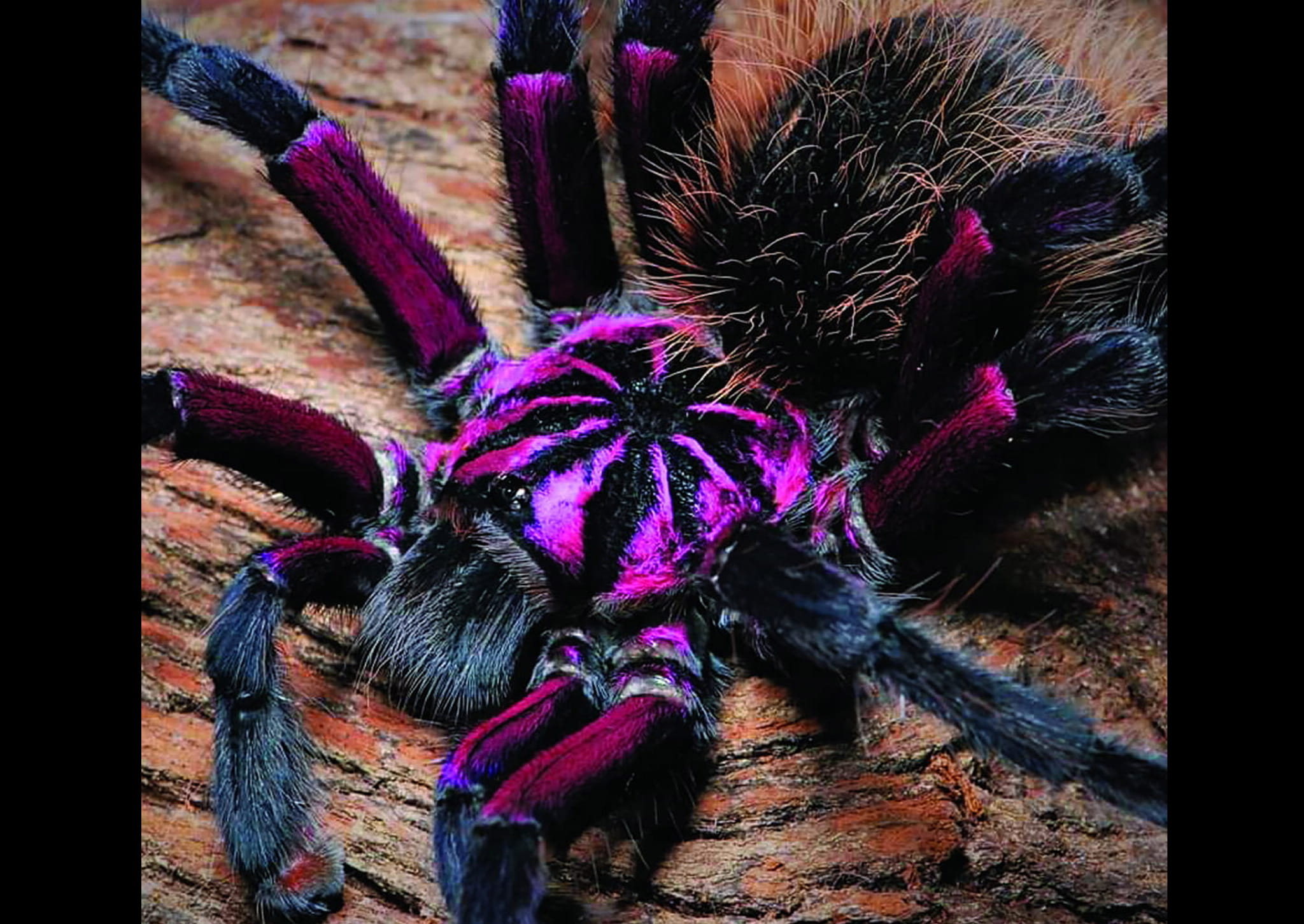
Species: Xenesthis sp. megascopula
Common name: -
Native range: Colombia
Temperature: 25–27 °C
Humidity: 75–80%
Adult size: Females 7–8 cm body length, up to 18–20 cm leg span
Lifestyle: Terrestrial, fossorial
Speed: Moderate
Venom potency: Mild to moderate
Temperament: Calm when young, more assertive and defensive with age
Recommended for: Intermediate keepers
Notes: Not CITES-listed; no captive-bred documentation required
Xenesthis sp. megascopula
product unavailable
Description
Xenesthis sp. megascopula comes from the humid lowland rainforests of Colombia, where it shares its range with the genus's better-known relatives, Xenesthis immanis and Xenesthis intermedia — the heavy-bodied giants of South American Theraphosidae. It remains undescribed and circulates in the hobby under its locality tag, but one look at a mature specimen explains the demand: a body of 7–8 cm, a leg span pushing 18–20 cm, and, in adult males, deep violets, indigos, and metallic sheens across the legs and opisthosoma that read less like pigment than like light bent through a prism.
Calm in early instars, Xenesthis sp. megascopula matures into a spider with clear opinions — deliberate at feeding, unhurried in movement, but decisive when disturbed. Its primary defence is the familiar New World mechanism: urticating setae kicked from the opisthosoma. Venom is mild to moderate. This is a terrestrial, fossorial species that spends much of its time tucked beneath cover or pressed against the walls of a self-excavated burrow, emerging after dark to hunt. Watch it patiently and you'll see a genuinely purposeful animal — one that maps its enclosure and moves through it with intent rather than simply sitting and waiting.
Adults need a footprint of at least 30 × 30 cm with 7–10 cm of substrate — coconut fibre mixed with topsoil holds burrows well. A cork tube or a slab of cork bark anchored against one wall gives the spider an immediate retreat while the substrate settles. Keep most of the substrate dry, with one corner misted regularly to maintain a damp zone. Adults should have a water dish available at all times; spiderlings do well with misting alone. Room temperature is sufficient. Offer appropriately sized prey and let the animal feed at its own pace.
Xenesthis sp. megascopula suits the intermediate keeper who values rarity alongside character — the collector willing to wait for what a species becomes rather than settling for what it is at purchase. Xenesthis females are long-lived and slow to mature; adulthood may not arrive until the fifth or sixth season, and each moult brings a deepening of colour that can make the same spider look like an altogether different animal. Collections that include one tend to hold onto it for years — not because it demands attention, but because it keeps earning it.