






 Choose language
- Spiders
- ANIMALS
- Arachnids (Arachnida)
- Spiders (Araneae)
- Tarantulas (Mygalomorphae)
- Psednocnemis spp.
- Diplura spp.
- Spinosatibiapalpus spp.
- Acanthogonatus spp.
- Acanthoscurria spp.
- Amazonius spp.
- Ami spp.
- Anquasha spp.
- Aphonopelma spp.
- Aspinochilus spp.
- Augacephalus spp.
- Avicularia spp.
- Birupes spp.
- Bonnetina spp.
- Brachypelma spp.
- Bumba spp.
- Caribena spp.
- Ceratogyrus spp.
- Chaetopelma spp.
- Chilobrachys spp.
- Chromatopelma spp.
- Cilantica spp.
- Citharacanthus spp.
- Coremiocnemis spp.
- Cyclosternum spp.
- Cyriocosmus spp.
- Cyriopagopus spp.
- Davus spp.
- Dolichothele spp.
- Encyocratella spp.
- Ephebopus spp.
- Euathlus spp.
- Eucratoscelus spp.
- Eupalaestrus spp.
- Fufius spp.
- Gorgyrella spp.
- Grammostola spp.
- Guyruita spp.
- Hapalopus spp.
- Haploclastus spp.
- Haplocosmia spp.
- Haplopelma spp.
- Harpactira spp.
- Heteroscodra spp.
- Heterothele spp.
- Holothele spp.
- Homoeomma spp.
- Hysterocrates spp.
- Idiothele spp.
- Iridopelma spp.
- Kochiana spp.
- Lampropelma spp.
- Lasiocyano spp.
- Lasiodora spp.
- Lasiodorides spp.
- Linothele spp.
- Lyrognathus spp.
- Megaphobema spp.
- Monocentropus spp.
- Neischnocolus spp.
- Neoholothele spp.
- Neostenotarsus spp.
- Nhandu spp.
- Omothymus spp.
- Ornithoctoninae spp.
- Ornithoctonus spp.
- Pamphobeteus spp.
- Pelinobius spp.
- Phormictopus spp.
- Phormingochilus spp.
- Phrixotrichus spp.
- Poecilotheria spp.
- Psalmopoeus spp.
- Pseudhapalopus spp.
- Pseudoclamoris spp.
- Pterinochilus spp.
- Selenocosmia spp.
- Sericopelma spp.
- Tapinauchenius spp.
- Taksinus spp.
- Tapinauchenius spp.
- Theraphosa spp.
- Theraphosidae spp.
- Theraphosinae spp.
- Thrigmopoeus spp.
- Thrixopelma spp.
- Tliltocatl spp.
- Typhochlaena spp.
- Urupelma spp.
- Vitalius spp.
- Xenesthis spp.
- Ybyrapora spp.
- True Spiders (Araneomorphae)
- Velvet Spiders (Eresidae)
- Macrothele spp.
- Liphistius spp.
- Tarantulas (Mygalomorphae)
- Scorpions (Scorpiones)
- Spiders (Araneae)
- Insects - for feeding
- Arachnids (Arachnida)
- Scorpions
- Accessories
- Books
- Centipede
- Millipede
- Cockroaches
- New products
- Products on sale
Currency

€32.00
Regular price:
€40.00

€42.50
Regular price:
€50.00
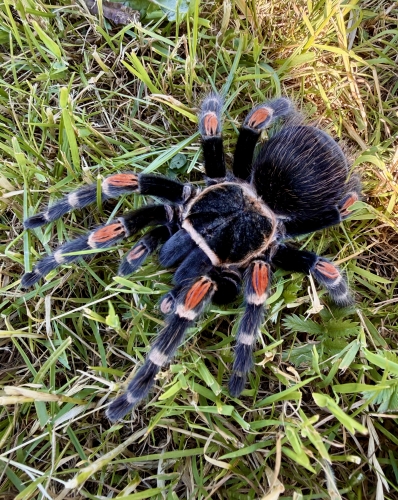
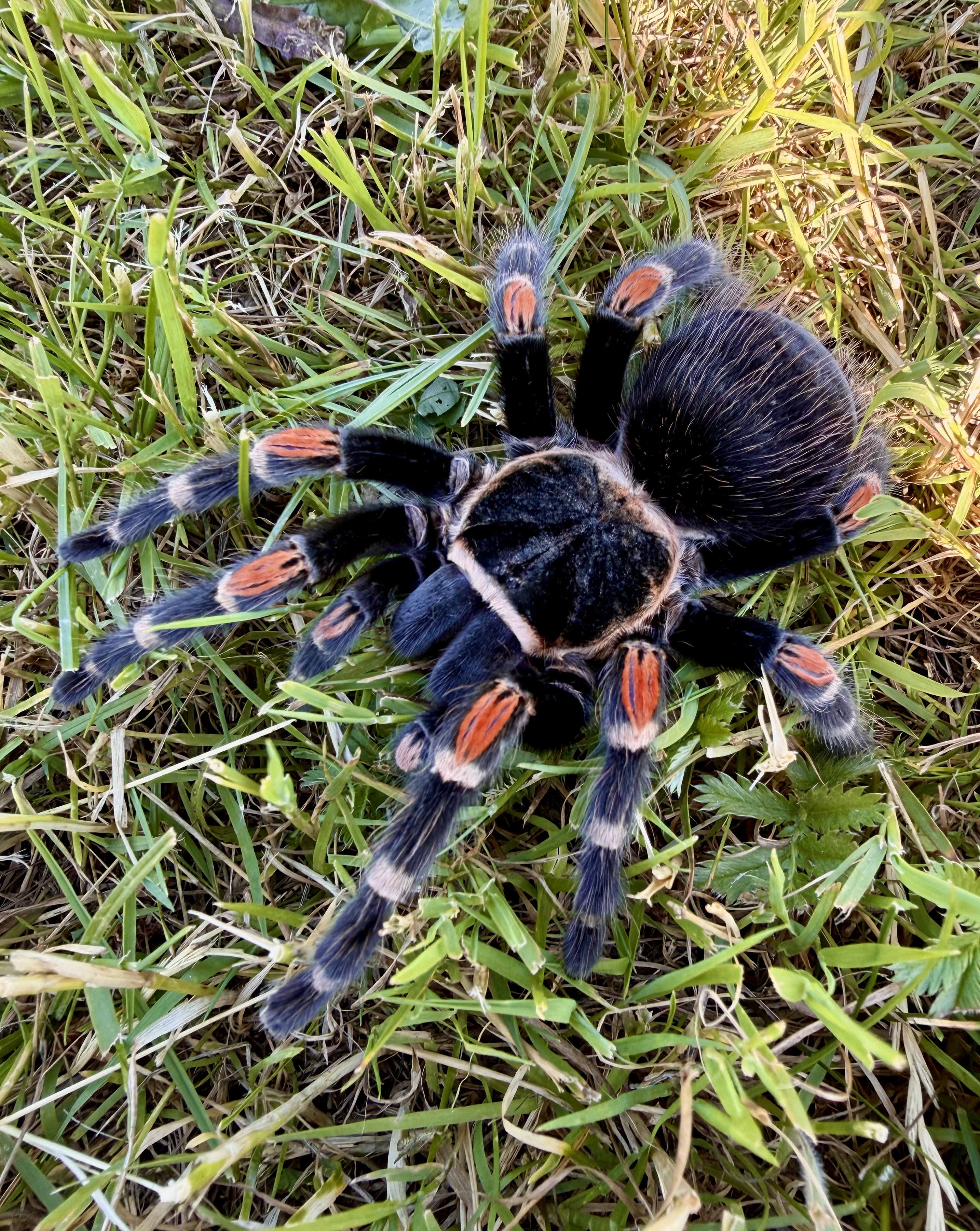
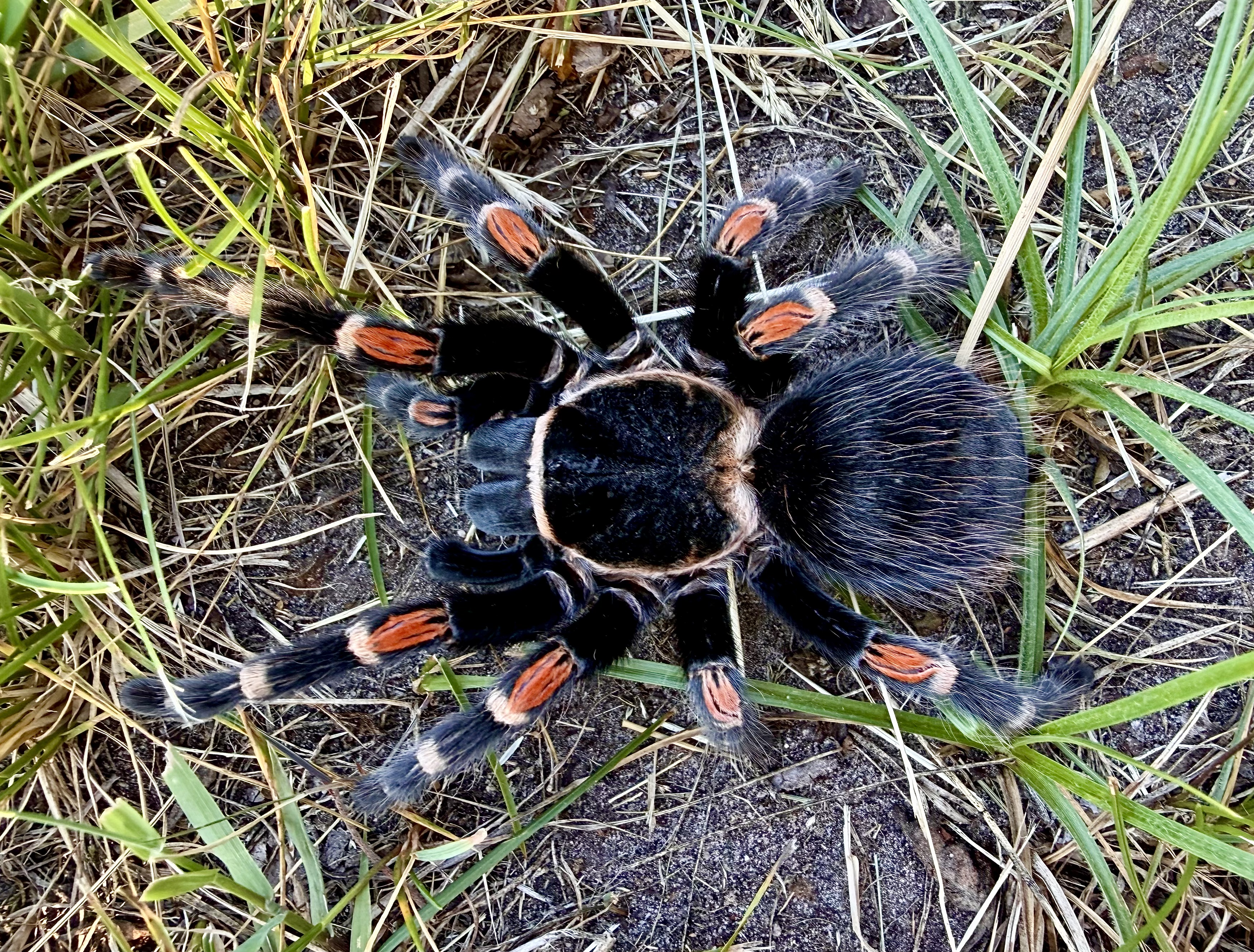
Species: Brachypelma auratum
Common name: Mexican Flame Knee
Native range: Mexico (Guerrero)
Temperature: 20–26°C (room temperature is sufficient)
Humidity: 40–55%
Adult size: Females reach up to 8 cm BL
Lifestyle: Terrestrial
Speed: Slow
Venom potency: Mild
Temperament: Calm
Recommended for: All keepers, including beginners
Notes: An excellent first tarantula and a long-term collection staple
Brachypelma auratum
product unavailable
Description
Few tarantulas reward a patient eye quite like Brachypelma auratum. At first glance it can pass for its better-known cousin Brachypelma hamorii, but spend a few minutes with one and a quieter character emerges — pale, cream-to-gold bands across the patellae set against a deep, near-black body, a pattern that reads as restrained rather than declarative. Where Brachypelma hamorii announces itself, Brachypelma auratum reveals itself gradually, embers cooling to gold rather than burning orange.
The species hails from the dry, rocky scrubland of Guerrero in Mexico, and that habitat shapes everything about it: slow growth, a long life, and a temperament that sits firmly at the calmer end of the genus. Brachypelma auratum meets the keeper's presence with something close to indifference — which, in this hobby, reads as trust. It rarely flicks urticating setae and holds a threat posture only under genuine provocation. You observe this tarantula rather than manage it, and it returns that ease with years of unhurried, predictable behaviour.
Housing follows the standard for terrestrial Brachypelma: 5–7 cm of coconut fibre substrate, a hide, and a water dish for adults. Keep most of the substrate dry, with occasional light misting of a small corner every week or two. Room temperature is sufficient. Feed appropriately sized prey on a regular schedule, adjusting frequency to growth stage and appetite. Brachypelma auratum is CITES Appendix II listed, and each specimen ships with documentation confirming captive-bred origin.
This is the natural next move for a keeper who already knows Brachypelma hamorii and wants something equally manageable but less expected — a graduation from the obvious to the quietly exceptional. The gold is subtle rather than loud, the presence steady rather than dramatic, and ten years on you'll likely still find yourself stopping at the enclosure for longer than you meant to. Collections that include Brachypelma auratum rarely let it go.