






 Choose language
- Spiders
- ANIMALS
- Arachnids (Arachnida)
- Spiders (Araneae)
- Tarantulas (Mygalomorphae)
- Psednocnemis spp.
- Diplura spp.
- Spinosatibiapalpus spp.
- Acanthogonatus spp.
- Acanthoscurria spp.
- Amazonius spp.
- Ami spp.
- Anquasha spp.
- Aphonopelma spp.
- Aspinochilus spp.
- Augacephalus spp.
- Avicularia spp.
- Birupes spp.
- Bonnetina spp.
- Brachypelma spp.
- Bumba spp.
- Caribena spp.
- Ceratogyrus spp.
- Chaetopelma spp.
- Chilobrachys spp.
- Chromatopelma spp.
- Cilantica spp.
- Citharacanthus spp.
- Coremiocnemis spp.
- Cyclosternum spp.
- Cyriocosmus spp.
- Cyriopagopus spp.
- Davus spp.
- Dolichothele spp.
- Encyocratella spp.
- Ephebopus spp.
- Euathlus spp.
- Eucratoscelus spp.
- Eupalaestrus spp.
- Fufius spp.
- Gorgyrella spp.
- Grammostola spp.
- Guyruita spp.
- Hapalopus spp.
- Haploclastus spp.
- Haplocosmia spp.
- Haplopelma spp.
- Harpactira spp.
- Heteroscodra spp.
- Heterothele spp.
- Holothele spp.
- Homoeomma spp.
- Hysterocrates spp.
- Idiothele spp.
- Iridopelma spp.
- Kochiana spp.
- Lampropelma spp.
- Lasiocyano spp.
- Lasiodora spp.
- Lasiodorides spp.
- Linothele spp.
- Lyrognathus spp.
- Megaphobema spp.
- Monocentropus spp.
- Neischnocolus spp.
- Neoholothele spp.
- Neostenotarsus spp.
- Nhandu spp.
- Omothymus spp.
- Ornithoctoninae spp.
- Ornithoctonus spp.
- Pamphobeteus spp.
- Pelinobius spp.
- Phormictopus spp.
- Phormingochilus spp.
- Phrixotrichus spp.
- Poecilotheria spp.
- Psalmopoeus spp.
- Pseudhapalopus spp.
- Pseudoclamoris spp.
- Pterinochilus spp.
- Selenocosmia spp.
- Sericopelma spp.
- Tapinauchenius spp.
- Taksinus spp.
- Tapinauchenius spp.
- Theraphosa spp.
- Theraphosidae spp.
- Theraphosinae spp.
- Thrigmopoeus spp.
- Thrixopelma spp.
- Tliltocatl spp.
- Typhochlaena spp.
- Urupelma spp.
- Vitalius spp.
- Xenesthis spp.
- Ybyrapora spp.
- True Spiders (Araneomorphae)
- Velvet Spiders (Eresidae)
- Macrothele spp.
- Liphistius spp.
- Tarantulas (Mygalomorphae)
- Scorpions (Scorpiones)
- Spiders (Araneae)
- Insects - for feeding
- Arachnids (Arachnida)
- Scorpions
- Accessories
- Books
- Centipede
- Millipede
- Cockroaches
- New products
- Products on sale
Currency

€32.00
Regular price:
€40.00

€42.50
Regular price:
€50.00
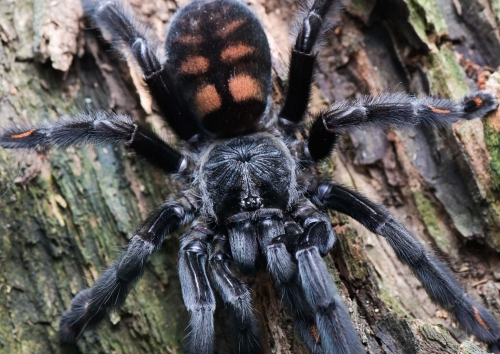
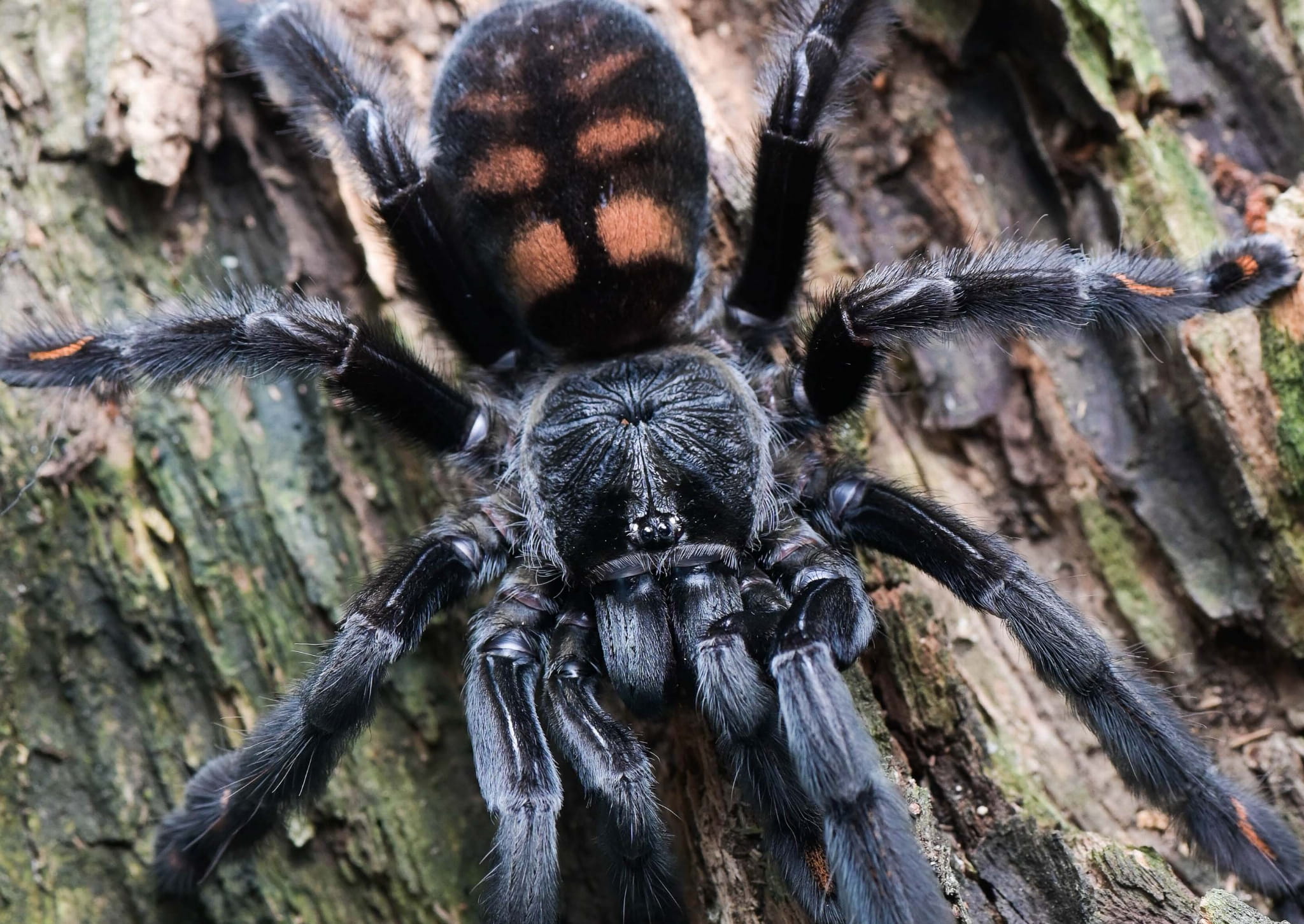
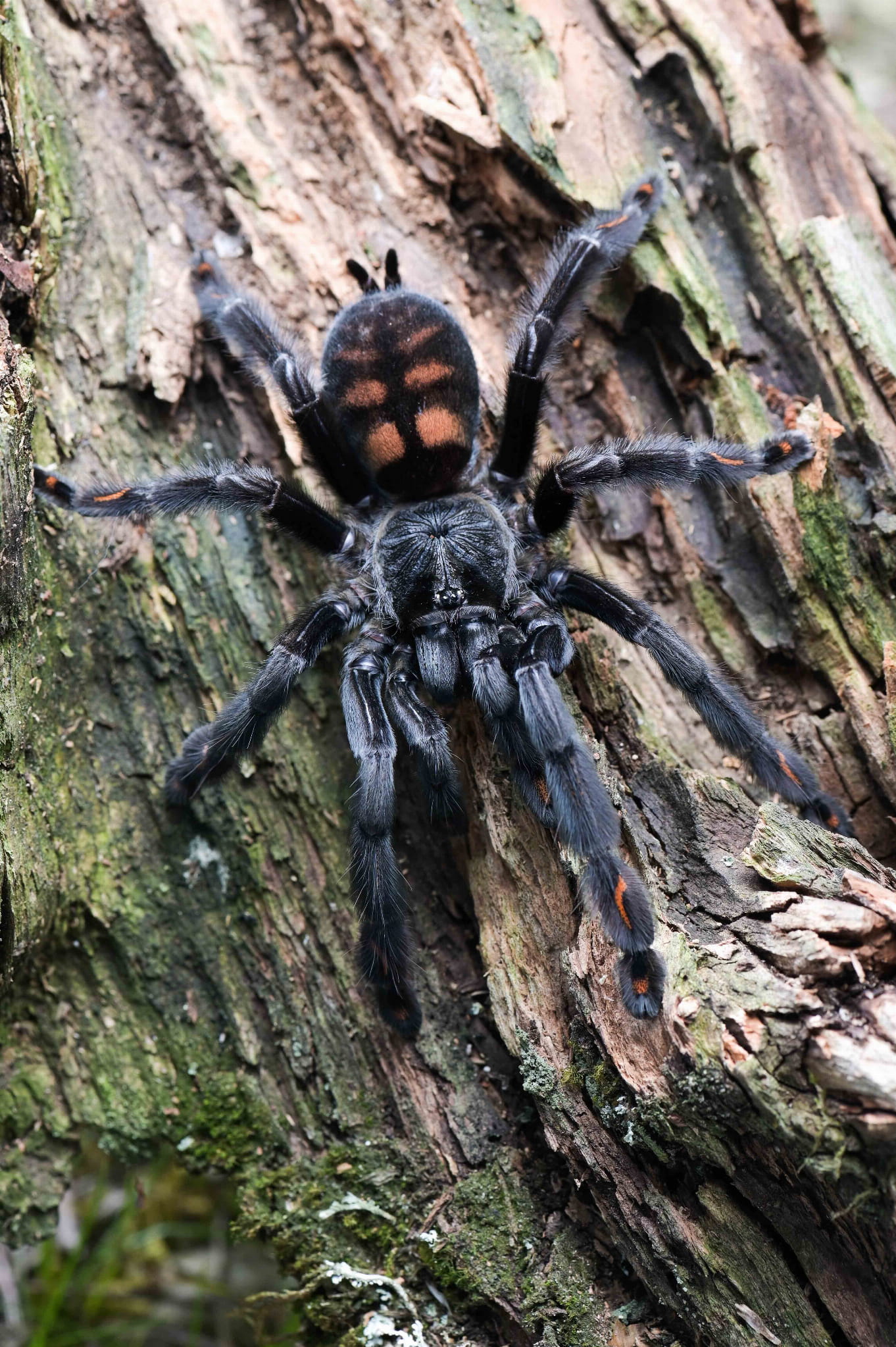
Species: Psalmopoeus irminia
Common name: Venezuelan Suntiger
Native range: Venezuela
Temperature: 22–26°C
Humidity: 75–85%
Adult size: 5–6 cm BL
Lifestyle: arboreal
Speed: fast
Venom potency: moderate
Temperament: defensive, skittish
Recommended for: intermediate keepers
Notes: Not listed under CITES.
Psalmopoeus irminia
product unavailable
Description
Few arboreals announce themselves quite like Psalmopoeus irminia. The body is velvet-black from carapace to abdomen, interrupted by sharp bands of burnt orange across the patellae — a contrast so immediate it stops the eye before the mind has caught up. There are no urticating setae here; the genus lacks them entirely. The slender build only amplifies the impact of that colouring, and among the New World arboreal theraphosids, this Venezuelan species sits comfortably near the top of the list for visual presence.
In temperament, Psalmopoeus irminia is faster and more defensive than its close relative Psalmopoeus cambridgei, and that difference is worth taking seriously before purchase. This is an animal that moves with purpose and reacts quickly when it feels cornered. It will weave a tubular silk retreat in the upper reaches of its enclosure and defend that territory with real conviction. The feeding response is excellent, prey rarely refused, and the activity level rewards patient observation — give it a proper vertical setup and it will use every inch.
Husbandry follows the standard arboreal pattern, with the vertical axis as the priority: a tall enclosure with cork bark or a cork tube positioned high enough to serve as a meaningful retreat site. Humidity should sit on the higher side, maintained through regular misting, but airflow must remain generous — cross-ventilation matters more than constant damp. Room temperature is sufficient, and a water dish at the base completes the setup.
Psalmopoeus irminia suits the keeper who has graduated past the gentler New World arboreals and wants something with a personality to match its appearance. It asks for calm, deliberate handling practices — not fear, but genuine respect. Keepers who offer that tend to find that black-and-orange silhouette has quietly become a permanent fixture of the room, one of those animals that proves difficult to part with once you have spent a few years watching it move.