






 Choose language
- Spiders
- ANIMALS
- Arachnids (Arachnida)
- Spiders (Araneae)
- Tarantulas (Mygalomorphae)
- Psednocnemis spp.
- Diplura spp.
- Spinosatibiapalpus spp.
- Acanthogonatus spp.
- Acanthoscurria spp.
- Amazonius spp.
- Ami spp.
- Anquasha spp.
- Aphonopelma spp.
- Aspinochilus spp.
- Augacephalus spp.
- Avicularia spp.
- Birupes spp.
- Bonnetina spp.
- Brachypelma spp.
- Bumba spp.
- Caribena spp.
- Ceratogyrus spp.
- Chaetopelma spp.
- Chilobrachys spp.
- Chromatopelma spp.
- Cilantica spp.
- Citharacanthus spp.
- Coremiocnemis spp.
- Cyclosternum spp.
- Cyriocosmus spp.
- Cyriopagopus spp.
- Davus spp.
- Dolichothele spp.
- Encyocratella spp.
- Ephebopus spp.
- Euathlus spp.
- Eucratoscelus spp.
- Eupalaestrus spp.
- Fufius spp.
- Gorgyrella spp.
- Grammostola spp.
- Guyruita spp.
- Hapalopus spp.
- Haploclastus spp.
- Haplocosmia spp.
- Haplopelma spp.
- Harpactira spp.
- Heteroscodra spp.
- Heterothele spp.
- Holothele spp.
- Homoeomma spp.
- Hysterocrates spp.
- Idiothele spp.
- Iridopelma spp.
- Kochiana spp.
- Lampropelma spp.
- Lasiocyano spp.
- Lasiodora spp.
- Lasiodorides spp.
- Linothele spp.
- Lyrognathus spp.
- Megaphobema spp.
- Monocentropus spp.
- Neischnocolus spp.
- Neoholothele spp.
- Neostenotarsus spp.
- Nhandu spp.
- Omothymus spp.
- Ornithoctoninae spp.
- Ornithoctonus spp.
- Pamphobeteus spp.
- Pelinobius spp.
- Phormictopus spp.
- Phormingochilus spp.
- Phrixotrichus spp.
- Poecilotheria spp.
- Psalmopoeus spp.
- Pseudhapalopus spp.
- Pseudoclamoris spp.
- Pterinochilus spp.
- Selenocosmia spp.
- Sericopelma spp.
- Tapinauchenius spp.
- Taksinus spp.
- Tapinauchenius spp.
- Theraphosa spp.
- Theraphosidae spp.
- Theraphosinae spp.
- Thrigmopoeus spp.
- Thrixopelma spp.
- Tliltocatl spp.
- Typhochlaena spp.
- Urupelma spp.
- Vitalius spp.
- Xenesthis spp.
- Ybyrapora spp.
- True Spiders (Araneomorphae)
- Velvet Spiders (Eresidae)
- Macrothele spp.
- Liphistius spp.
- Tarantulas (Mygalomorphae)
- Scorpions (Scorpiones)
- Spiders (Araneae)
- Insects - for feeding
- Arachnids (Arachnida)
- Scorpions
- Accessories
- Books
- Centipede
- Millipede
- Cockroaches
- New products
- Products on sale
Currency

€32.00
Regular price:
€40.00

€42.50
Regular price:
€50.00
Species: Theraphosidae sp. tordo
Common name: -
Native range: Undescribed species - locality not disclosed
Temperature: 24-27°C; room temperature suits it well
Humidity: 65-75%
Adult size: Species not yet described - adult size still to be discovered in captivity
Lifestyle: Terrestrial
Speed: Yet to be discovered in captivity
Venom potency: Not yet described
Temperament: Yet to be discovered in captivity
Recommended for: Intermediate keepers
Notes: Species not yet formally described. Not listed under CITES
Theraphosidae sp. tordo
product unavailable
Description
Theraphosidae sp. tordo is one of those species that reach keepers before anyone has had the chance to describe them scientifically. It has no assigned genus, no species description, and publicly available sources say very little about it with any certainty. In the tarantula world this is a familiar story: plenty of now well-known species started life as a mysterious "sp." with a short working name.
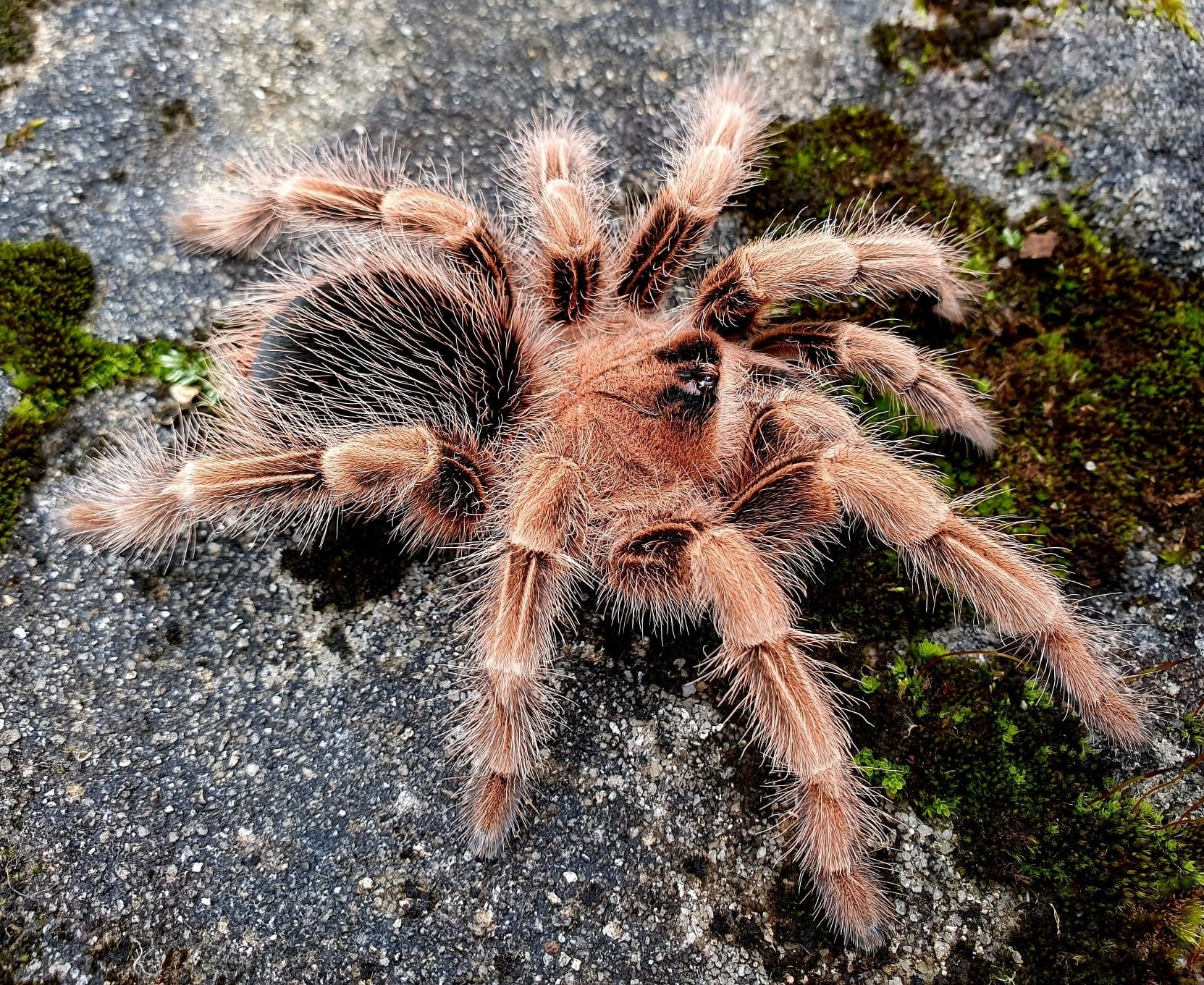
Its looks speak for themselves: the specimen pictured is a densely haired tarantula in a warm salmon-pink, with a darker abdomen and legs cloaked in long pale hairs. Final size and temperament are questions that only time in captivity will answer. That is exactly where its value lies for a collector: from L1 onwards, every change, every moult, the way it arranges its retreat and takes prey can be followed first-hand. This is a spider for observation in the enclosure, and a keeper's notes may well become one of the first reliable accounts of this species in the hobby.
L1 spiderlings do best in a small container with a few centimetres of coconut fibre, a small hide and good ventilation. Keep part of the substrate lightly moist with regular misting and part of it dry, so the spider can choose for itself. Spiderlings drink from droplets on the walls and substrate; a water dish comes in only for larger specimens. Room temperature is sufficient. Offer small prey sized to the spider and watch how it responds.
This is one for experienced keepers and collectors of rarities who knowingly choose the unknown. A species rarely seen on offer, without a scientific name and without ready answers. Choosing it means choosing discovery: the moults to come will show what lies behind the name tordo.