






 Choose language
- Spiders
- ANIMALS
- Arachnids (Arachnida)
- Spiders (Araneae)
- Tarantulas (Mygalomorphae)
- Psednocnemis spp.
- Diplura spp.
- Spinosatibiapalpus spp.
- Acanthogonatus spp.
- Acanthoscurria spp.
- Amazonius spp.
- Ami spp.
- Anquasha spp.
- Aphonopelma spp.
- Aspinochilus spp.
- Augacephalus spp.
- Avicularia spp.
- Birupes spp.
- Bonnetina spp.
- Brachypelma spp.
- Bumba spp.
- Caribena spp.
- Ceratogyrus spp.
- Chaetopelma spp.
- Chilobrachys spp.
- Chromatopelma spp.
- Cilantica spp.
- Citharacanthus spp.
- Coremiocnemis spp.
- Cyclosternum spp.
- Cyriocosmus spp.
- Cyriopagopus spp.
- Davus spp.
- Dolichothele spp.
- Encyocratella spp.
- Ephebopus spp.
- Euathlus spp.
- Eucratoscelus spp.
- Eupalaestrus spp.
- Fufius spp.
- Gorgyrella spp.
- Grammostola spp.
- Guyruita spp.
- Hapalopus spp.
- Haploclastus spp.
- Haplocosmia spp.
- Haplopelma spp.
- Harpactira spp.
- Heteroscodra spp.
- Heterothele spp.
- Holothele spp.
- Homoeomma spp.
- Hysterocrates spp.
- Idiothele spp.
- Iridopelma spp.
- Kochiana spp.
- Lampropelma spp.
- Lasiocyano spp.
- Lasiodora spp.
- Lasiodorides spp.
- Linothele spp.
- Lyrognathus spp.
- Megaphobema spp.
- Monocentropus spp.
- Neischnocolus spp.
- Neoholothele spp.
- Neostenotarsus spp.
- Nhandu spp.
- Omothymus spp.
- Ornithoctoninae spp.
- Ornithoctonus spp.
- Pamphobeteus spp.
- Pelinobius spp.
- Phormictopus spp.
- Phormingochilus spp.
- Phrixotrichus spp.
- Poecilotheria spp.
- Psalmopoeus spp.
- Pseudhapalopus spp.
- Pseudoclamoris spp.
- Pterinochilus spp.
- Selenocosmia spp.
- Sericopelma spp.
- Tapinauchenius spp.
- Taksinus spp.
- Tapinauchenius spp.
- Theraphosa spp.
- Theraphosidae spp.
- Theraphosinae spp.
- Thrigmopoeus spp.
- Thrixopelma spp.
- Tliltocatl spp.
- Typhochlaena spp.
- Urupelma spp.
- Vitalius spp.
- Xenesthis spp.
- Ybyrapora spp.
- True Spiders (Araneomorphae)
- Velvet Spiders (Eresidae)
- Macrothele spp.
- Liphistius spp.
- Tarantulas (Mygalomorphae)
- Scorpions (Scorpiones)
- Spiders (Araneae)
- Insects - for feeding
- Arachnids (Arachnida)
- Scorpions
- Accessories
- Books
- Centipede
- Millipede
- Cockroaches
- New products
- Products on sale
Currency

€32.00
Regular price:
€40.00

€42.50
Regular price:
€50.00

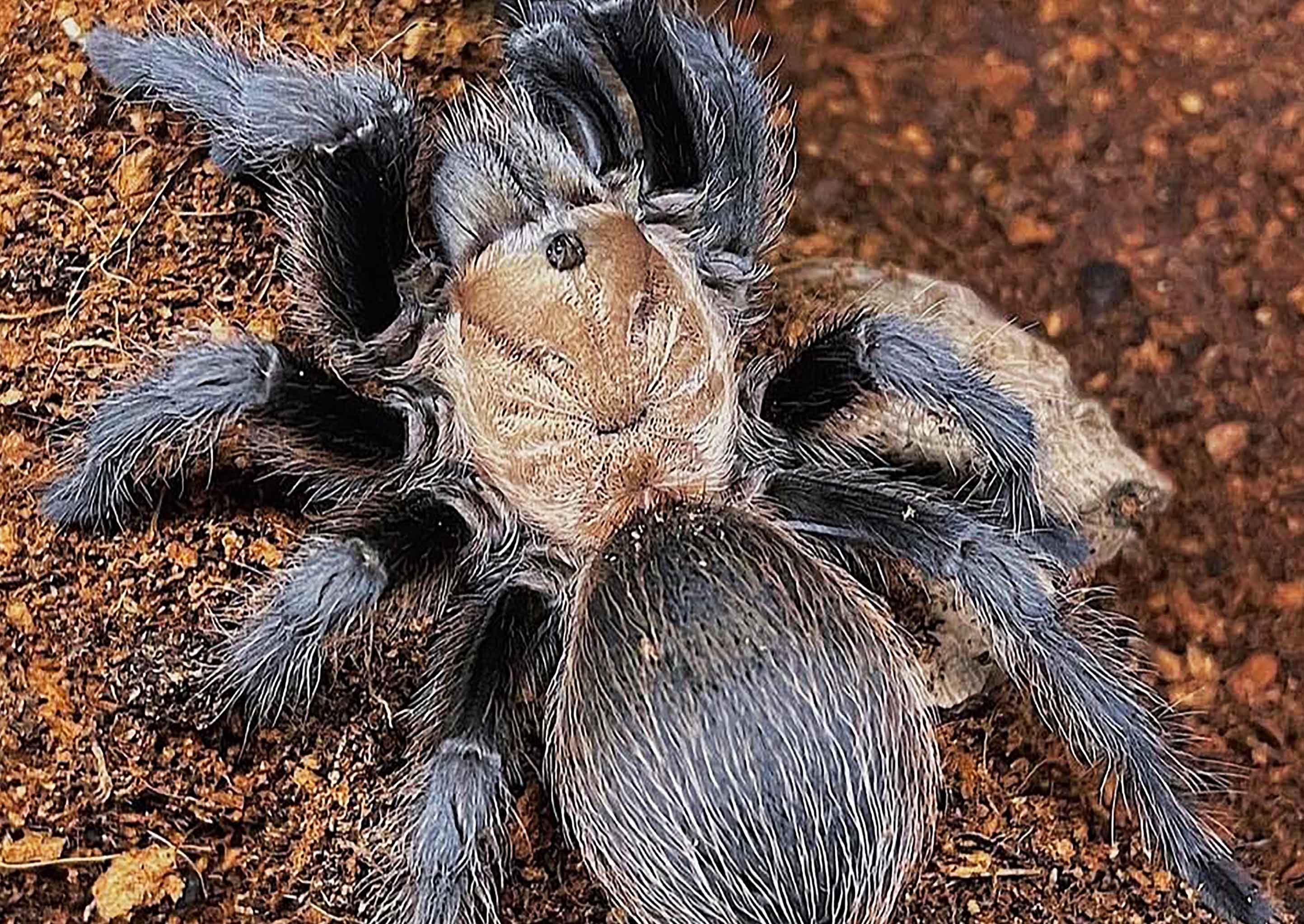
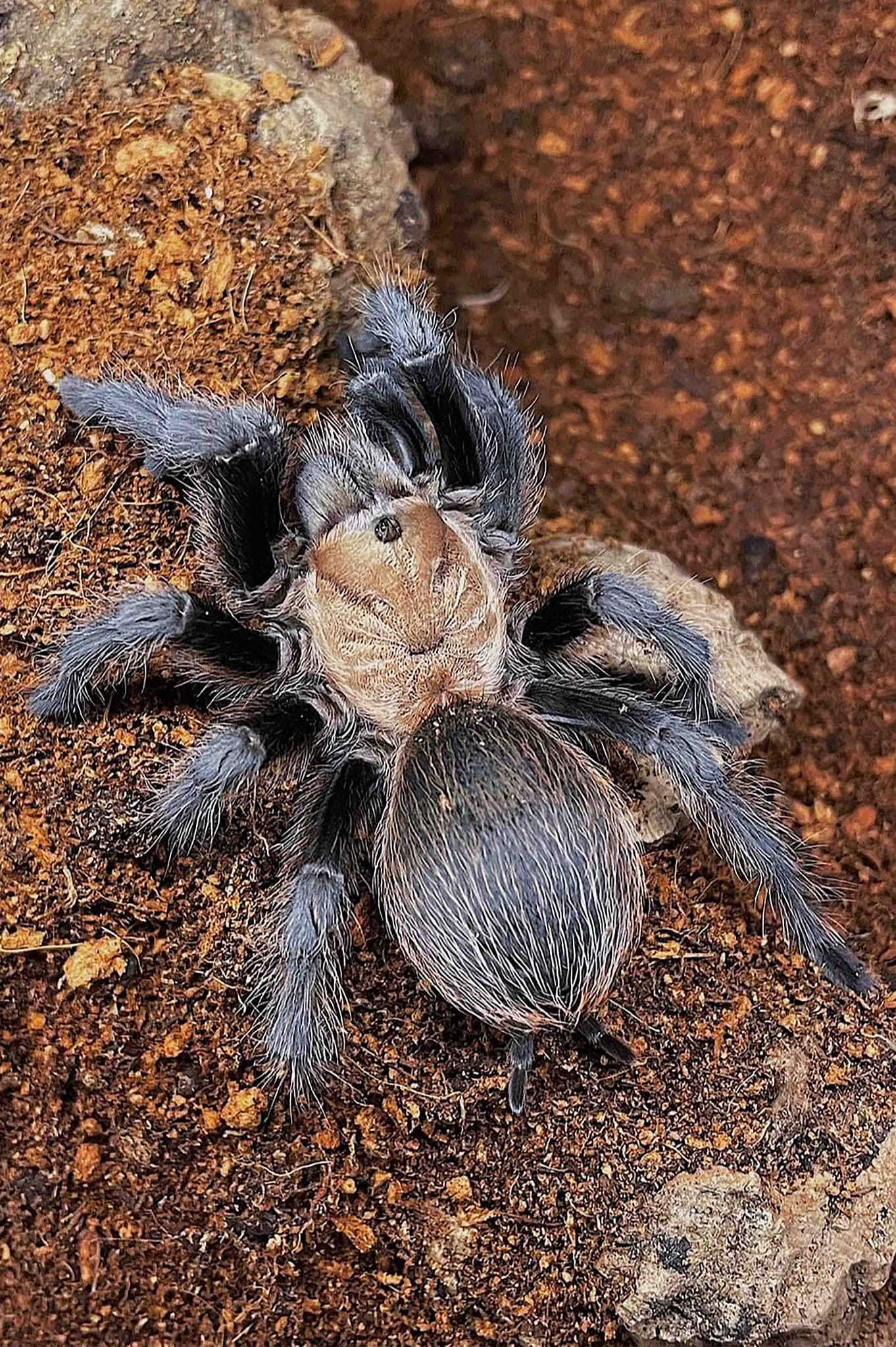
Species: Aphonopelma hentzi
Common name: Texas Brown Tarantula
Native range: USA (Texas, Oklahoma, Kansas)
Temperature: Room temperature (20–26°C), no supplemental heating required
Humidity: 40–50%
Adult size: Female up to 6–7 cm BL, leg span up to 15 cm; male up to 5.5 cm BL
Lifestyle: Terrestrial
Speed: Slow
Venom potency: Mild
Temperament: Calm
Recommended for: Suitable for all keepers, including beginners
Notes: No CITES documentation required
Aphonopelma hentzi
product unavailable
Description
Across the open prairies and dry grasslands of Texas, Oklahoma, and Kansas, where the horizon runs unbroken from edge to edge of the sky, Aphonopelma hentzi is simply part of the landscape. Known widely as the Texas Brown, it is the tarantula that middle America is most likely to encounter — in a backyard, on a dirt road, or crossing a county highway on a warm October evening as a wandering male searches for a mate. The colouration is understated: a uniform deep brown with a faint russet undertone, no iridescence, no contrast. There is a particular honesty to that plainness — the look of an animal that has never needed spectacle to survive.
In the enclosure, Aphonopelma hentzi is as composed as it appears in the field. It almost never postures, rarely bolts in alarm, and seems largely indifferent to being observed. Growth is slow, as it is across the entire genus, but what patience costs in time it returns in durability — this is a species that tolerates fluctuations in temperature, humidity, and feeding schedule without visible complaint. On some evenings it will simply sit out in the open, settled on top of its hide, and let itself be watched.
Setup is straightforward: a terrestrial enclosure with 5–7 cm of dry-to-slightly-damp substrate, a hide, and a water dish. Room temperature is sufficient and humidity requirements are low. An appropriately sized prey item every week or two is plenty. Aphonopelma hentzi is among the least demanding tarantulas in the hobby — not because it cuts corners, but because its native environment has made it genuinely resilient.
This is a species for keepers who find meaning in understatement. It will not arrest a room with colour or drama. What it offers instead is permanence — a calm, unhurried presence that asks very little and tends to outlast the flashier animals around it. Years on, when faster fashions have come and gone from your shelves, the Texas Brown will still be sitting quietly at the mouth of its burrow, exactly as you left it, exactly as the prairie made it.