






 Choose language
- Spiders
- ANIMALS
- Arachnids (Arachnida)
- Spiders (Araneae)
- Tarantulas (Mygalomorphae)
- Psednocnemis spp.
- Diplura spp.
- Spinosatibiapalpus spp.
- Acanthogonatus spp.
- Acanthoscurria spp.
- Amazonius spp.
- Ami spp.
- Anquasha spp.
- Aphonopelma spp.
- Aspinochilus spp.
- Augacephalus spp.
- Avicularia spp.
- Birupes spp.
- Bonnetina spp.
- Brachypelma spp.
- Bumba spp.
- Caribena spp.
- Ceratogyrus spp.
- Chaetopelma spp.
- Chilobrachys spp.
- Chromatopelma spp.
- Cilantica spp.
- Citharacanthus spp.
- Coremiocnemis spp.
- Cyclosternum spp.
- Cyriocosmus spp.
- Cyriopagopus spp.
- Davus spp.
- Dolichothele spp.
- Encyocratella spp.
- Ephebopus spp.
- Euathlus spp.
- Eucratoscelus spp.
- Eupalaestrus spp.
- Fufius spp.
- Gorgyrella spp.
- Grammostola spp.
- Guyruita spp.
- Hapalopus spp.
- Haploclastus spp.
- Haplocosmia spp.
- Haplopelma spp.
- Harpactira spp.
- Heteroscodra spp.
- Heterothele spp.
- Holothele spp.
- Homoeomma spp.
- Hysterocrates spp.
- Idiothele spp.
- Iridopelma spp.
- Kochiana spp.
- Lampropelma spp.
- Lasiocyano spp.
- Lasiodora spp.
- Lasiodorides spp.
- Linothele spp.
- Lyrognathus spp.
- Megaphobema spp.
- Monocentropus spp.
- Neischnocolus spp.
- Neoholothele spp.
- Neostenotarsus spp.
- Nhandu spp.
- Omothymus spp.
- Ornithoctoninae spp.
- Ornithoctonus spp.
- Pamphobeteus spp.
- Pelinobius spp.
- Phormictopus spp.
- Phormingochilus spp.
- Phrixotrichus spp.
- Poecilotheria spp.
- Psalmopoeus spp.
- Pseudhapalopus spp.
- Pseudoclamoris spp.
- Pterinochilus spp.
- Selenocosmia spp.
- Sericopelma spp.
- Tapinauchenius spp.
- Taksinus spp.
- Tapinauchenius spp.
- Theraphosa spp.
- Theraphosidae spp.
- Theraphosinae spp.
- Thrigmopoeus spp.
- Thrixopelma spp.
- Tliltocatl spp.
- Typhochlaena spp.
- Urupelma spp.
- Vitalius spp.
- Xenesthis spp.
- Ybyrapora spp.
- True Spiders (Araneomorphae)
- Velvet Spiders (Eresidae)
- Macrothele spp.
- Liphistius spp.
- Tarantulas (Mygalomorphae)
- Scorpions (Scorpiones)
- Spiders (Araneae)
- Insects - for feeding
- Arachnids (Arachnida)
- Scorpions
- Accessories
- Books
- Centipede
- Millipede
- Cockroaches
- New products
- Products on sale
Currency

€32.00
Regular price:
€40.00

€42.50
Regular price:
€50.00
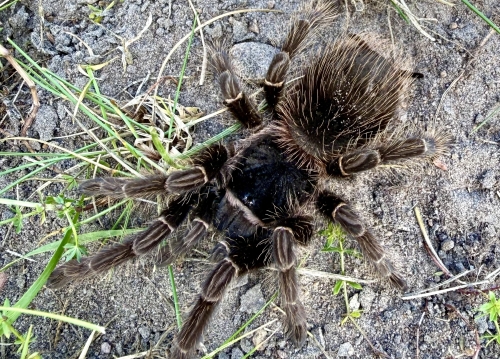
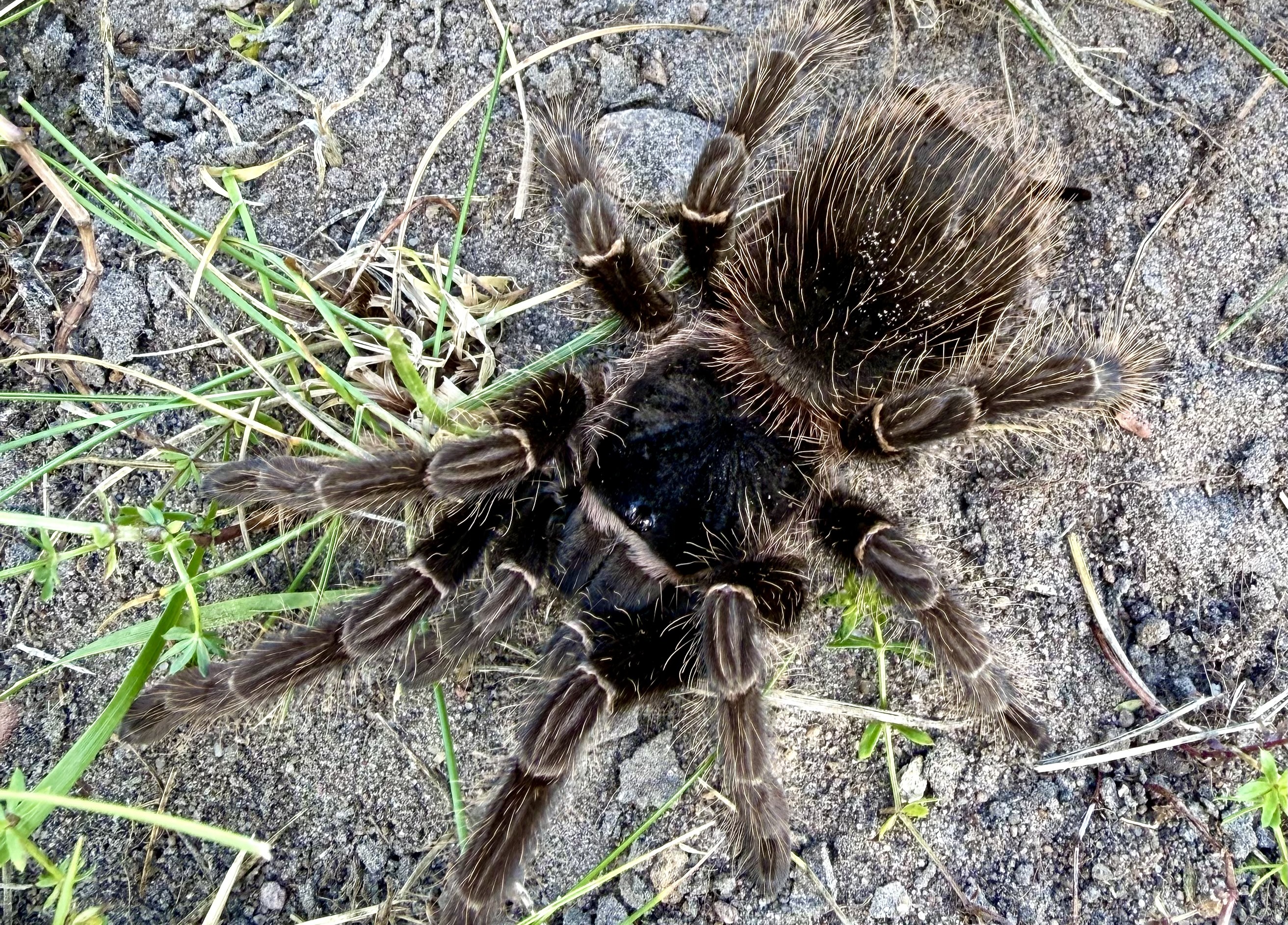

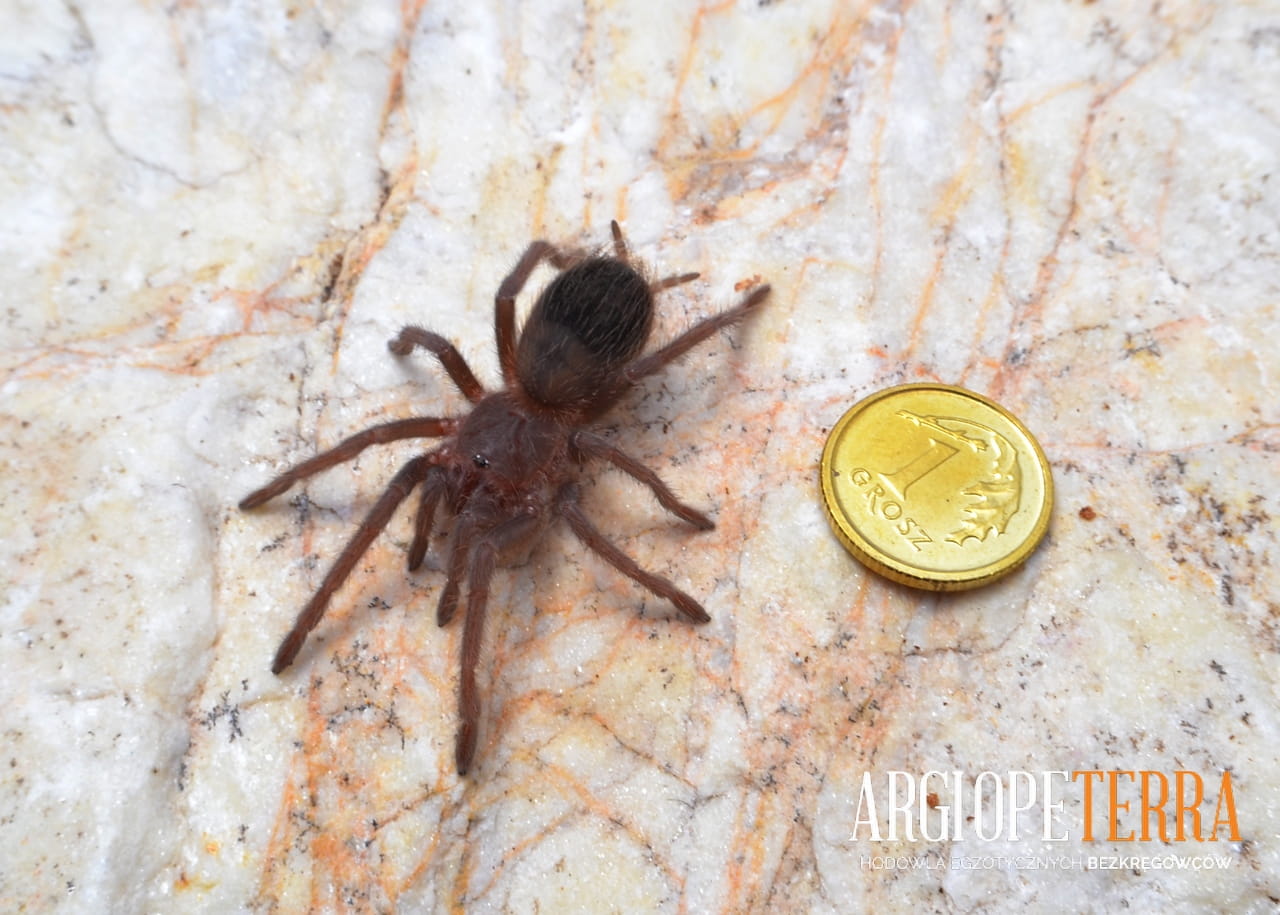
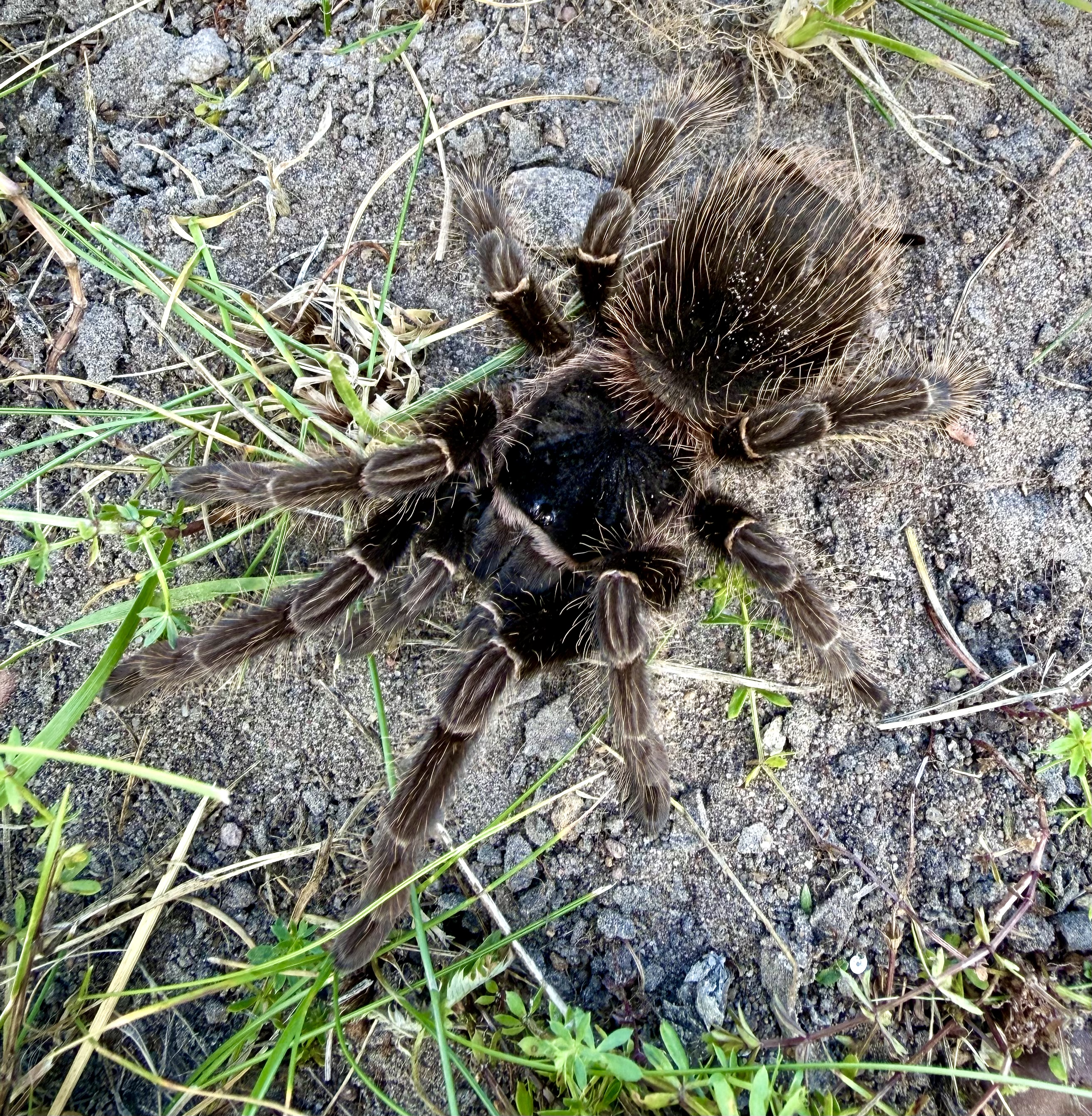
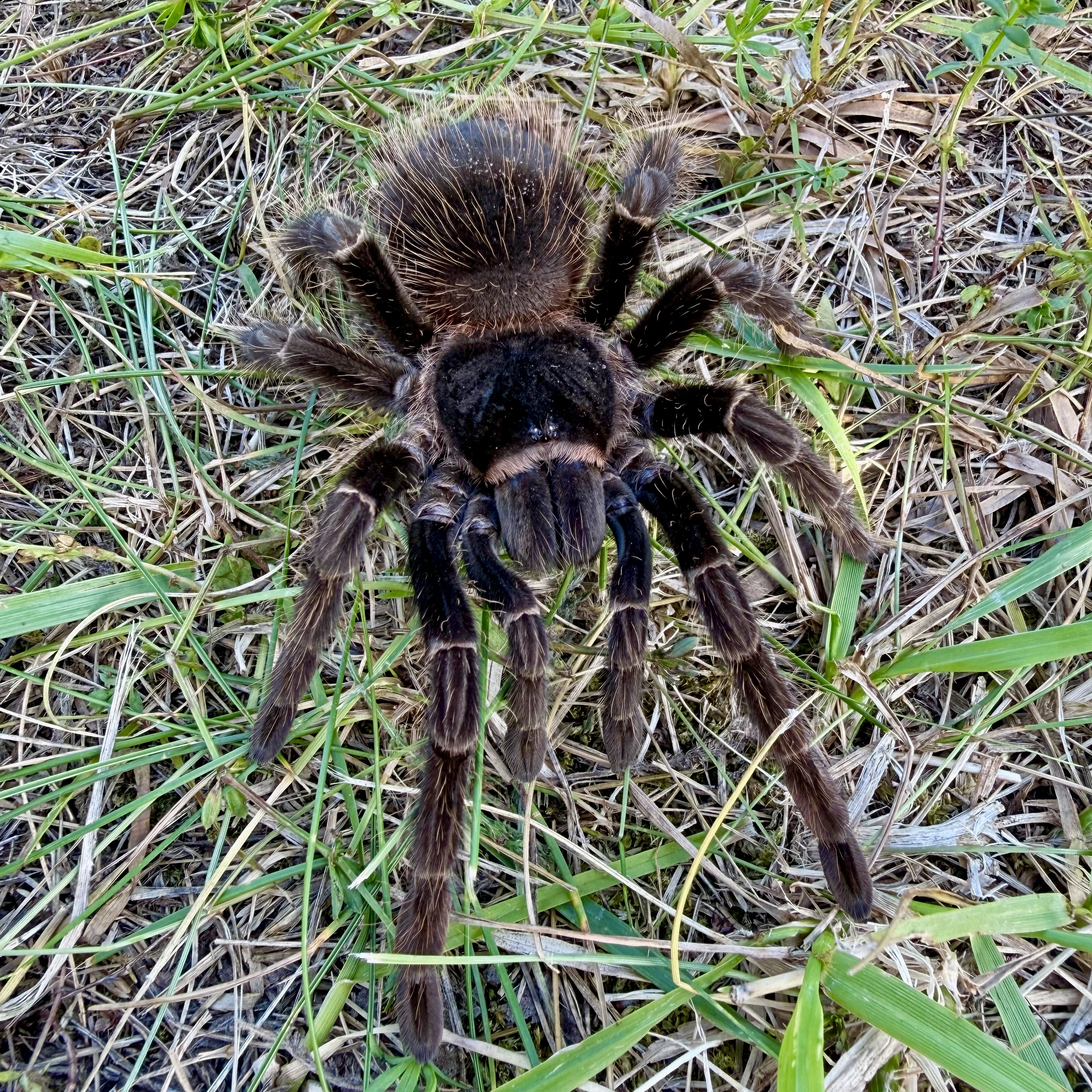
Species: Lasiodora parahybana
Common name: Salmon Pink Birdeater
Native range: Brazil (Paraíba state, northeastern Brazil)
Temperature: 25–28°C with a 2–3°C drop at night; also does well at room temperature
Humidity: 60–70%
Adult size: Females over 10 cm BL (leg span up to 25–28 cm DLS)
Lifestyle: Terrestrial
Speed: Slow
Venom potency: Mild
Temperament: Calm
Recommended for: Suitable for all keepers
Notes: This species does NOT require captive-bred documentation (CITES)
Lasiodora parahybana
product unavailable
Description
Few tarantulas announce themselves the way Lasiodora parahybana does. A mature female standing motionless in the middle of her enclosure looks less like an animal and more like something a natural history illustrator dreamed up to prove a point — deep, dark brown body, long salmon-pink setae catching the light and shifting tone with every angle. The established common name, Salmon Pink Birdeater, isn't marketing; the coloration earns it. Originating from the state of Paraíba in northeastern Brazil, this is one of the largest members of Theraphosidae by any honest measure, with adult females exceeding 10 cm in body length and leg spans pushing past 25 cm.
What tends to surprise new keepers — particularly those who approach a spider of this scale with appropriate caution — is how calm Lasiodora parahybana usually is. It rarely resorts to a threat posture, and while it will kick urticating setae if genuinely pressed, it isn't a skittish animal. It moves with the unhurried deliberateness of something that has few natural reasons to panic. The growth rate, however, is anything but slow. Spiderlings put on mass at a pace that makes each moult feel like an event, and keepers who start with a sling often describe the experience as time-lapse growth with no fast-forward required.
In the enclosure, Lasiodora parahybana needs room proportional to its ambitions. Adult females call for a floor area of at least 40 × 30 cm, with 5–8 cm of coconut fibre substrate and a hide substantial enough to actually conceal the animal. A large water dish should be kept filled at all times. Humidity should be moderate, maintained through occasional misting rather than saturation, and room temperature is perfectly adequate. Feeders should be offered generously and sized to match the animal's rapid growth trajectory, especially in younger instars.
Lasiodora parahybana occupies a specific and appealing niche in a collection: a tarantula that delivers scale, presence, and visual impact without demanding the kind of guarded, contingency-aware management that other large-bodied species require. It suits the intermediate keeper ready for their first genuinely large terrestrial, and equally the experienced keeper who simply wants a species they can observe without choreographing every interaction. Years on, a mature female tends to become the quiet anchor of the room — the spider every visitor notices first, standing perfectly still as though aware she has already made her point.