






 Choose language
- Spiders
- ANIMALS
- Arachnids (Arachnida)
- Spiders (Araneae)
- Tarantulas (Mygalomorphae)
- Psednocnemis spp.
- Diplura spp.
- Spinosatibiapalpus spp.
- Acanthogonatus spp.
- Acanthoscurria spp.
- Amazonius spp.
- Ami spp.
- Anquasha spp.
- Aphonopelma spp.
- Aspinochilus spp.
- Augacephalus spp.
- Avicularia spp.
- Birupes spp.
- Bonnetina spp.
- Brachypelma spp.
- Bumba spp.
- Caribena spp.
- Ceratogyrus spp.
- Chaetopelma spp.
- Chilobrachys spp.
- Chromatopelma spp.
- Cilantica spp.
- Citharacanthus spp.
- Coremiocnemis spp.
- Cyclosternum spp.
- Cyriocosmus spp.
- Cyriopagopus spp.
- Davus spp.
- Dolichothele spp.
- Encyocratella spp.
- Ephebopus spp.
- Euathlus spp.
- Eucratoscelus spp.
- Eupalaestrus spp.
- Fufius spp.
- Gorgyrella spp.
- Grammostola spp.
- Guyruita spp.
- Hapalopus spp.
- Haploclastus spp.
- Haplocosmia spp.
- Haplopelma spp.
- Harpactira spp.
- Heteroscodra spp.
- Heterothele spp.
- Holothele spp.
- Homoeomma spp.
- Hysterocrates spp.
- Idiothele spp.
- Iridopelma spp.
- Kochiana spp.
- Lampropelma spp.
- Lasiocyano spp.
- Lasiodora spp.
- Lasiodorides spp.
- Linothele spp.
- Lyrognathus spp.
- Megaphobema spp.
- Monocentropus spp.
- Neischnocolus spp.
- Neoholothele spp.
- Neostenotarsus spp.
- Nhandu spp.
- Omothymus spp.
- Ornithoctoninae spp.
- Ornithoctonus spp.
- Pamphobeteus spp.
- Pelinobius spp.
- Phormictopus spp.
- Phormingochilus spp.
- Phrixotrichus spp.
- Poecilotheria spp.
- Psalmopoeus spp.
- Pseudhapalopus spp.
- Pseudoclamoris spp.
- Pterinochilus spp.
- Selenocosmia spp.
- Sericopelma spp.
- Tapinauchenius spp.
- Taksinus spp.
- Tapinauchenius spp.
- Theraphosa spp.
- Theraphosidae spp.
- Theraphosinae spp.
- Thrigmopoeus spp.
- Thrixopelma spp.
- Tliltocatl spp.
- Typhochlaena spp.
- Urupelma spp.
- Vitalius spp.
- Xenesthis spp.
- Ybyrapora spp.
- True Spiders (Araneomorphae)
- Velvet Spiders (Eresidae)
- Macrothele spp.
- Liphistius spp.
- Tarantulas (Mygalomorphae)
- Scorpions (Scorpiones)
- Spiders (Araneae)
- Insects - for feeding
- Arachnids (Arachnida)
- Scorpions
- Accessories
- Books
- Centipede
- Millipede
- Cockroaches
- New products
- Products on sale
Currency

€32.00
Regular price:
€40.00

€42.50
Regular price:
€50.00
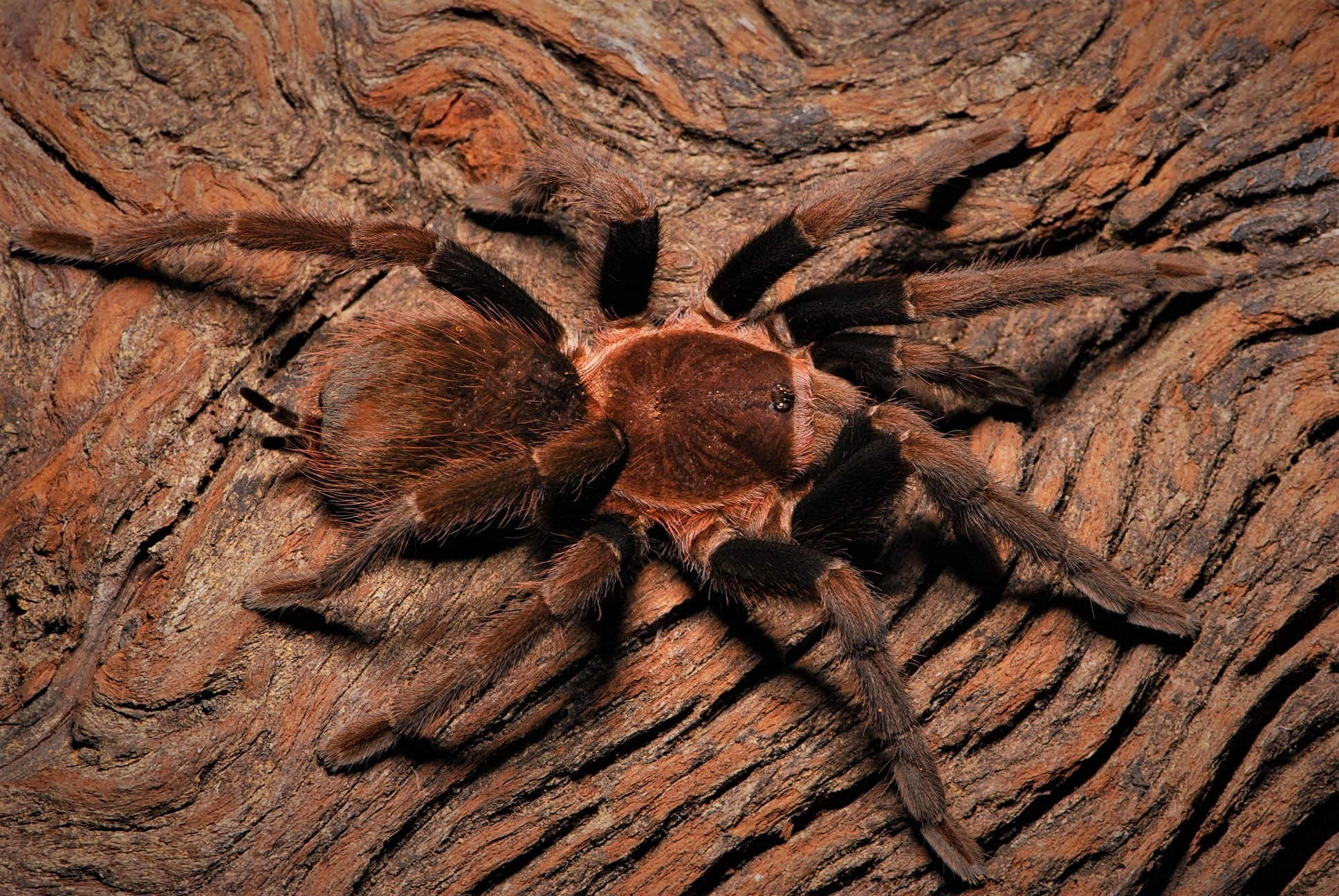
Species: Theraphosidae sp. Roatan
Common name: Roatan Purple
Native range: Honduras (Roatan Island, Bay Islands)
Temperature: 22-26°C; room temperature suits it well
Humidity: 60-70%
Adult size: According to keepers, around 12-15 cm leg span
Lifestyle: Terrestrial (older specimens burrow)
Speed: Moderately fast
Venom potency: Mild to moderate
Temperament: Varies between individuals, from calm to skittish
Recommended for: Intermediate keepers
Notes: Species not yet formally described, also traded as Theraphosinae sp. Roatan. Not listed under CITES
Theraphosidae sp. Roatan
product unavailable
Description
Roatan is a small island off the Caribbean coast of Honduras, and Theraphosidae sp. Roatan is a tarantula known only by the name of that place. It has no formal description and no assigned genus yet; in the hobby it also circulates as Theraphosinae sp. Roatan. Keepers who have worked with it for years point to striking sexual dimorphism: mature males turn a deep purple, while females (pictured) are stocky and warm rusty brown, with a copper carapace and contrasting black femurs. It is a rare chance to watch a completely different animal emerge from an unassuming spiderling.
Keepers report that in the wild the young shelter under logs and plant debris, while older specimens dig burrows in seasonally dry scrub. The same pattern shows in the enclosure: the spider shifts substrate, enlarges its hide and builds its own network of tunnels. Temperament varies from calm to distinctly skittish, so it is best kept as a display animal. Like most tarantulas from the Americas, it may kick urticating hairs. Spiderlings feed readily and are said to grow relatively quickly.
The L1 spiderlings on offer do best in a small container with a few centimetres of lightly moist coconut fibre, keeping part of it dry and misting the rest regularly. Spiderlings drink from droplets on the walls and substrate; a water dish only becomes useful for larger specimens. Increase the substrate depth as the spider grows, since adults burrow. Room temperature is perfectly adequate, and keepers note that this species tolerates slightly drier conditions than typical rainforest species. Offer small prey sized to the spider.
This is one for keepers who already have a few tarantulas behind them and want something off the usual list. A single-island species still without a scientific name, purple males and black females makes for years of observation. Every moult adds something to what we know about this spider, and its keeper becomes part of that story.