






 Choose language
- Spiders
- ANIMALS
- Arachnids (Arachnida)
- Spiders (Araneae)
- Tarantulas (Mygalomorphae)
- Psednocnemis spp.
- Diplura spp.
- Spinosatibiapalpus spp.
- Acanthogonatus spp.
- Acanthoscurria spp.
- Amazonius spp.
- Ami spp.
- Anquasha spp.
- Aphonopelma spp.
- Aspinochilus spp.
- Augacephalus spp.
- Avicularia spp.
- Birupes spp.
- Bonnetina spp.
- Brachypelma spp.
- Bumba spp.
- Caribena spp.
- Ceratogyrus spp.
- Chaetopelma spp.
- Chilobrachys spp.
- Chromatopelma spp.
- Cilantica spp.
- Citharacanthus spp.
- Coremiocnemis spp.
- Cyclosternum spp.
- Cyriocosmus spp.
- Cyriopagopus spp.
- Davus spp.
- Dolichothele spp.
- Encyocratella spp.
- Ephebopus spp.
- Euathlus spp.
- Eucratoscelus spp.
- Eupalaestrus spp.
- Fufius spp.
- Gorgyrella spp.
- Grammostola spp.
- Guyruita spp.
- Hapalopus spp.
- Haploclastus spp.
- Haplocosmia spp.
- Haplopelma spp.
- Harpactira spp.
- Heteroscodra spp.
- Heterothele spp.
- Holothele spp.
- Homoeomma spp.
- Hysterocrates spp.
- Idiothele spp.
- Iridopelma spp.
- Kochiana spp.
- Lampropelma spp.
- Lasiocyano spp.
- Lasiodora spp.
- Lasiodorides spp.
- Linothele spp.
- Lyrognathus spp.
- Megaphobema spp.
- Monocentropus spp.
- Neischnocolus spp.
- Neoholothele spp.
- Neostenotarsus spp.
- Nhandu spp.
- Omothymus spp.
- Ornithoctoninae spp.
- Ornithoctonus spp.
- Pamphobeteus spp.
- Pelinobius spp.
- Phormictopus spp.
- Phormingochilus spp.
- Phrixotrichus spp.
- Poecilotheria spp.
- Psalmopoeus spp.
- Pseudhapalopus spp.
- Pseudoclamoris spp.
- Pterinochilus spp.
- Selenocosmia spp.
- Sericopelma spp.
- Tapinauchenius spp.
- Taksinus spp.
- Tapinauchenius spp.
- Theraphosa spp.
- Theraphosidae spp.
- Theraphosinae spp.
- Thrigmopoeus spp.
- Thrixopelma spp.
- Tliltocatl spp.
- Typhochlaena spp.
- Urupelma spp.
- Vitalius spp.
- Xenesthis spp.
- Ybyrapora spp.
- True Spiders (Araneomorphae)
- Velvet Spiders (Eresidae)
- Macrothele spp.
- Liphistius spp.
- Tarantulas (Mygalomorphae)
- Scorpions (Scorpiones)
- Spiders (Araneae)
- Insects - for feeding
- Arachnids (Arachnida)
- Scorpions
- Accessories
- Books
- Centipede
- Millipede
- Cockroaches
- New products
- Products on sale
Currency

€32.00
Regular price:
€40.00

€42.50
Regular price:
€50.00
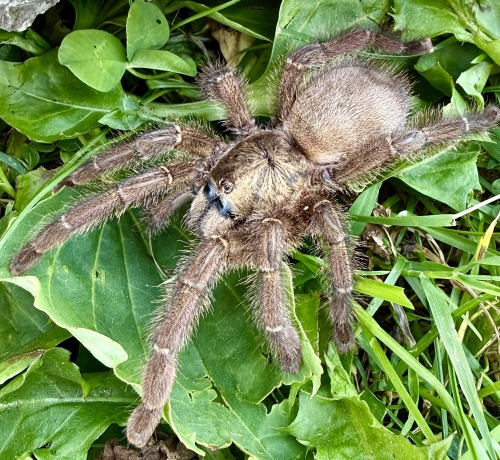
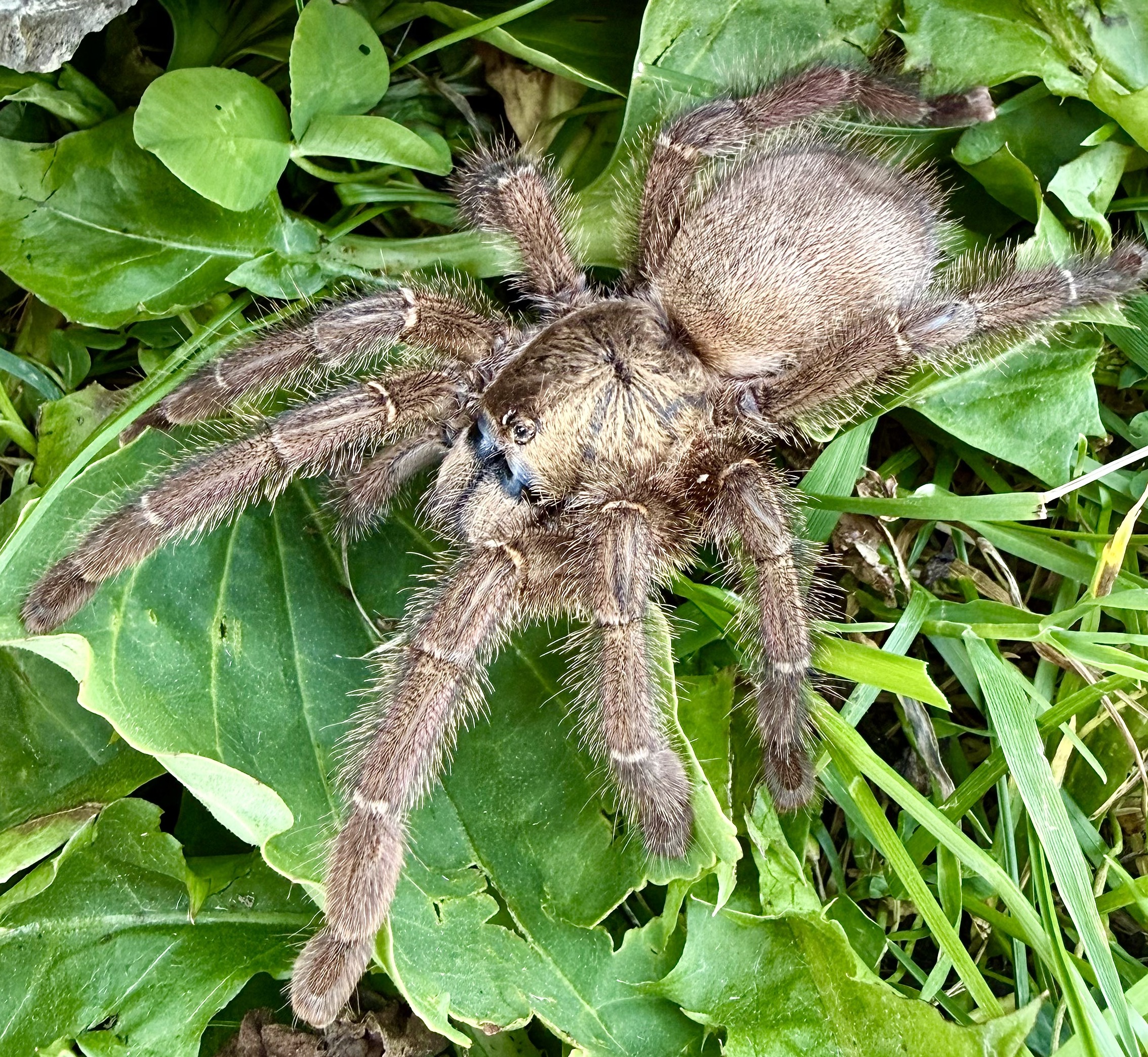
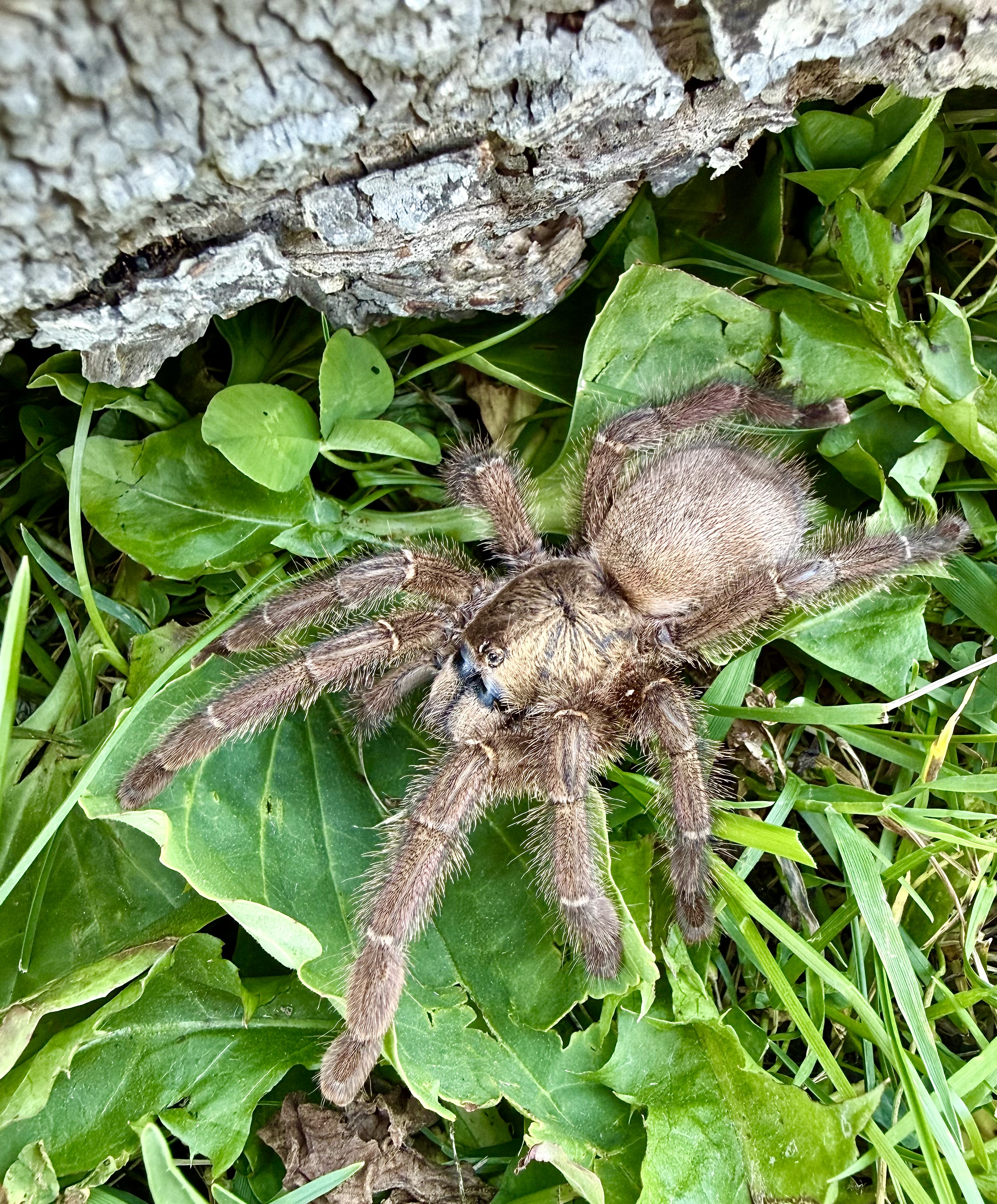
Species: Caribena laeta
Common name: Puerto Rican Pinktoe
Native range: Caribbean (Puerto Rico)
Temperature: 24–28°C with a drop of 2–3°C at night; room temperature is generally sufficient
Humidity: 75–85%
Adult size: Females reach 5–6 cm body length
Lifestyle: Arboreal
Speed: Fast
Venom potency: Mild
Temperament: Lively and reactive, rarely flicks urticating setae
Recommended for: Intermediate keepers
Notes: Not CITES-listed; captive-bred documentation not required
Caribena laeta
product unavailable
Description
Few arboreals carry the Caribbean palette quite like Caribena laeta — a smaller, less famous cousin of Caribena versicolor that rewards close watching with a colour shift few spiders match. Spiderlings carry a pale, faintly bluish cast that shifts with each moult toward the warm brick-red of adulthood, the carapace holding a metallic sheen that catches light at certain angles like burnished copper. Native to the Caribbean archipelago around Puerto Rico — bromeliads, palms, and the brackish edges of mangroves — the species has a lightness to its build, slender-legged and alert, that reads almost contradictory against the energy it brings to daily life.
Caribena laeta is arboreal, fast, and constantly aware of its surroundings. Given anchor points and vertical height, it builds an extensive silken tube retreat that becomes the centre of its world, hunting from ambush with strikes that leave little room for hesitation. It stays noticeably smaller than Caribena versicolor — something many keepers find genuinely practical rather than a compromise, since the species settles into a more modestly sized enclosure without giving up any of its personality. The temperament is lively and reactive, though flicking urticating setae is uncommon in this species.
The enclosure should be oriented vertically, with cross-ventilation treated as essential — stagnant air is the one condition this species will not tolerate. A cork tube or section of cork bark positioned upright provides the retreat anchor; climbing branches and artificial foliage give the spider territory to map and use. A thin layer of coconut fibre substrate across the floor, kept slightly damp in one corner, supports ambient humidity without creating pooled moisture. Light misting of the enclosure walls maintains the gradient, and a water dish on the floor rounds out the setup. Room temperature is sufficient, provided it stays within the warm range a Caribbean origin implies.
Caribena laeta suits the keeper ready to step into the Caribbean arboreal genera without committing to a tall enclosure build or the bulk of a full-grown Caribena versicolor. Prior time with arboreals helps — not because Caribena laeta is especially demanding, but because its speed and use of vertical space are easier to read when you have watched that pattern before. If Caribena versicolor is already familiar territory, Caribena laeta opens a slightly different door in the same hallway: the colour develops on its own arc, the scale is different, and the animal that emerges after several moults tends to earn a permanent place in the collection rather than living in a more famous relative's shadow.