






 Choose language
- Spiders
- ANIMALS
- Arachnids (Arachnida)
- Spiders (Araneae)
- Tarantulas (Mygalomorphae)
- Psednocnemis spp.
- Diplura spp.
- Spinosatibiapalpus spp.
- Acanthogonatus spp.
- Acanthoscurria spp.
- Amazonius spp.
- Ami spp.
- Anquasha spp.
- Aphonopelma spp.
- Aspinochilus spp.
- Augacephalus spp.
- Avicularia spp.
- Birupes spp.
- Bonnetina spp.
- Brachypelma spp.
- Bumba spp.
- Caribena spp.
- Ceratogyrus spp.
- Chaetopelma spp.
- Chilobrachys spp.
- Chromatopelma spp.
- Cilantica spp.
- Citharacanthus spp.
- Coremiocnemis spp.
- Cyclosternum spp.
- Cyriocosmus spp.
- Cyriopagopus spp.
- Davus spp.
- Dolichothele spp.
- Encyocratella spp.
- Ephebopus spp.
- Euathlus spp.
- Eucratoscelus spp.
- Eupalaestrus spp.
- Fufius spp.
- Gorgyrella spp.
- Grammostola spp.
- Guyruita spp.
- Hapalopus spp.
- Haploclastus spp.
- Haplocosmia spp.
- Haplopelma spp.
- Harpactira spp.
- Heteroscodra spp.
- Heterothele spp.
- Holothele spp.
- Homoeomma spp.
- Hysterocrates spp.
- Idiothele spp.
- Iridopelma spp.
- Kochiana spp.
- Lampropelma spp.
- Lasiocyano spp.
- Lasiodora spp.
- Lasiodorides spp.
- Linothele spp.
- Lyrognathus spp.
- Megaphobema spp.
- Monocentropus spp.
- Neischnocolus spp.
- Neoholothele spp.
- Neostenotarsus spp.
- Nhandu spp.
- Omothymus spp.
- Ornithoctoninae spp.
- Ornithoctonus spp.
- Pamphobeteus spp.
- Pelinobius spp.
- Phormictopus spp.
- Phormingochilus spp.
- Phrixotrichus spp.
- Poecilotheria spp.
- Psalmopoeus spp.
- Pseudhapalopus spp.
- Pseudoclamoris spp.
- Pterinochilus spp.
- Selenocosmia spp.
- Sericopelma spp.
- Tapinauchenius spp.
- Taksinus spp.
- Tapinauchenius spp.
- Theraphosa spp.
- Theraphosidae spp.
- Theraphosinae spp.
- Thrigmopoeus spp.
- Thrixopelma spp.
- Tliltocatl spp.
- Typhochlaena spp.
- Urupelma spp.
- Vitalius spp.
- Xenesthis spp.
- Ybyrapora spp.
- True Spiders (Araneomorphae)
- Velvet Spiders (Eresidae)
- Macrothele spp.
- Liphistius spp.
- Tarantulas (Mygalomorphae)
- Scorpions (Scorpiones)
- Spiders (Araneae)
- Insects - for feeding
- Arachnids (Arachnida)
- Scorpions
- Accessories
- Books
- Centipede
- Millipede
- Cockroaches
- New products
- Products on sale
Currency

€42.50
Regular price:
€50.00

€32.00
Regular price:
€40.00
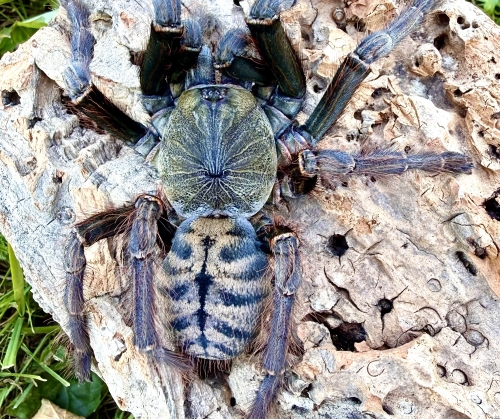
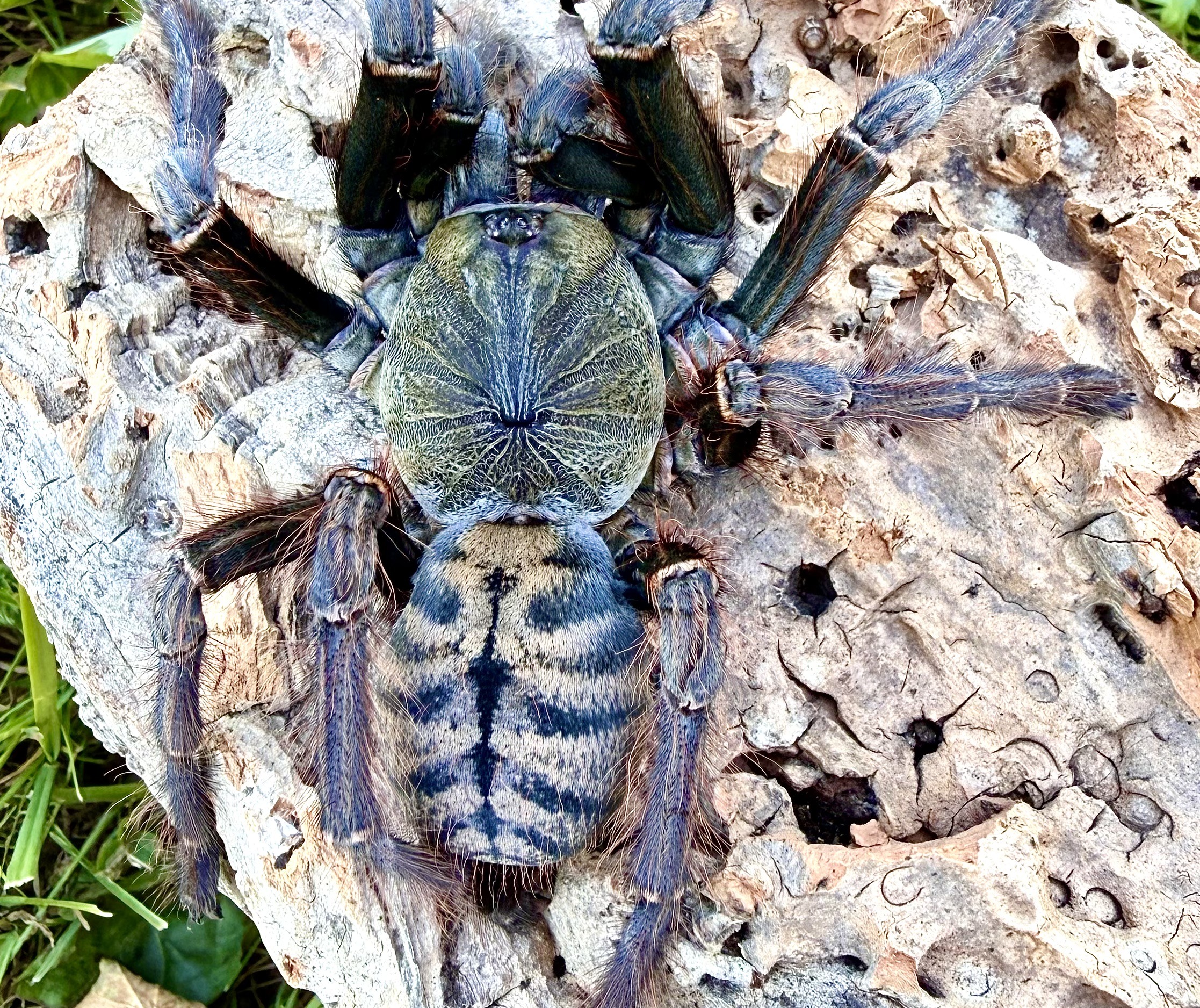
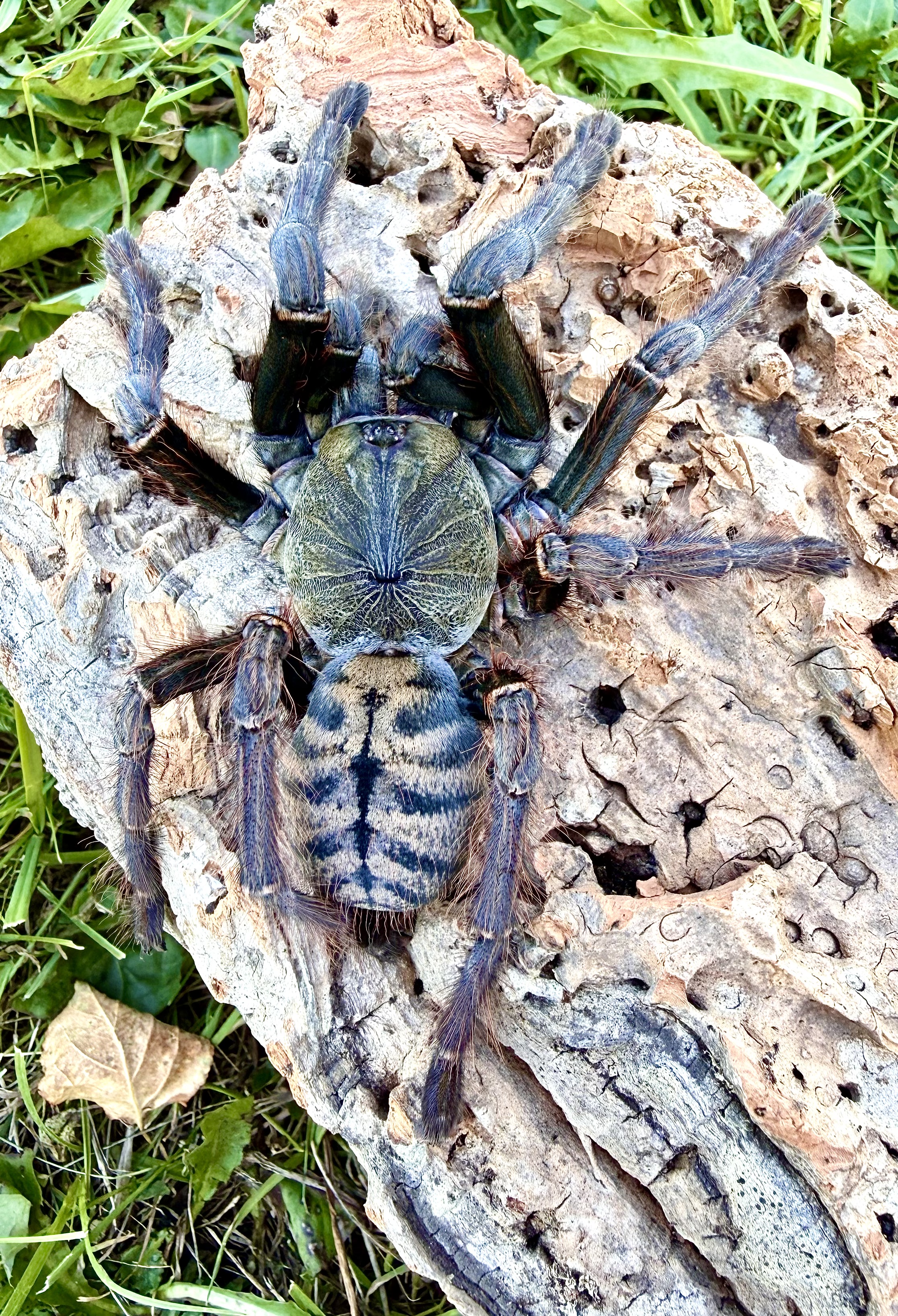

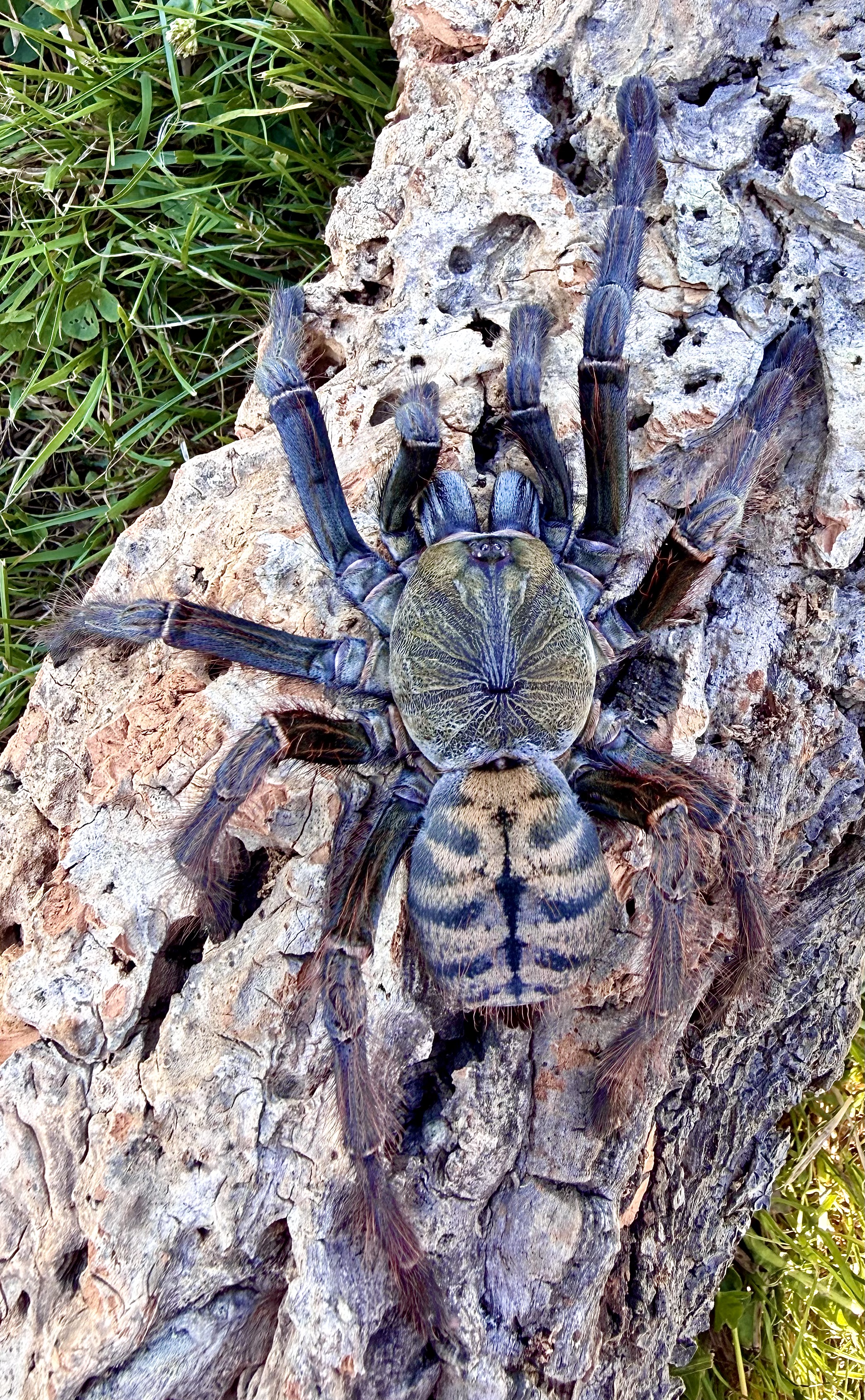
Species: Phormingochilus sp. sabah blue
Common name: -
Native range: Borneo (Sabah, Malaysia)
Temperature: 24–28°C
Humidity: 70–90%
Adult size: 6–7 cm BL
Lifestyle: arboreal
Speed: fast
Venom potency: potent
Temperament: defensive when disturbed
Recommended for: advanced keepers
Notes: Not CITES listed.
Phormingochilus sp. sabah blue
product unavailable
Description
From the rainforests of Sabah, in the Malaysian half of Borneo, comes an arboreal that makes the case for metallic blue as a colour nature deploys with genuine intent. Phormingochilus sp. sabah blue carries an electric, iridescent blue across its walking legs — not a hint or a sheen, but a consistent brilliance that reads almost like fresh enamel against the darker prosoma and opisthosoma. The name promises exactly what it delivers, and the animal holds your attention far longer than a placeholder name has any right to.
This is a species that commits fully to the vertical dimension, anchoring dense silken tube retreats high in the enclosure and defending them with conviction. Phormingochilus sp. sabah blue won't loiter in the open for casual viewing — it moves with the decisive speed expected of Old World arboreals, and a quick threat posture is part of the package. Appetite is strong and consistent, so once the enclosure is dialled in, husbandry settles into a quiet rhythm.
Orient the enclosure vertically, with cork tube or slab positioned to let the spider anchor its retreat at height. Humidity should sit on the higher side, maintained through regular misting, but cross-ventilation is what carries this species — stagnant warm air will undo everything else. Temperatures of 24–28°C suit it well, with a water dish on the substrate floor and appropriately sized prey offered on a regular schedule.
Phormingochilus sp. sabah blue is the kind of animal experienced keepers add with quiet certainty, knowing it will hold the vertical real estate of a collection room for years. For the keeper building toward something considered — a shelf where every enclosure earns its space — this is one of the most persuasive arguments the genus makes for itself.