






 Choose language
Currency
Choose language
Currency

€32.00
Regular price:
€40.00

€42.50
Regular price:
€50.00

Phidippus ardens
product unavailable
Description
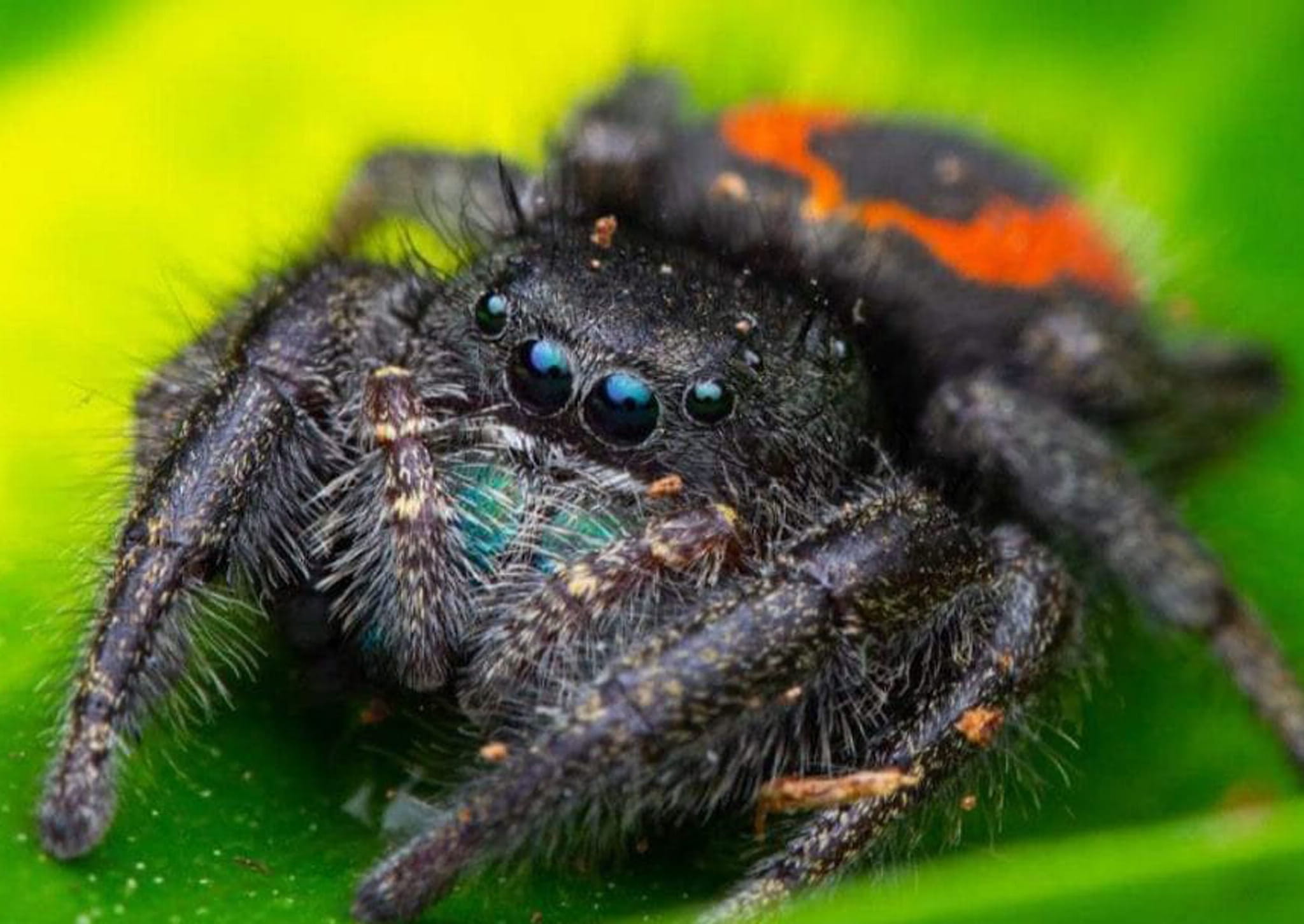
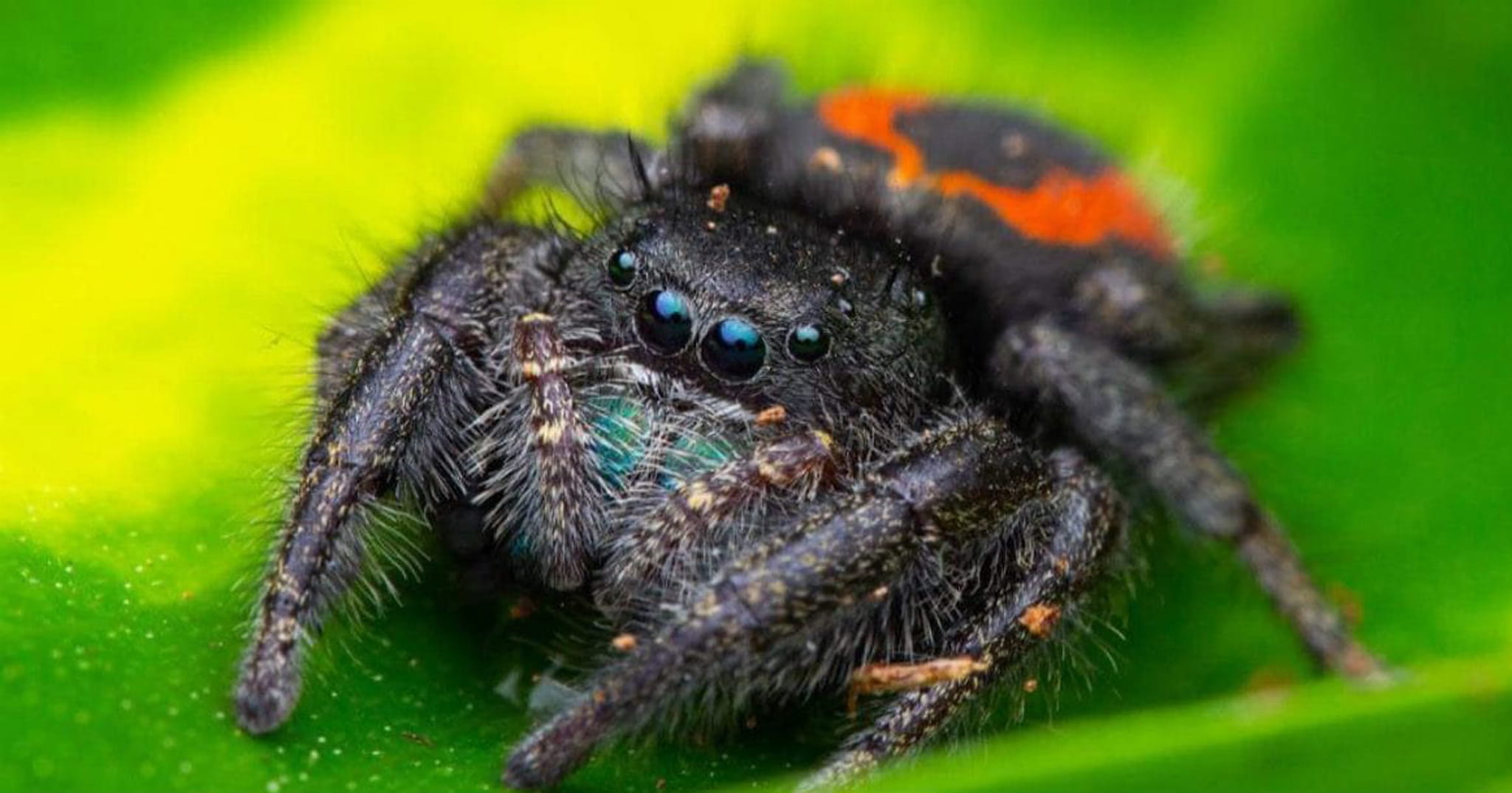
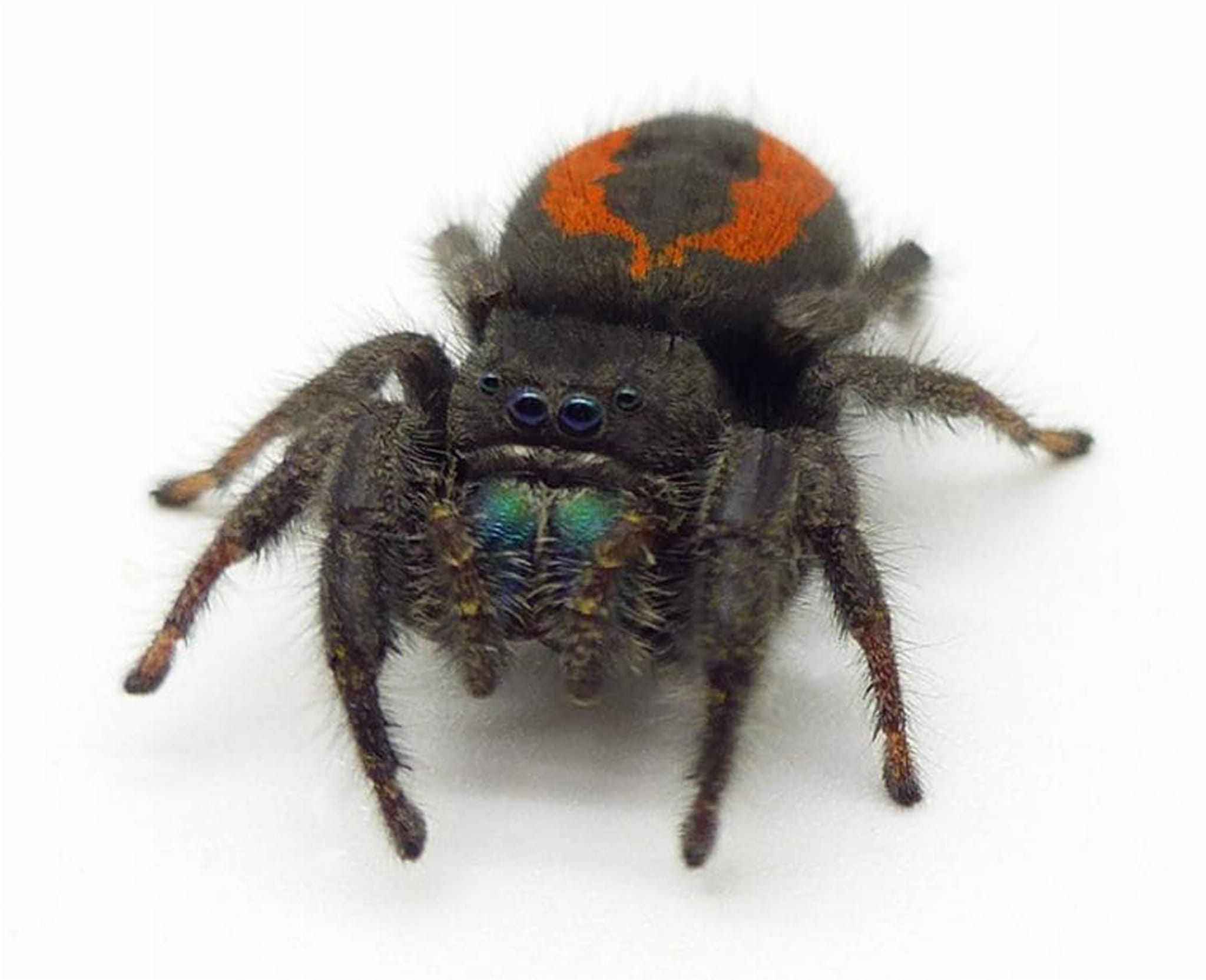
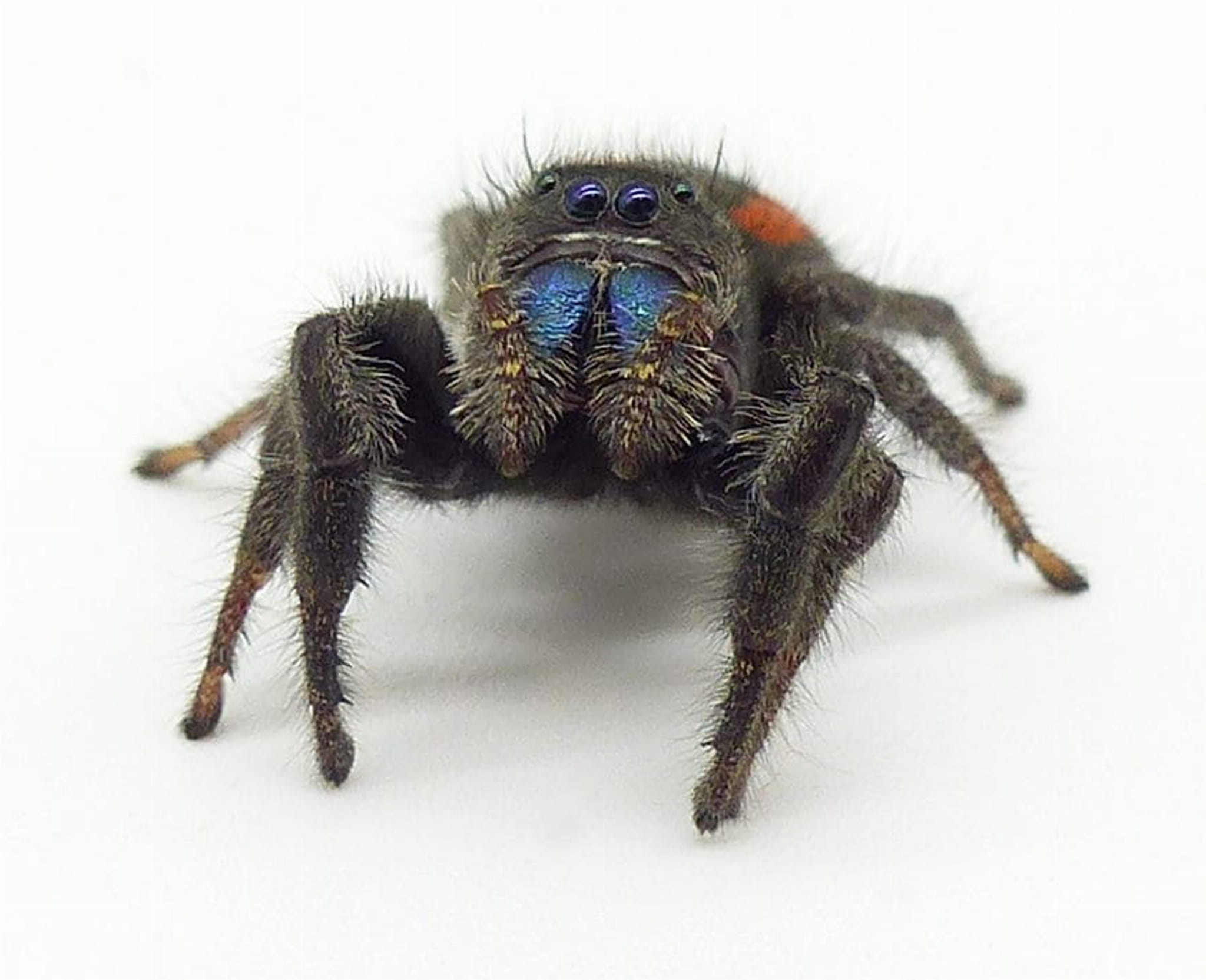
Phidippus ardens carries an opisthosoma the colour of a live coal — a deep orange-red that, caught in full light, seems to glow from within. The species name means "burning," and the animal earns it. This is a jumping spider built for the eye: four oversized anterior eyes dominate the prosoma at a proportion that borders on the architectural, and they deliver the moment that defines the species — the unmistakable sense that something is actively looking back at you. At only 10–12 mm of body length, it has no business commanding attention the way it does, and yet it commands it completely.
It comes from the dry country of Mexico and the southern United States — scrubland, cactus flats, sun-warmed rocks that hold their heat well past dusk. Like the rest of the genus Phidippus, it is diurnal and driven by sight rather than silk. It builds no prey-capture web; instead it patrols, freezes, calculates, and launches itself across distances many times its own body length, paying out a silk safety line as it goes. Toward a keeper it reads as curious rather than nervous, tracking a hand that moves behind the glass and approaching the panel when food appears. The venom is mild, a bite comparable to a faint pinch. This is about as close as the invertebrate world comes to a spider with genuine personality.
A vertical enclosure with a modest footprint suits it well — 15×15×20 cm is ample. A piece of cork bark, some artificial foliage, or a cork tube set in the upper section gives both a climbing surface and a site for the silken retreat and egg sac. Two to three centimetres of coconut fibre underfoot, kept lightly moist; a regular misting of the walls is enough, since the spider drinks droplets directly. Excess moisture is the chief husbandry risk with jumping spiders, so always err dry rather than damp. Room temperature is fine. Offer prey no larger than half the spider's body length.
Phidippus ardens makes an excellent first step into the family Salticidae — small, undemanding, harmless, and conspicuously busy throughout the day. This is the kind of animal that ends up on a desk within arm's reach rather than tucked away on a shelf, watched daily because it watches you back. Most keepers who start here return for more Salticidae within months. What it really opens is a different way of observing arachnids altogether: a predator that hunts with its eyes, a discipline of attention that runs alongside tarantula keeping and, given time, proves every bit as absorbing.