






 Choose language
- Spiders
- ANIMALS
- Arachnids (Arachnida)
- Spiders (Araneae)
- Tarantulas (Mygalomorphae)
- Psednocnemis spp.
- Diplura spp.
- Spinosatibiapalpus spp.
- Acanthogonatus spp.
- Acanthoscurria spp.
- Amazonius spp.
- Ami spp.
- Anquasha spp.
- Aphonopelma spp.
- Aspinochilus spp.
- Augacephalus spp.
- Avicularia spp.
- Birupes spp.
- Bonnetina spp.
- Brachypelma spp.
- Bumba spp.
- Caribena spp.
- Ceratogyrus spp.
- Chaetopelma spp.
- Chilobrachys spp.
- Chromatopelma spp.
- Cilantica spp.
- Citharacanthus spp.
- Coremiocnemis spp.
- Cyclosternum spp.
- Cyriocosmus spp.
- Cyriopagopus spp.
- Davus spp.
- Dolichothele spp.
- Encyocratella spp.
- Ephebopus spp.
- Euathlus spp.
- Eucratoscelus spp.
- Eupalaestrus spp.
- Fufius spp.
- Gorgyrella spp.
- Grammostola spp.
- Guyruita spp.
- Hapalopus spp.
- Haploclastus spp.
- Haplocosmia spp.
- Haplopelma spp.
- Harpactira spp.
- Heteroscodra spp.
- Heterothele spp.
- Holothele spp.
- Homoeomma spp.
- Hysterocrates spp.
- Idiothele spp.
- Iridopelma spp.
- Kochiana spp.
- Lampropelma spp.
- Lasiocyano spp.
- Lasiodora spp.
- Lasiodorides spp.
- Linothele spp.
- Lyrognathus spp.
- Megaphobema spp.
- Monocentropus spp.
- Neischnocolus spp.
- Neoholothele spp.
- Neostenotarsus spp.
- Nhandu spp.
- Omothymus spp.
- Ornithoctoninae spp.
- Ornithoctonus spp.
- Pamphobeteus spp.
- Pelinobius spp.
- Phormictopus spp.
- Phormingochilus spp.
- Phrixotrichus spp.
- Poecilotheria spp.
- Psalmopoeus spp.
- Pseudhapalopus spp.
- Pseudoclamoris spp.
- Pterinochilus spp.
- Selenocosmia spp.
- Sericopelma spp.
- Tapinauchenius spp.
- Taksinus spp.
- Tapinauchenius spp.
- Theraphosa spp.
- Theraphosidae spp.
- Theraphosinae spp.
- Thrigmopoeus spp.
- Thrixopelma spp.
- Tliltocatl spp.
- Typhochlaena spp.
- Urupelma spp.
- Vitalius spp.
- Xenesthis spp.
- Ybyrapora spp.
- True Spiders (Araneomorphae)
- Velvet Spiders (Eresidae)
- Macrothele spp.
- Liphistius spp.
- Tarantulas (Mygalomorphae)
- Scorpions (Scorpiones)
- Spiders (Araneae)
- Insects - for feeding
- Arachnids (Arachnida)
- Scorpions
- Accessories
- Books
- Centipede
- Millipede
- Cockroaches
- New products
- Products on sale
Currency

€32.00
Regular price:
€40.00

€42.50
Regular price:
€50.00

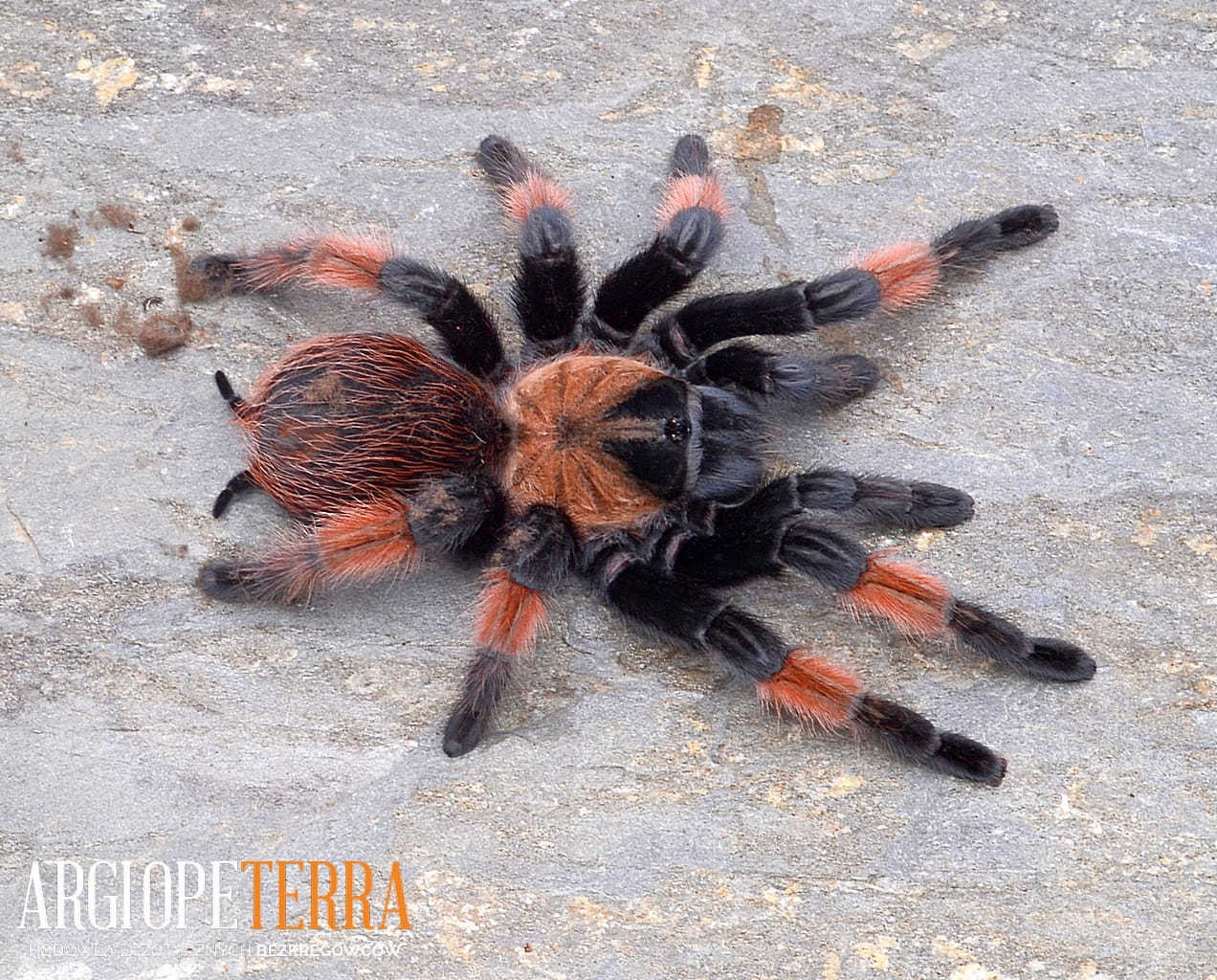
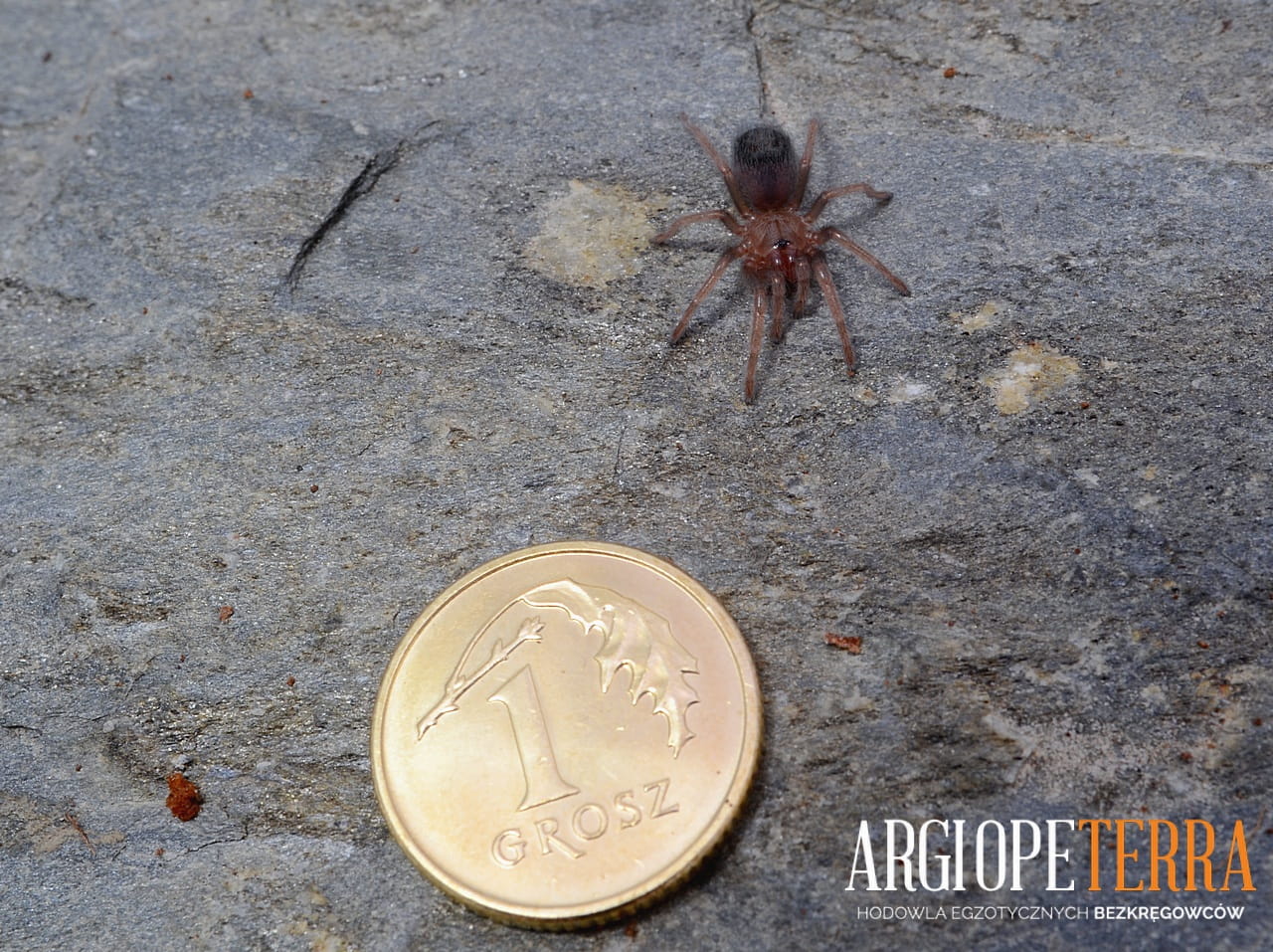
Species: Brachypelma emilia
Common name: Mexican Red Leg
Native range: Mexico (Sinaloa, Nayarit, Durango)
Temperature: 25–27°C with a 2–3°C drop at night; room temperature also works well
Humidity: 50–60%
Adult size: Females reach 6–7 cm in body length
Lifestyle: Terrestrial
Speed: Slow
Venom potency: Mild
Temperament: Calm
Recommended for: Suitable for all keepers, including beginners
Notes: Like all members of the genus Brachypelma, this species is CITES Appendix II listed. Every Brachypelma purchased from us is accompanied by a captive-bred certificate in addition to your proof of purchase.
Brachypelma emilia
product unavailable
Description
Brachypelma emilia carries one of the most recognisable markings in the entire hobby: a sharp black triangle stamped across a warm orange-red carapace, framed by legs the colour of autumn rust. It reads less like camouflage and more like a signature — a pattern so consistent that no other tarantula occupies quite the same visual territory. This is what a field guide looks like when it learns to move.
The species hails from the western coast of Mexico — Sinaloa, Nayarit and Durango — where dry forest and scrubland have shaped an animal built for patience. Even among the Brachypelma, a genus already famous for placid temperaments, Brachypelma emilia sits at the quiet end of the spectrum. It moves deliberately, tolerates proximity without alarm, and rarely flicks urticating setae. The fangs, across years of observation, almost never come into defensive play. Growth is slow, but that slowness plays out over a lifespan long enough to outlast careers, flats and entire phases of the hobby.
Housing is unpretentious: 5–7 cm of coco fibre, a hide, a water dish, and a keeper willing to leave well enough alone. Keep most of the substrate dry, with one corner lightly moistened from time to time. Room temperature suits it. Appropriately sized prey at measured intervals matches a metabolism in no particular hurry.
Brachypelma emilia is often recommended as a first tarantula, but calling it only that undersells the relationship on offer. Keepers who acquired one in their early days often find the same black triangle and the same unhurried gait still on the shelf a decade later, long after flashier species have come and gone. CITES Appendix II listed and supplied with captive-bred documentation. Some animals earn their place in a collection once; Brachypelma emilia tends to earn it again every time you walk past the enclosure.