






 Choose language
- Spiders
- ANIMALS
- Arachnids (Arachnida)
- Spiders (Araneae)
- Tarantulas (Mygalomorphae)
- Psednocnemis spp.
- Diplura spp.
- Spinosatibiapalpus spp.
- Acanthogonatus spp.
- Acanthoscurria spp.
- Amazonius spp.
- Ami spp.
- Anquasha spp.
- Aphonopelma spp.
- Aspinochilus spp.
- Augacephalus spp.
- Avicularia spp.
- Birupes spp.
- Bonnetina spp.
- Brachypelma spp.
- Bumba spp.
- Caribena spp.
- Ceratogyrus spp.
- Chaetopelma spp.
- Chilobrachys spp.
- Chromatopelma spp.
- Cilantica spp.
- Citharacanthus spp.
- Coremiocnemis spp.
- Cyclosternum spp.
- Cyriocosmus spp.
- Cyriopagopus spp.
- Davus spp.
- Dolichothele spp.
- Encyocratella spp.
- Ephebopus spp.
- Euathlus spp.
- Eucratoscelus spp.
- Eupalaestrus spp.
- Fufius spp.
- Gorgyrella spp.
- Grammostola spp.
- Guyruita spp.
- Hapalopus spp.
- Haploclastus spp.
- Haplocosmia spp.
- Haplopelma spp.
- Harpactira spp.
- Heteroscodra spp.
- Heterothele spp.
- Holothele spp.
- Homoeomma spp.
- Hysterocrates spp.
- Idiothele spp.
- Iridopelma spp.
- Kochiana spp.
- Lampropelma spp.
- Lasiocyano spp.
- Lasiodora spp.
- Lasiodorides spp.
- Linothele spp.
- Lyrognathus spp.
- Megaphobema spp.
- Monocentropus spp.
- Neischnocolus spp.
- Neoholothele spp.
- Neostenotarsus spp.
- Nhandu spp.
- Omothymus spp.
- Ornithoctoninae spp.
- Ornithoctonus spp.
- Pamphobeteus spp.
- Pelinobius spp.
- Phormictopus spp.
- Phormingochilus spp.
- Phrixotrichus spp.
- Poecilotheria spp.
- Psalmopoeus spp.
- Pseudhapalopus spp.
- Pseudoclamoris spp.
- Pterinochilus spp.
- Selenocosmia spp.
- Sericopelma spp.
- Tapinauchenius spp.
- Taksinus spp.
- Tapinauchenius spp.
- Theraphosa spp.
- Theraphosidae spp.
- Theraphosinae spp.
- Thrigmopoeus spp.
- Thrixopelma spp.
- Tliltocatl spp.
- Typhochlaena spp.
- Urupelma spp.
- Vitalius spp.
- Xenesthis spp.
- Ybyrapora spp.
- True Spiders (Araneomorphae)
- Velvet Spiders (Eresidae)
- Macrothele spp.
- Liphistius spp.
- Tarantulas (Mygalomorphae)
- Scorpions (Scorpiones)
- Spiders (Araneae)
- Insects - for feeding
- Arachnids (Arachnida)
- Scorpions
- Accessories
- Books
- Centipede
- Millipede
- Cockroaches
- New products
- Products on sale
Currency

€32.00
Regular price:
€40.00

€42.50
Regular price:
€50.00
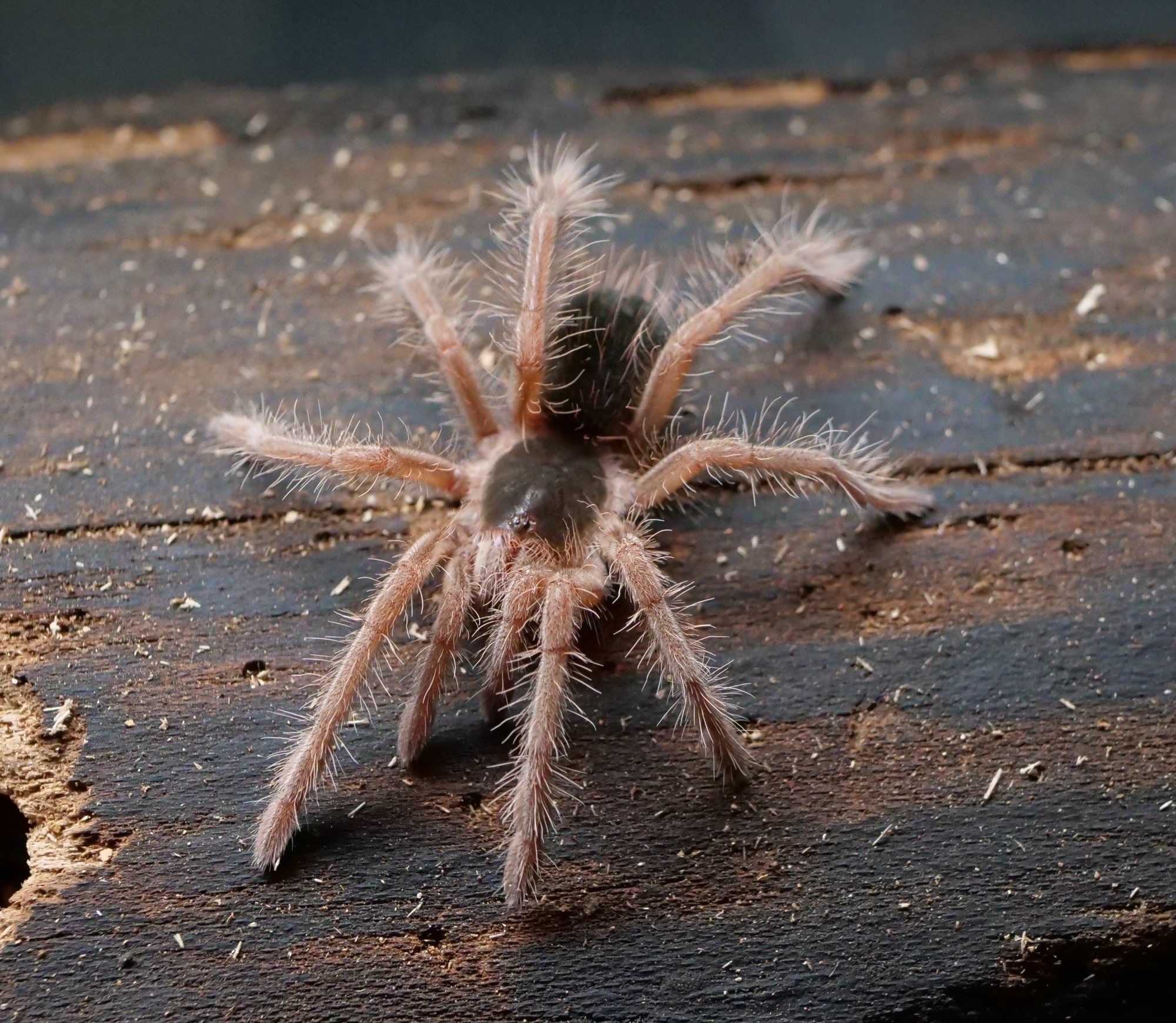
Species: Megaphobema sp. white
Common name: -
Native range: South America (Colombia)
Temperature: 24-27°C with a 2-3°C drop at night; room temperature also suits it well
Humidity: 70-75%
Adult size: Large terrestrial species; adult size of this species not yet documented
Lifestyle: Terrestrial
Speed: Moderate
Venom potency: Mild
Temperament: Moderate
Recommended for: Intermediate keepers
Notes: Not listed under CITES, no captive-breeding certificate required
Megaphobema sp. white
product unavailable
Description
For most keepers the genus Megaphobema means Megaphobema robustum, the heavy-set terrestrial tarantula from Colombia. Megaphobema sp. white is a far rarer species, still awaiting formal description. Hobby sources place it in Colombia, although no exact locality has been published yet. The name "white" refers to the pale markings on the legs, which stand out sharply against the dark carapace and femora when the light catches them.
Megaphobema are spiders with some attitude, though not nervous ones. They spend most of their time in or at the mouth of their hide, and when disturbed they may adopt a defensive posture and flick urticating hairs. Megaphobema robustum is also known for vigorous kicking with its spiny hind legs, so it pays to learn your own spider rather than assume sp. white will behave identically. This is a display animal, and calm, predictable maintenance keeps things uneventful.
An L2/3 spiderling needs only a small container with a few centimetres of coconut fibre and a small hide. Keep the substrate slightly damp and never fully dry, misting one section regularly so there are droplets on the walls to drink from; a water dish can wait until it is larger. Good ventilation matters, as damp plus stagnant air invites mould. Room temperature is fine, ideally 24-27°C. Feed crickets or roaches sized to the spider.
Megaphobema sp. white suits a keeper with a few tarantulas behind them who is looking for something genuinely scarce. It is rarely available, and watching its appearance develop from moult to moult offers a satisfaction no common species can match. It is an investment in patience and in a collection that stands apart.