






 Choose language
- Spiders
- ANIMALS
- Arachnids (Arachnida)
- Spiders (Araneae)
- Tarantulas (Mygalomorphae)
- Psednocnemis spp.
- Diplura spp.
- Spinosatibiapalpus spp.
- Acanthogonatus spp.
- Acanthoscurria spp.
- Amazonius spp.
- Ami spp.
- Anquasha spp.
- Aphonopelma spp.
- Aspinochilus spp.
- Augacephalus spp.
- Avicularia spp.
- Birupes spp.
- Bonnetina spp.
- Brachypelma spp.
- Bumba spp.
- Caribena spp.
- Ceratogyrus spp.
- Chaetopelma spp.
- Chilobrachys spp.
- Chromatopelma spp.
- Cilantica spp.
- Citharacanthus spp.
- Coremiocnemis spp.
- Cyclosternum spp.
- Cyriocosmus spp.
- Cyriopagopus spp.
- Davus spp.
- Dolichothele spp.
- Encyocratella spp.
- Ephebopus spp.
- Euathlus spp.
- Eucratoscelus spp.
- Eupalaestrus spp.
- Fufius spp.
- Gorgyrella spp.
- Grammostola spp.
- Guyruita spp.
- Hapalopus spp.
- Haploclastus spp.
- Haplocosmia spp.
- Haplopelma spp.
- Harpactira spp.
- Heteroscodra spp.
- Heterothele spp.
- Holothele spp.
- Homoeomma spp.
- Hysterocrates spp.
- Idiothele spp.
- Iridopelma spp.
- Kochiana spp.
- Lampropelma spp.
- Lasiocyano spp.
- Lasiodora spp.
- Lasiodorides spp.
- Linothele spp.
- Lyrognathus spp.
- Megaphobema spp.
- Monocentropus spp.
- Neischnocolus spp.
- Neoholothele spp.
- Neostenotarsus spp.
- Nhandu spp.
- Omothymus spp.
- Ornithoctoninae spp.
- Ornithoctonus spp.
- Pamphobeteus spp.
- Pelinobius spp.
- Phormictopus spp.
- Phormingochilus spp.
- Phrixotrichus spp.
- Poecilotheria spp.
- Psalmopoeus spp.
- Pseudhapalopus spp.
- Pseudoclamoris spp.
- Pterinochilus spp.
- Selenocosmia spp.
- Sericopelma spp.
- Tapinauchenius spp.
- Taksinus spp.
- Tapinauchenius spp.
- Theraphosa spp.
- Theraphosidae spp.
- Theraphosinae spp.
- Thrigmopoeus spp.
- Thrixopelma spp.
- Tliltocatl spp.
- Typhochlaena spp.
- Urupelma spp.
- Vitalius spp.
- Xenesthis spp.
- Ybyrapora spp.
- True Spiders (Araneomorphae)
- Velvet Spiders (Eresidae)
- Macrothele spp.
- Liphistius spp.
- Tarantulas (Mygalomorphae)
- Scorpions (Scorpiones)
- Spiders (Araneae)
- Insects - for feeding
- Arachnids (Arachnida)
- Scorpions
- Accessories
- Books
- Centipede
- Millipede
- Cockroaches
- New products
- Products on sale
Currency

€32.00
Regular price:
€40.00

€42.50
Regular price:
€50.00

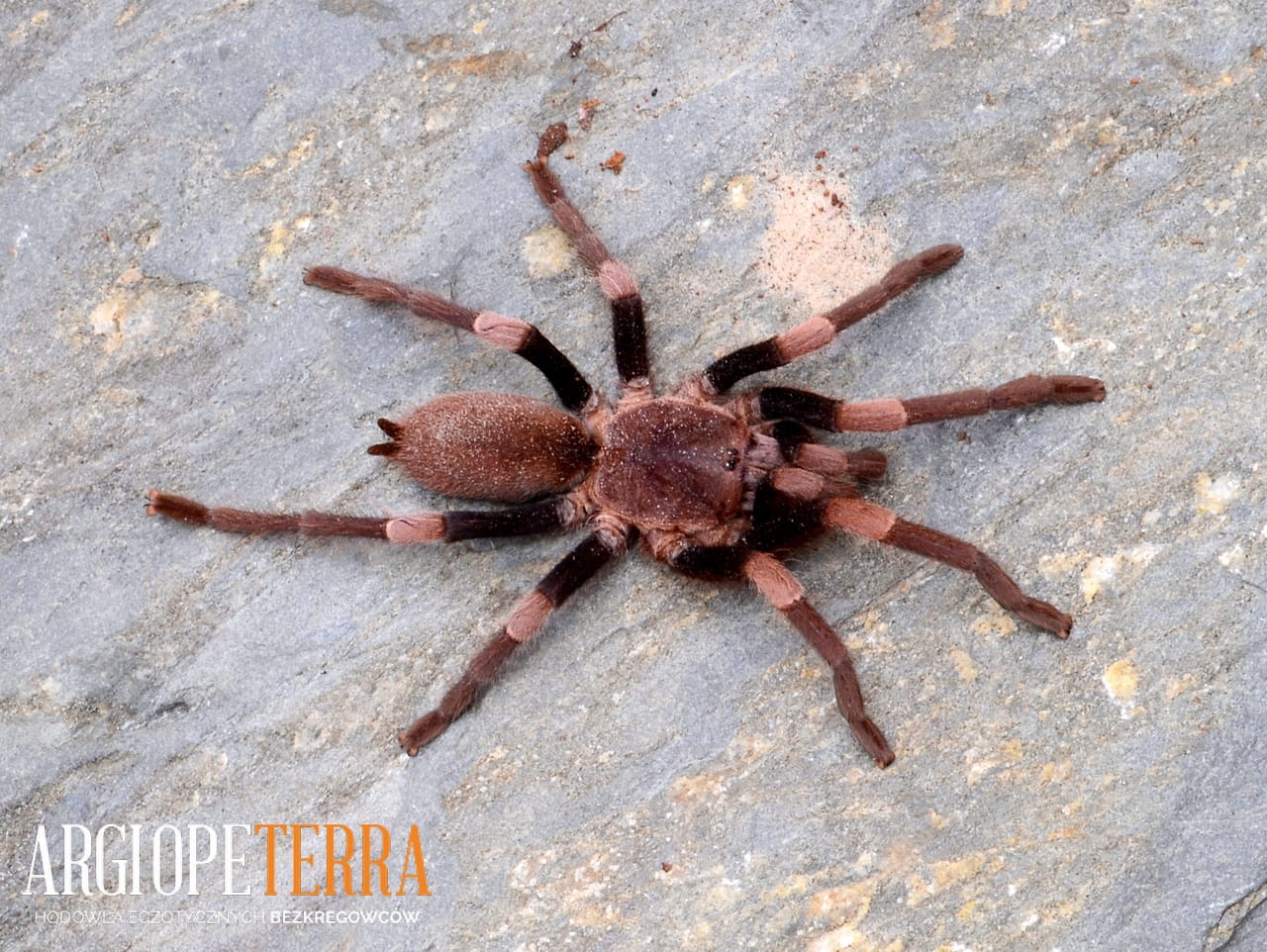
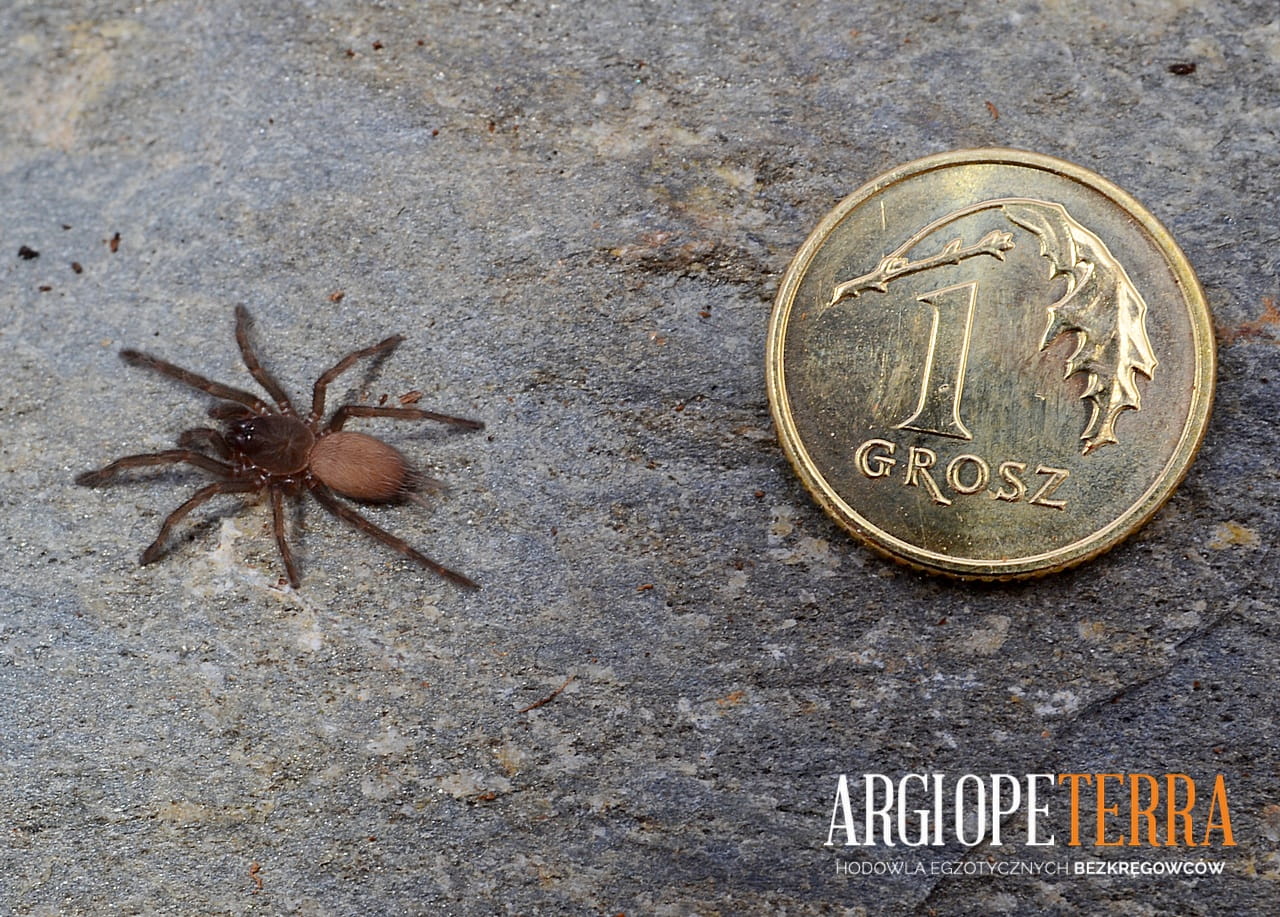
Species: Haplocosmia himalayana
Common name: Himalayan Earth Tiger
Native range: Nepal, northern India (Himalayan region)
Temperature: 20–25°C
Humidity: 65–75%
Adult size: up to 5 cm BL
Lifestyle: fossorial
Speed: moderate
Venom potency: moderate
Temperament: calm (for an Asian species)
Recommended for: advanced keepers
First spider: No
Notes: A Himalayan altitude specialist. Prefers distinctly cooler temperatures than most Asian theraphosids — avoid summer heat.
Haplocosmia himalayana
product unavailable
Description
Haplocosmia himalayana is the tarantula that lives where tarantulas aren't supposed to — the misty mid-elevation forests of Nepal and northern India, where tropical lowland gives way to the cool, damp slopes of the Himalayas. Most theraphosids have never had to negotiate a cold night. This one built its entire life around them, adapted over countless generations to conditions that would push the majority of the family into lethargy. The result is a darkly coloured, compactly built fossorial spider that carries its mountain homeland in its physiology: a quiet resilience to temperatures other keepers treat as an emergency.
In the enclosure it is composed even by the standards of Asian theraphosids, which are not a group known for patience. Haplocosmia himalayana spends most of its time below the surface, engineering burrows with methodical purpose. Threat postures are rare, the appetite is moderate, and feeding is deliberate rather than frantic — the pace of a metabolism tuned to cooler air.
A minimum of 10 cm of substrate is the foundation of a successful setup — a slightly damp mix of coconut fibre and soil that lets the spider burrow fully and maintain the microclimate it prefers. A water dish and a hide complete the enclosure. Light, regular misting keeps the substrate from drying out, though this species does not demand the high humidity many lowland theraphosids require. The temperature range of 20–25°C should be maintained consistently; this is one of the few species where keeping the enclosure cool is an active husbandry goal rather than a side note, and prolonged heat should be avoided.
Haplocosmia himalayana belongs in collections built around ecological curiosity — the outliers, the altitude specialists, the species that quietly redraw your idea of what a tarantula's world can look like. Keepers who acquire one rarely let it go. Years later, every check on the enclosure still carries the same small reminder: somewhere on a Himalayan slope, under a cold sky, a spider exactly like this one is doing exactly the same thing.