






 Choose language
- Spiders
- ANIMALS
- Arachnids (Arachnida)
- Spiders (Araneae)
- Tarantulas (Mygalomorphae)
- Psednocnemis spp.
- Diplura spp.
- Spinosatibiapalpus spp.
- Acanthogonatus spp.
- Acanthoscurria spp.
- Amazonius spp.
- Ami spp.
- Anquasha spp.
- Aphonopelma spp.
- Aspinochilus spp.
- Augacephalus spp.
- Avicularia spp.
- Birupes spp.
- Bonnetina spp.
- Brachypelma spp.
- Bumba spp.
- Caribena spp.
- Ceratogyrus spp.
- Chaetopelma spp.
- Chilobrachys spp.
- Chromatopelma spp.
- Cilantica spp.
- Citharacanthus spp.
- Coremiocnemis spp.
- Cyclosternum spp.
- Cyriocosmus spp.
- Cyriopagopus spp.
- Davus spp.
- Dolichothele spp.
- Encyocratella spp.
- Ephebopus spp.
- Euathlus spp.
- Eucratoscelus spp.
- Eupalaestrus spp.
- Fufius spp.
- Gorgyrella spp.
- Grammostola spp.
- Guyruita spp.
- Hapalopus spp.
- Haploclastus spp.
- Haplocosmia spp.
- Haplopelma spp.
- Harpactira spp.
- Heteroscodra spp.
- Heterothele spp.
- Holothele spp.
- Homoeomma spp.
- Hysterocrates spp.
- Idiothele spp.
- Iridopelma spp.
- Kochiana spp.
- Lampropelma spp.
- Lasiocyano spp.
- Lasiodora spp.
- Lasiodorides spp.
- Linothele spp.
- Lyrognathus spp.
- Megaphobema spp.
- Monocentropus spp.
- Neischnocolus spp.
- Neoholothele spp.
- Neostenotarsus spp.
- Nhandu spp.
- Omothymus spp.
- Ornithoctoninae spp.
- Ornithoctonus spp.
- Pamphobeteus spp.
- Pelinobius spp.
- Phormictopus spp.
- Phormingochilus spp.
- Phrixotrichus spp.
- Poecilotheria spp.
- Psalmopoeus spp.
- Pseudhapalopus spp.
- Pseudoclamoris spp.
- Pterinochilus spp.
- Selenocosmia spp.
- Sericopelma spp.
- Tapinauchenius spp.
- Taksinus spp.
- Tapinauchenius spp.
- Theraphosa spp.
- Theraphosidae spp.
- Theraphosinae spp.
- Thrigmopoeus spp.
- Thrixopelma spp.
- Tliltocatl spp.
- Typhochlaena spp.
- Urupelma spp.
- Vitalius spp.
- Xenesthis spp.
- Ybyrapora spp.
- True Spiders (Araneomorphae)
- Velvet Spiders (Eresidae)
- Macrothele spp.
- Liphistius spp.
- Tarantulas (Mygalomorphae)
- Scorpions (Scorpiones)
- Spiders (Araneae)
- Insects - for feeding
- Arachnids (Arachnida)
- Scorpions
- Accessories
- Books
- Centipede
- Millipede
- Cockroaches
- New products
- Products on sale
Currency

€32.00
Regular price:
€40.00

€42.50
Regular price:
€50.00

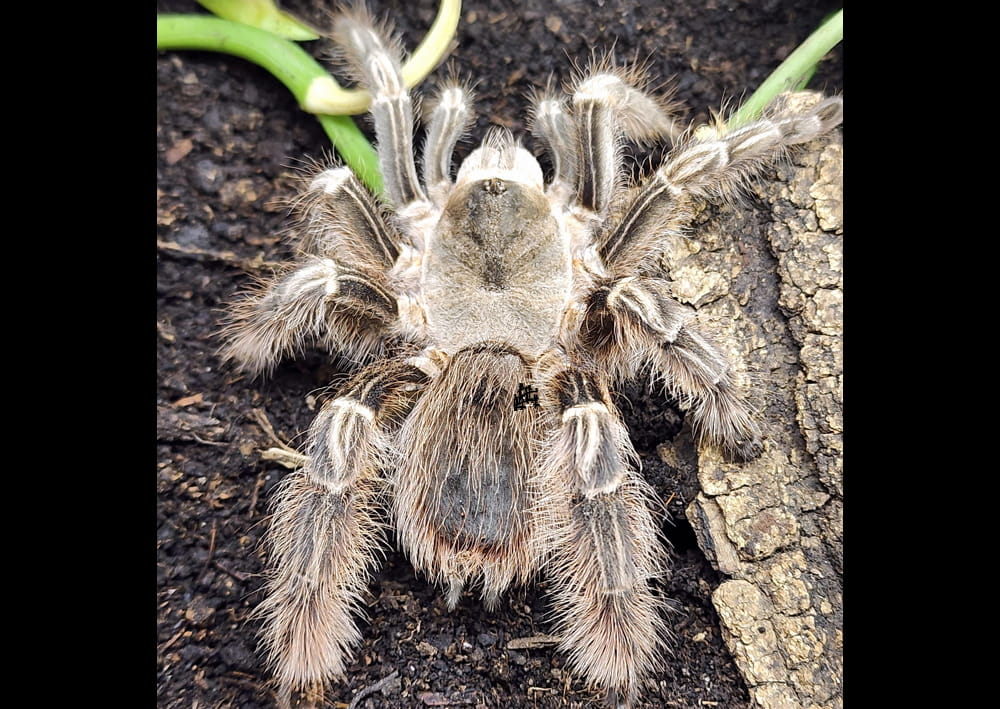

Species: Eupalaestrus larae
Common name: -
Native range: Brazil
Temperature: 24–28°C with a 2–3°C drop at night; room temperature is also well tolerated
Humidity: 75–85%
Adult size: Females reach up to 6 cm body length
Lifestyle: Terrestrial
Speed: Slow
Venom potency: Mild
Temperament: Calm
Recommended for: All keepers, including beginners
Notes: Not CITES listed; no captive-bred documentation required
Eupalaestrus larae
product unavailable
Description
Eupalaestrus larae is the quieter cousin in a genus best known for the affable Eupalaestrus campestratus. Where campestratus catches the eye with bold contrast, larae trades in restraint — a deep, subdued palette with faint russet accents along the opisthosoma and walking legs. Spend a few minutes watching one and the appeal clicks: this is a spider that rewards close attention rather than demanding it.
Temperament is what makes the genus a hobby favourite, and Eupalaestrus larae upholds the family reputation. It is a terrestrial species with little interest in threat postures, content to potter about its enclosure on its own unhurried schedule. Appetite is moderate, growth is slow, and the keeper sets the pace of the relationship as much as the spider does — which, for many of us, is precisely the point.
Husbandry asks very little. An enclosure with 5–7 cm of coconut fibre substrate, a hide and a water dish covers the essentials. Moderate humidity, topped up with the occasional misting, is plenty, and room temperature suits this species without supplementary heating. Once the setup is dialled in, it largely looks after itself.
Eupalaestrus larae is for the keeper who has fallen for the genus and wants to dig past the obvious choice — and for anyone after a calm, low-maintenance terrestrial they can keep watching for a decade or more. Lesser known doesn't mean lesser. It means there is still something to discover, and this spider hands you that discovery quietly, on its own terms.