






 Choose language
- Spiders
- ANIMALS
- Arachnids (Arachnida)
- Spiders (Araneae)
- Tarantulas (Mygalomorphae)
- Psednocnemis spp.
- Diplura spp.
- Spinosatibiapalpus spp.
- Acanthogonatus spp.
- Acanthoscurria spp.
- Amazonius spp.
- Ami spp.
- Anquasha spp.
- Aphonopelma spp.
- Aspinochilus spp.
- Augacephalus spp.
- Avicularia spp.
- Birupes spp.
- Bonnetina spp.
- Brachypelma spp.
- Bumba spp.
- Caribena spp.
- Ceratogyrus spp.
- Chaetopelma spp.
- Chilobrachys spp.
- Chromatopelma spp.
- Cilantica spp.
- Citharacanthus spp.
- Coremiocnemis spp.
- Cyclosternum spp.
- Cyriocosmus spp.
- Cyriopagopus spp.
- Davus spp.
- Dolichothele spp.
- Encyocratella spp.
- Ephebopus spp.
- Euathlus spp.
- Eucratoscelus spp.
- Eupalaestrus spp.
- Fufius spp.
- Gorgyrella spp.
- Grammostola spp.
- Guyruita spp.
- Hapalopus spp.
- Haploclastus spp.
- Haplocosmia spp.
- Haplopelma spp.
- Harpactira spp.
- Heteroscodra spp.
- Heterothele spp.
- Holothele spp.
- Homoeomma spp.
- Hysterocrates spp.
- Idiothele spp.
- Iridopelma spp.
- Kochiana spp.
- Lampropelma spp.
- Lasiocyano spp.
- Lasiodora spp.
- Lasiodorides spp.
- Linothele spp.
- Lyrognathus spp.
- Megaphobema spp.
- Monocentropus spp.
- Neischnocolus spp.
- Neoholothele spp.
- Neostenotarsus spp.
- Nhandu spp.
- Omothymus spp.
- Ornithoctoninae spp.
- Ornithoctonus spp.
- Pamphobeteus spp.
- Pelinobius spp.
- Phormictopus spp.
- Phormingochilus spp.
- Phrixotrichus spp.
- Poecilotheria spp.
- Psalmopoeus spp.
- Pseudhapalopus spp.
- Pseudoclamoris spp.
- Pterinochilus spp.
- Selenocosmia spp.
- Sericopelma spp.
- Tapinauchenius spp.
- Taksinus spp.
- Tapinauchenius spp.
- Theraphosa spp.
- Theraphosidae spp.
- Theraphosinae spp.
- Thrigmopoeus spp.
- Thrixopelma spp.
- Tliltocatl spp.
- Typhochlaena spp.
- Urupelma spp.
- Vitalius spp.
- Xenesthis spp.
- Ybyrapora spp.
- True Spiders (Araneomorphae)
- Velvet Spiders (Eresidae)
- Macrothele spp.
- Liphistius spp.
- Tarantulas (Mygalomorphae)
- Scorpions (Scorpiones)
- Spiders (Araneae)
- Insects - for feeding
- Arachnids (Arachnida)
- Scorpions
- Accessories
- Books
- Centipede
- Millipede
- Cockroaches
- New products
- Products on sale
Currency

€32.00
Regular price:
€40.00

€42.50
Regular price:
€50.00

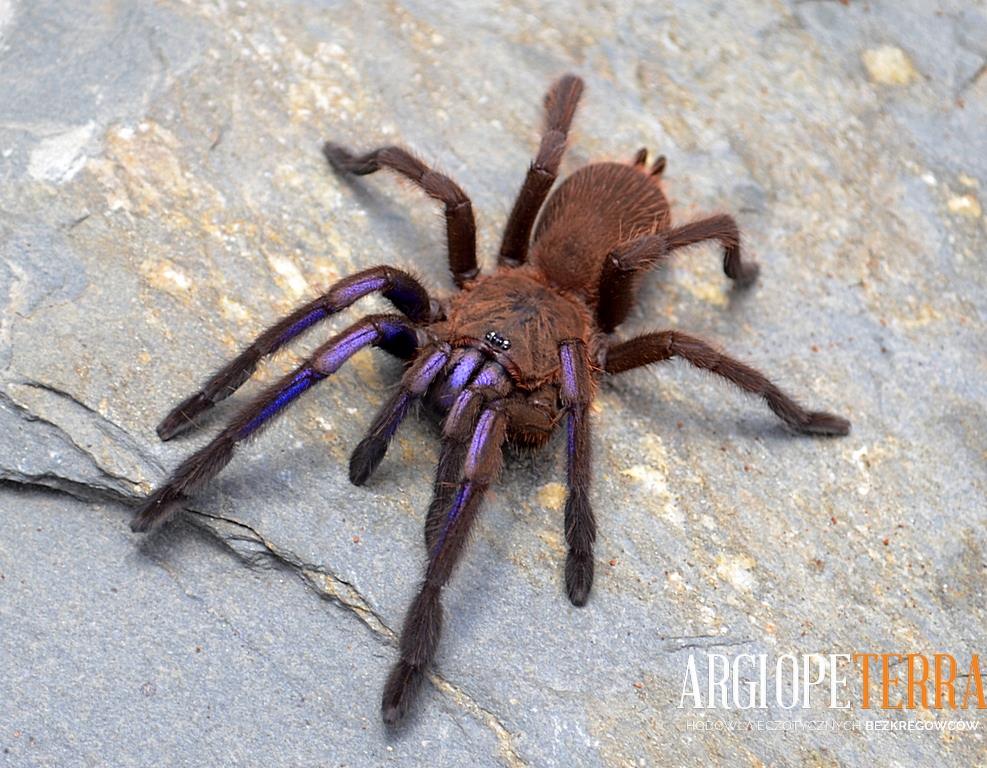
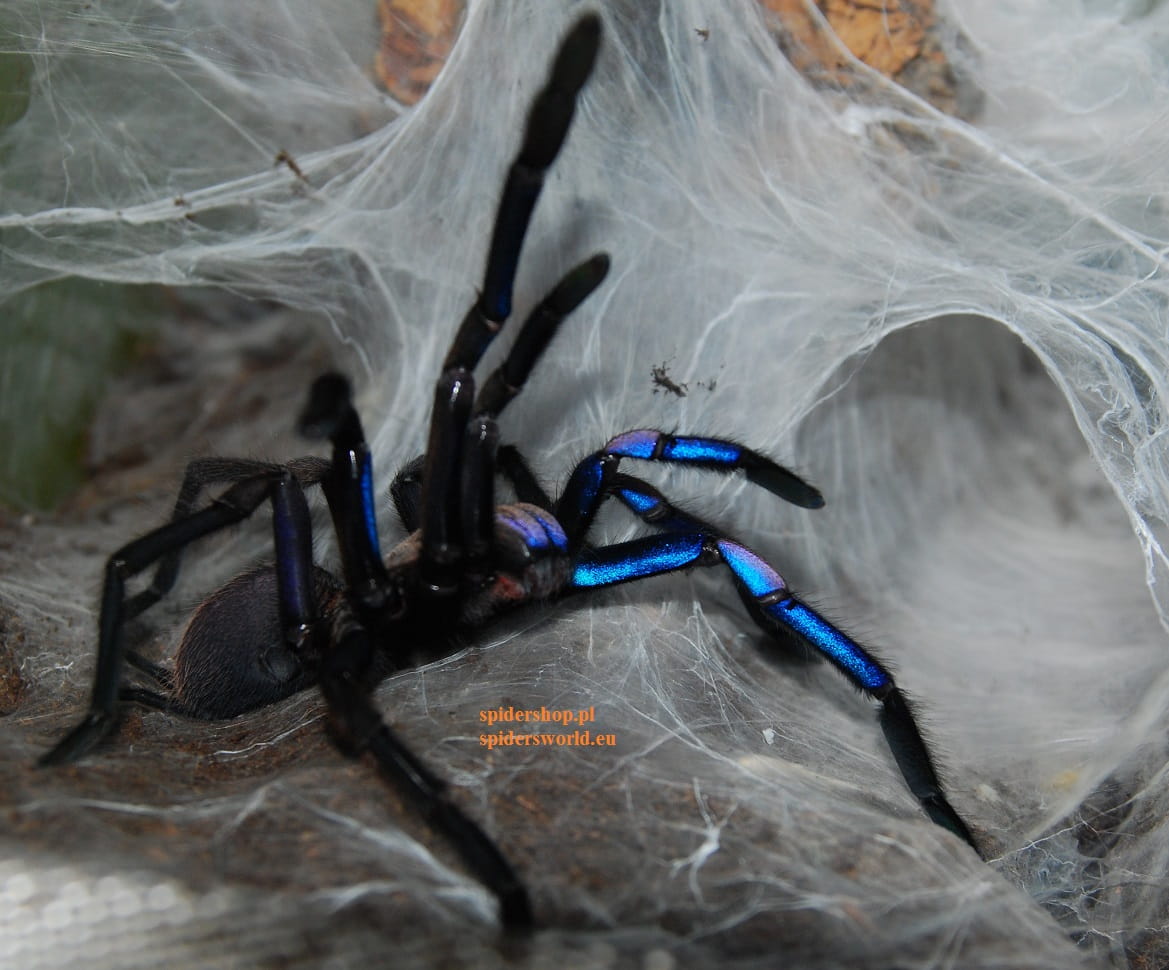
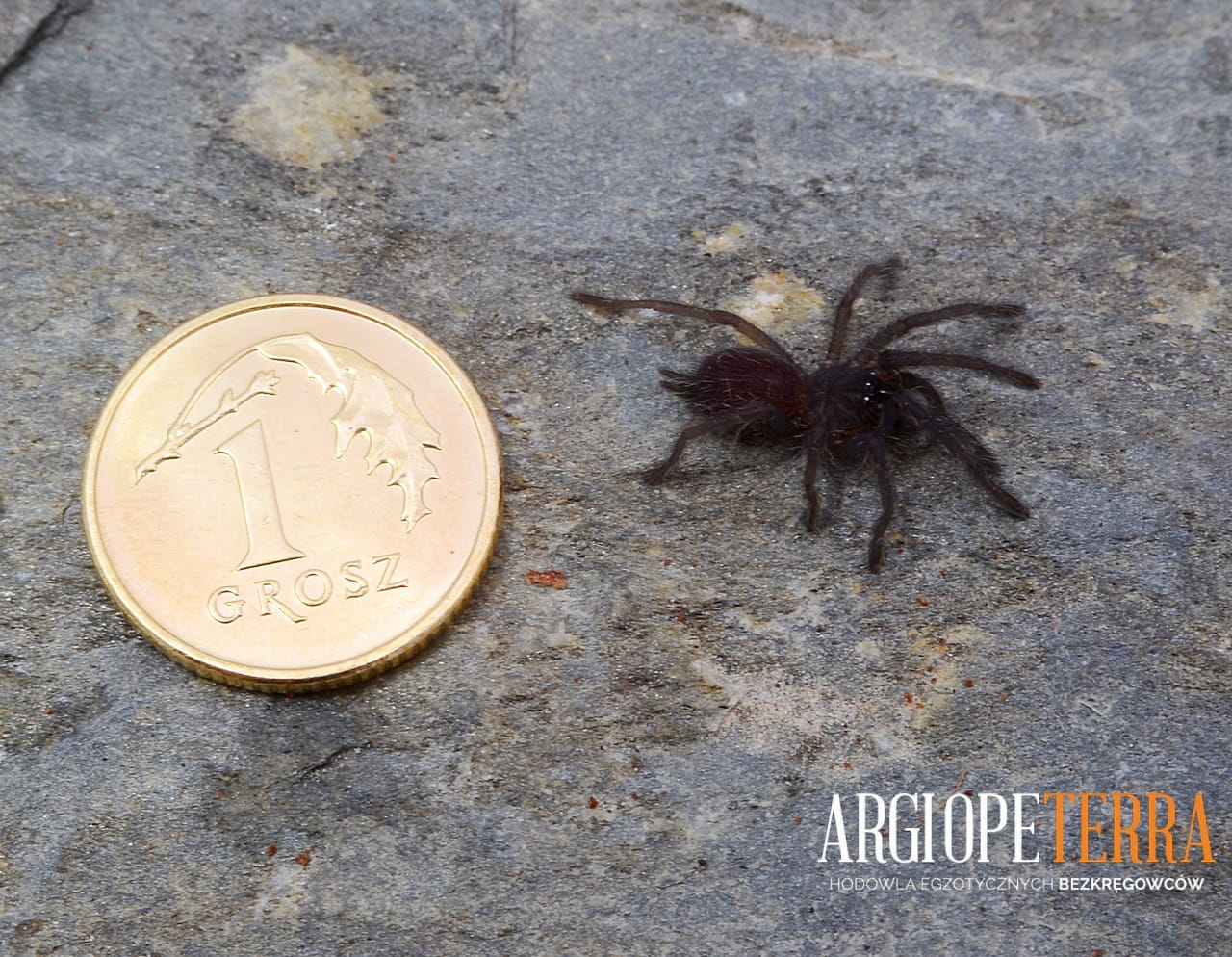
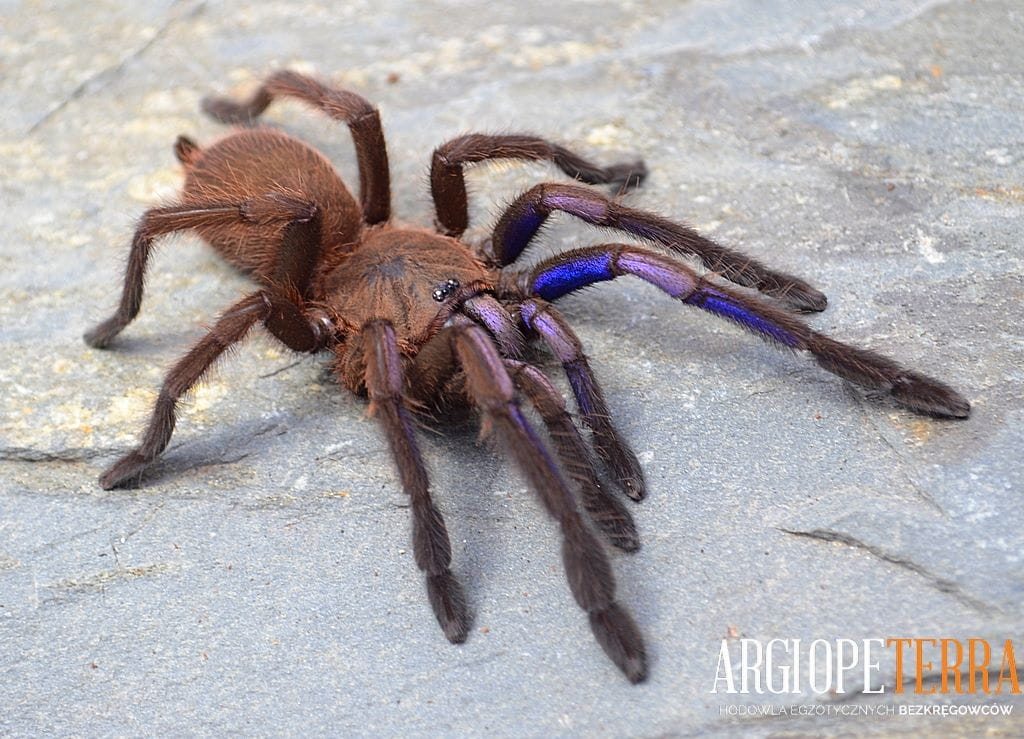
Species: Chilobrachys natanicharum (Electric Blue)
Common name: Electric Blue Tarantula
Native range: Thailand (Phang Nga Province)
Temperature: 24–28°C with a 2–3°C drop at night
Humidity: 70–80%
Adult size: Females reach up to 6 cm BL
Lifestyle: Fossorial
Speed: Fast
Venom potency: Potent
Temperament: Defensive
Recommended for: Advanced keepers
Notes: Does not require CITES captive-bred documentation
Chilobrachys natanicharum
product unavailable
Description
Chilobrachys natanicharum wears a blue that photographs cannot quite catch — a deep metallic shimmer that sits somewhere between overcast sky and the filament of a neon lamp, shifting with every angle and every change in light. Described only in 2023, it arrived in the hobby already trailing headlines, making international natural history media before most keepers had seen a live specimen. It comes from the mangrove forests and surrounding lowlands of Phang Nga Province in Thailand — a humid, coastal world far removed from the drier habitats most keepers associate with the genus.
The temperament is exactly what experienced keepers of Chilobrachys expect, and it is worth stating plainly. Chilobrachys natanicharum is fast, purposeful, and treats its burrow as territory worth defending. Prey is met with a decisive strike that leaves no ambiguity about intent. Media fame has not softened it into anything more manageable — what the cameras captured is the same animal that will hold its ground in the enclosure, and the respect that implies is part of what makes long-term observation rewarding.
In the enclosure, the fossorial nature of the species sets the parameters. At least 10 cm of moist substrate — coconut fibre on its own, or blended with vermiculite — gives the animal room to construct the deep burrow system it will use as both shelter and ambush point. A water dish and a starter hide anchor the setup; regular misting maintains a humid zone on one side while the opposite corner stays drier, and steady cross-ventilation keeps the air moving. Temperatures of 24–28°C reflect its lowland tropical origin. Given those conditions, the spider settles in, excavates, and begins behaving exactly as it does on the mangrove margins it came from.
This is a species for keepers who have moved well past the question of whether a spider can be demanding — and who find that quality interesting rather than off-putting. What Chilobrachys natanicharum gives back is a colour that does not fully resolve until you are watching it move under natural light, and a behavioural directness that rewards patient, long-distance observation. Years on, it tends to remain the spider visitors ask about first, and the one you still find yourself watching after the others have settled for the night.