






 Choose language
- Spiders
- ANIMALS
- Arachnids (Arachnida)
- Spiders (Araneae)
- Tarantulas (Mygalomorphae)
- Psednocnemis spp.
- Diplura spp.
- Spinosatibiapalpus spp.
- Acanthogonatus spp.
- Acanthoscurria spp.
- Amazonius spp.
- Ami spp.
- Anquasha spp.
- Aphonopelma spp.
- Aspinochilus spp.
- Augacephalus spp.
- Avicularia spp.
- Birupes spp.
- Bonnetina spp.
- Brachypelma spp.
- Bumba spp.
- Caribena spp.
- Ceratogyrus spp.
- Chaetopelma spp.
- Chilobrachys spp.
- Chromatopelma spp.
- Cilantica spp.
- Citharacanthus spp.
- Coremiocnemis spp.
- Cyclosternum spp.
- Cyriocosmus spp.
- Cyriopagopus spp.
- Davus spp.
- Dolichothele spp.
- Encyocratella spp.
- Ephebopus spp.
- Euathlus spp.
- Eucratoscelus spp.
- Eupalaestrus spp.
- Fufius spp.
- Gorgyrella spp.
- Grammostola spp.
- Guyruita spp.
- Hapalopus spp.
- Haploclastus spp.
- Haplocosmia spp.
- Haplopelma spp.
- Harpactira spp.
- Heteroscodra spp.
- Heterothele spp.
- Holothele spp.
- Homoeomma spp.
- Hysterocrates spp.
- Idiothele spp.
- Iridopelma spp.
- Kochiana spp.
- Lampropelma spp.
- Lasiocyano spp.
- Lasiodora spp.
- Lasiodorides spp.
- Linothele spp.
- Lyrognathus spp.
- Megaphobema spp.
- Monocentropus spp.
- Neischnocolus spp.
- Neoholothele spp.
- Neostenotarsus spp.
- Nhandu spp.
- Omothymus spp.
- Ornithoctoninae spp.
- Ornithoctonus spp.
- Pamphobeteus spp.
- Pelinobius spp.
- Phormictopus spp.
- Phormingochilus spp.
- Phrixotrichus spp.
- Poecilotheria spp.
- Psalmopoeus spp.
- Pseudhapalopus spp.
- Pseudoclamoris spp.
- Pterinochilus spp.
- Selenocosmia spp.
- Sericopelma spp.
- Tapinauchenius spp.
- Taksinus spp.
- Tapinauchenius spp.
- Theraphosa spp.
- Theraphosidae spp.
- Theraphosinae spp.
- Thrigmopoeus spp.
- Thrixopelma spp.
- Tliltocatl spp.
- Typhochlaena spp.
- Urupelma spp.
- Vitalius spp.
- Xenesthis spp.
- Ybyrapora spp.
- True Spiders (Araneomorphae)
- Velvet Spiders (Eresidae)
- Macrothele spp.
- Liphistius spp.
- Tarantulas (Mygalomorphae)
- Scorpions (Scorpiones)
- Spiders (Araneae)
- Insects - for feeding
- Arachnids (Arachnida)
- Scorpions
- Accessories
- Books
- Centipede
- Millipede
- Cockroaches
- New products
- Products on sale
Currency

€32.00
Regular price:
€40.00

€42.50
Regular price:
€50.00
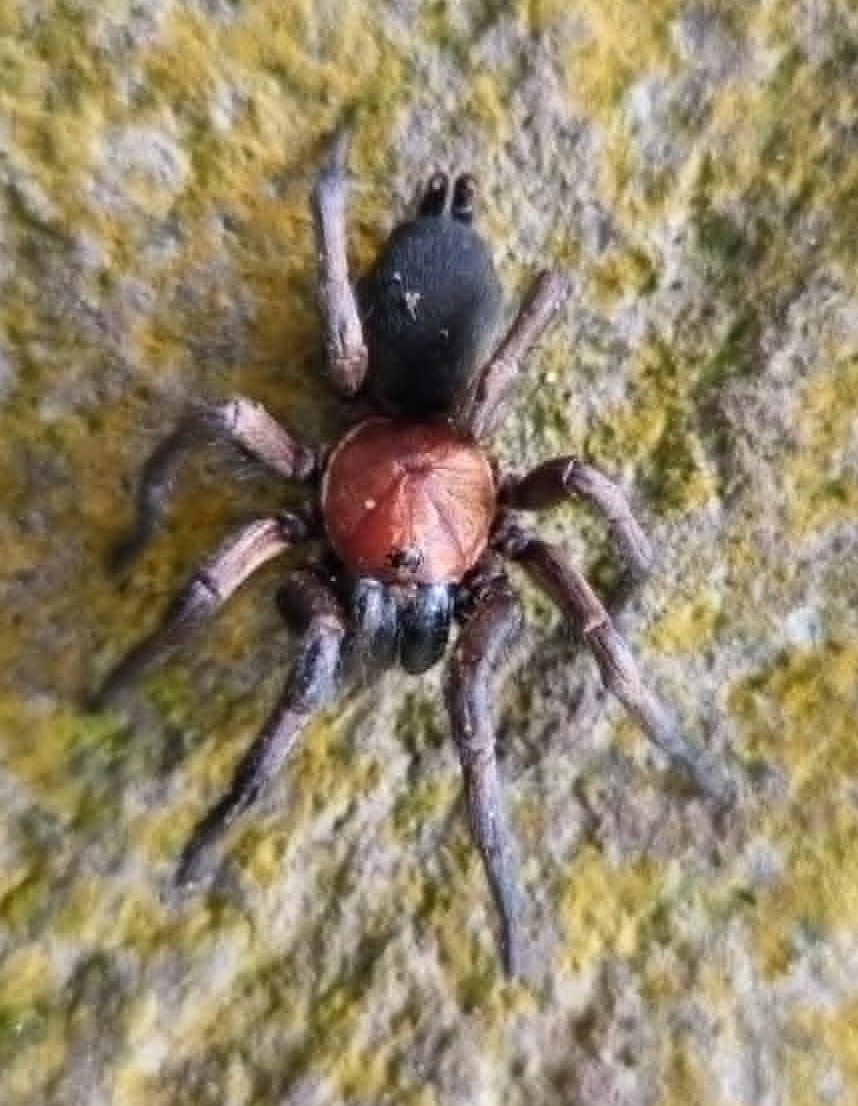
Species: Diplura sp. Oliva
Common name: -
Native range: South America
Temperature: 22-26°C, copes well at room temperature
Humidity: 70-80%
Adult size: Exact size of this species not yet documented; the genus Diplura comprises small to medium-sized spiders
Lifestyle: Terrestrial, builds extensive funnel and sheet webs close to the ground
Speed: Very fast
Venom potency: Poorly studied, no data on medical significance
Temperament: Skittish, retreats into its web when disturbed
Recommended for: Intermediate keepers
Notes: A curtain-web spider (family Dipluridae), not a tarantula. Not listed under CITES, no captive-breeding certificate required
Diplura sp. Oliva
product unavailable
Description
Diplura sp. Oliva belongs to Dipluridae, the curtain-web or funnel-web mygalomorphs. It shares the infraorder Mygalomorphae with tarantulas, yet it is not one: it is a separate family, known for spinning extensive webs. The genus Diplura ranges across South America and Cuba, and Diplura sp. Oliva is a species not yet formally described; "Oliva" is the working name used by keepers. The specimen pictured has a glossy brick-red carapace, a velvety black abdomen and greyish-brown legs. The first thing most people notice is the spinnerets, long and clearly projecting beyond the abdomen, moving like a pair of nimble fingers as the spider spins.
Rather than waiting in a ready-made hide, Diplura builds. Over time the enclosure fills with dense, pale silk: sheets stretched just above the substrate and tunnels leading back to a retreat. The spider spends most of its time at the mouth of the funnel, and the moment something touches the threads it bursts out at a speed that surprises anyone used to terrestrial tarantulas, then vanishes into the tunnel with its prey. That split second is what keeping funnel-web spiders is all about. Dipluridae have no urticating hairs and, when disturbed, usually withdraw deeper into the web.
We offer L1 spiderlings, which do best in a small, well-ventilated container. A layer of lightly moist coconut fibre is enough, topped with a piece of cork bark, a few twigs or dry leaves, as every item becomes an anchor point for silk. The substrate should be neither wet nor fully dry. Regular misting of part of the container leaves droplets on the walls for the spiderlings to drink from; a water dish only makes sense for larger specimens. Room temperature is perfectly adequate. Offer appropriately sized prey close to the mouth of the tunnel.
Diplura sp. Oliva suits keepers who already know tarantulas and want to see how differently a mygalomorph can live. Its speed and poorly studied venom make it a display animal, best kept by intermediate hobbyists. In return it offers something no tarantula can: a silk architecture that grows with the spider and looks a little different every time you look in.