






 Choose language
- Spiders
- ANIMALS
- Arachnids (Arachnida)
- Spiders (Araneae)
- Tarantulas (Mygalomorphae)
- Psednocnemis spp.
- Diplura spp.
- Spinosatibiapalpus spp.
- Acanthogonatus spp.
- Acanthoscurria spp.
- Amazonius spp.
- Ami spp.
- Anquasha spp.
- Aphonopelma spp.
- Aspinochilus spp.
- Augacephalus spp.
- Avicularia spp.
- Birupes spp.
- Bonnetina spp.
- Brachypelma spp.
- Bumba spp.
- Caribena spp.
- Ceratogyrus spp.
- Chaetopelma spp.
- Chilobrachys spp.
- Chromatopelma spp.
- Cilantica spp.
- Citharacanthus spp.
- Coremiocnemis spp.
- Cyclosternum spp.
- Cyriocosmus spp.
- Cyriopagopus spp.
- Davus spp.
- Dolichothele spp.
- Encyocratella spp.
- Ephebopus spp.
- Euathlus spp.
- Eucratoscelus spp.
- Eupalaestrus spp.
- Fufius spp.
- Gorgyrella spp.
- Grammostola spp.
- Guyruita spp.
- Hapalopus spp.
- Haploclastus spp.
- Haplocosmia spp.
- Haplopelma spp.
- Harpactira spp.
- Heteroscodra spp.
- Heterothele spp.
- Holothele spp.
- Homoeomma spp.
- Hysterocrates spp.
- Idiothele spp.
- Iridopelma spp.
- Kochiana spp.
- Lampropelma spp.
- Lasiocyano spp.
- Lasiodora spp.
- Lasiodorides spp.
- Linothele spp.
- Lyrognathus spp.
- Megaphobema spp.
- Monocentropus spp.
- Neischnocolus spp.
- Neoholothele spp.
- Neostenotarsus spp.
- Nhandu spp.
- Omothymus spp.
- Ornithoctoninae spp.
- Ornithoctonus spp.
- Pamphobeteus spp.
- Pelinobius spp.
- Phormictopus spp.
- Phormingochilus spp.
- Phrixotrichus spp.
- Poecilotheria spp.
- Psalmopoeus spp.
- Pseudhapalopus spp.
- Pseudoclamoris spp.
- Pterinochilus spp.
- Selenocosmia spp.
- Sericopelma spp.
- Tapinauchenius spp.
- Taksinus spp.
- Tapinauchenius spp.
- Theraphosa spp.
- Theraphosidae spp.
- Theraphosinae spp.
- Thrigmopoeus spp.
- Thrixopelma spp.
- Tliltocatl spp.
- Typhochlaena spp.
- Urupelma spp.
- Vitalius spp.
- Xenesthis spp.
- Ybyrapora spp.
- True Spiders (Araneomorphae)
- Velvet Spiders (Eresidae)
- Macrothele spp.
- Liphistius spp.
- Tarantulas (Mygalomorphae)
- Scorpions (Scorpiones)
- Spiders (Araneae)
- Insects - for feeding
- Arachnids (Arachnida)
- Scorpions
- Accessories
- Books
- Centipede
- Millipede
- Cockroaches
- New products
- Products on sale
Currency

€32.00
Regular price:
€40.00

€42.50
Regular price:
€50.00

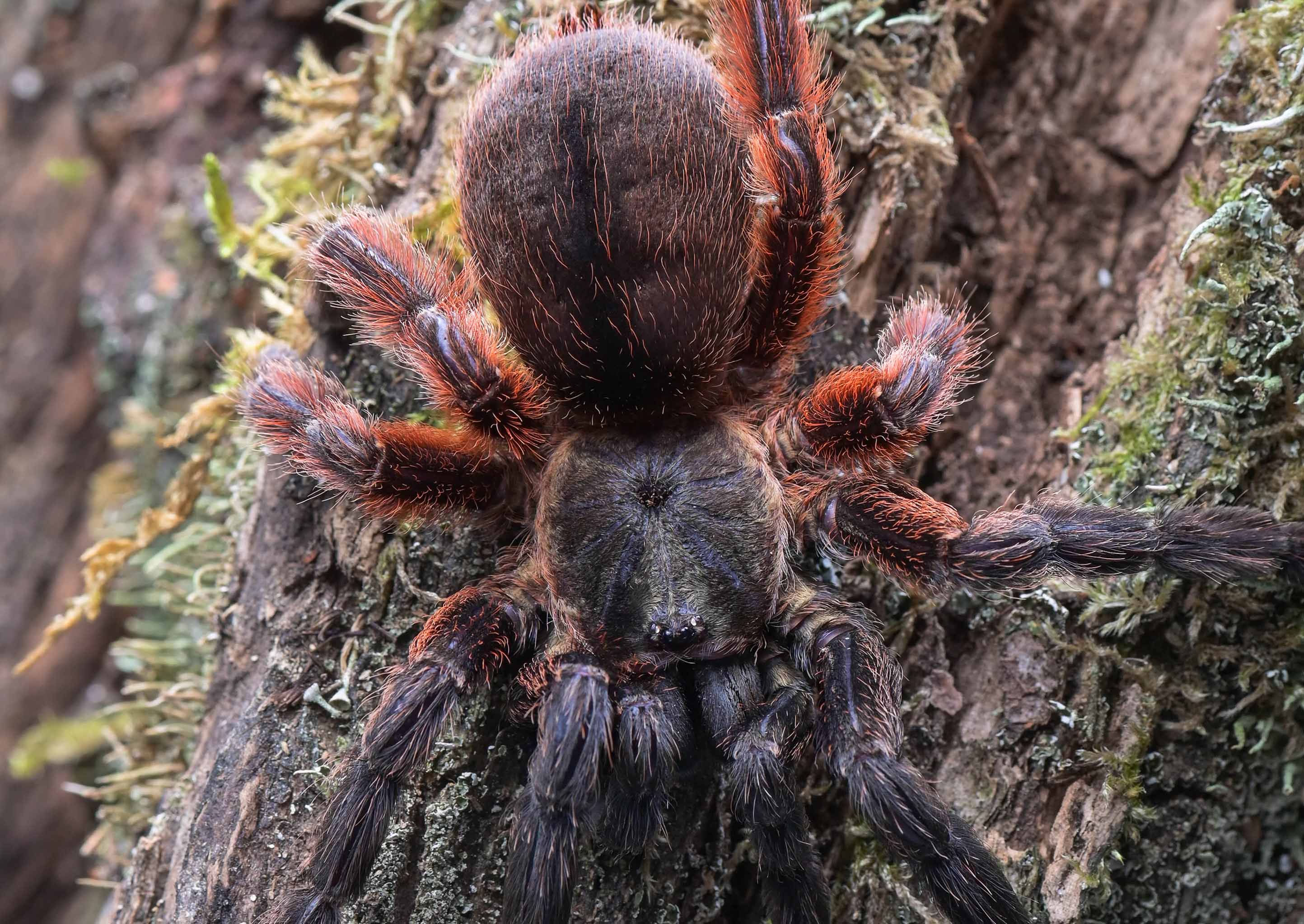
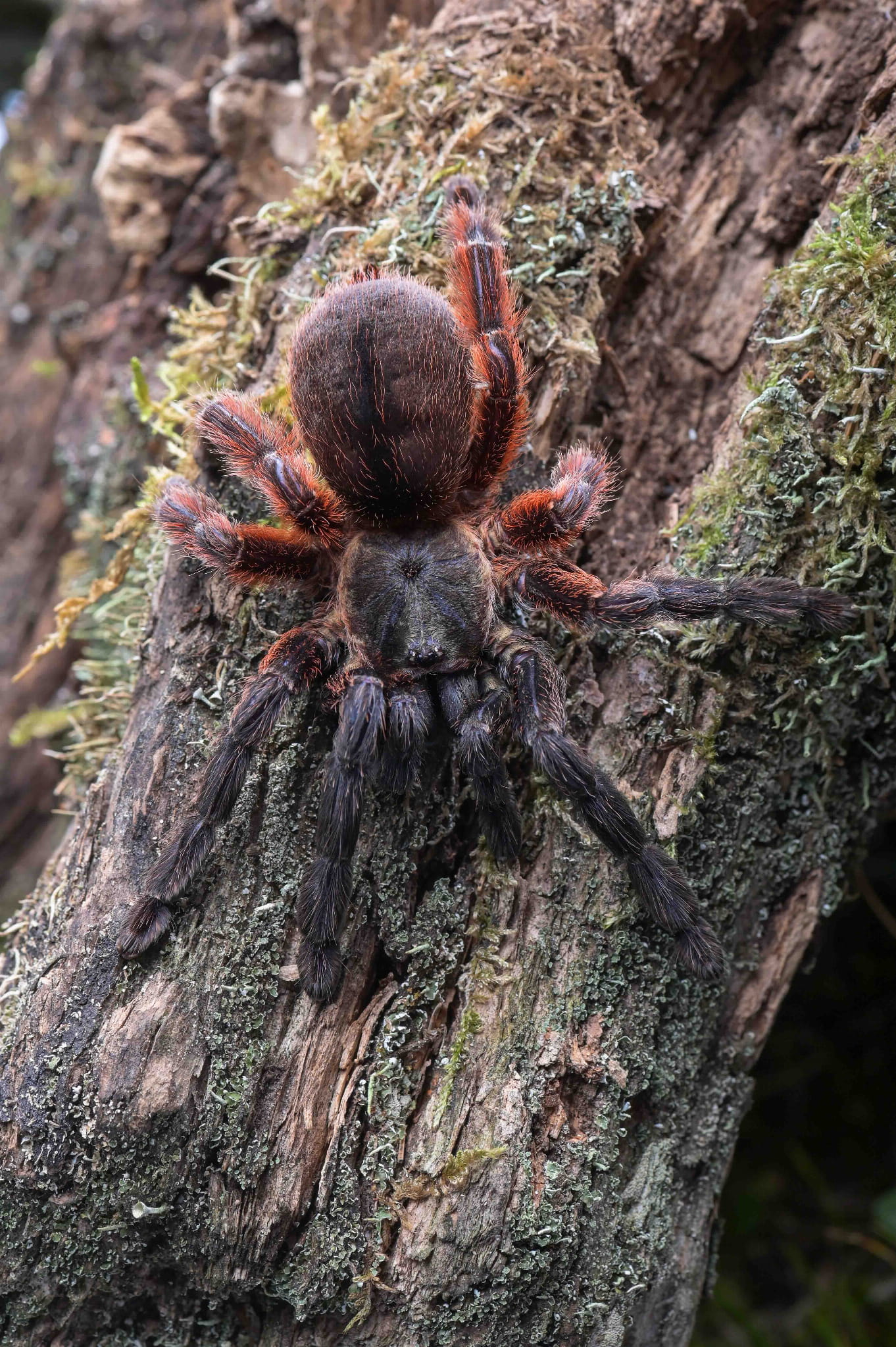
Species: Psalmopoeus victorii
Common name: Darth Maul tarantula
Native range: Mexico (Veracruz)
Temperature: 25–28 °C
Humidity: 75%
Adult size: 5–6 cm BL
Lifestyle: arboreal
Speed: fast
Venom potency: moderate
Temperament: defensive when disturbed
Recommended for: intermediate keepers
Notes: Not listed under CITES; no captive-bred documentation required.
Psalmopoeus victorii
product unavailable
Description
Psalmopoeus victorii comes from the humid tropical forests of Veracruz, Mexico, and it arrives in any collection looking like something that has no business being real. The prosoma carries a muted metallic green; the front legs darken to near-black; then, as the eye travels back, the opisthosoma ignites into deep red and the rear legs follow in warm amber-rust. That hard split — cool dark front, burning rear — is what earned the species its "Darth Maul tarantula" nickname among hobbyists, and the image earns it every time. Psalmopoeus victorii was described relatively recently and rose to prominence quickly, as species this visually arresting tend to do. It carries no urticating setae, so the coloration is the only defence it has bothered to announce.
Fast, deliberate, and confident in its movements, Psalmopoeus victorii is an arboreal species that spends most of its time at elevation rather than on the ground. It is alert and quick — not one to handle casually — but that activity level is precisely what makes it rewarding to watch. Given a suitable vertical setup, it will emerge and move in ways that keep the enclosure feeling alive. Appetite is strong and consistent, which keeps the rhythm of keeping refreshingly simple.
A vertically oriented enclosure is the starting point, with a cork tube or slab of cork bark positioned high enough to serve as the anchor for a silken tube retreat — Psalmopoeus victorii will web this point heavily and claim it as its own. Humidity should sit on the higher side, maintained through regular misting while keeping ventilation generous; stagnant moisture works against the animal. Room temperature is sufficient. A water dish at the base of the enclosure completes the setup.
This is a species for a keeper who has grown past the familiar arboreal options and wants something that reads differently every time they glance into the enclosure. No other Psalmopoeus presents quite this combination — the green prosoma, the black forelegs, the red opisthosoma — and that visual coherence tends to make Psalmopoeus victorii a long-term fixture. Whether you organise your collection around the genus or around standout individuals, it earns a place for the same reason: years on, you will still be pausing to look at it.