






 Choose language
- Spiders
- ANIMALS
- Arachnids (Arachnida)
- Spiders (Araneae)
- Tarantulas (Mygalomorphae)
- Psednocnemis spp.
- Diplura spp.
- Spinosatibiapalpus spp.
- Acanthogonatus spp.
- Acanthoscurria spp.
- Amazonius spp.
- Ami spp.
- Anquasha spp.
- Aphonopelma spp.
- Aspinochilus spp.
- Augacephalus spp.
- Avicularia spp.
- Birupes spp.
- Bonnetina spp.
- Brachypelma spp.
- Bumba spp.
- Caribena spp.
- Ceratogyrus spp.
- Chaetopelma spp.
- Chilobrachys spp.
- Chromatopelma spp.
- Cilantica spp.
- Citharacanthus spp.
- Coremiocnemis spp.
- Cyclosternum spp.
- Cyriocosmus spp.
- Cyriopagopus spp.
- Davus spp.
- Dolichothele spp.
- Encyocratella spp.
- Ephebopus spp.
- Euathlus spp.
- Eucratoscelus spp.
- Eupalaestrus spp.
- Fufius spp.
- Gorgyrella spp.
- Grammostola spp.
- Guyruita spp.
- Hapalopus spp.
- Haploclastus spp.
- Haplocosmia spp.
- Haplopelma spp.
- Harpactira spp.
- Heteroscodra spp.
- Heterothele spp.
- Holothele spp.
- Homoeomma spp.
- Hysterocrates spp.
- Idiothele spp.
- Iridopelma spp.
- Kochiana spp.
- Lampropelma spp.
- Lasiocyano spp.
- Lasiodora spp.
- Lasiodorides spp.
- Linothele spp.
- Lyrognathus spp.
- Megaphobema spp.
- Monocentropus spp.
- Neischnocolus spp.
- Neoholothele spp.
- Neostenotarsus spp.
- Nhandu spp.
- Omothymus spp.
- Ornithoctoninae spp.
- Ornithoctonus spp.
- Pamphobeteus spp.
- Pelinobius spp.
- Phormictopus spp.
- Phormingochilus spp.
- Phrixotrichus spp.
- Poecilotheria spp.
- Psalmopoeus spp.
- Pseudhapalopus spp.
- Pseudoclamoris spp.
- Pterinochilus spp.
- Selenocosmia spp.
- Sericopelma spp.
- Tapinauchenius spp.
- Taksinus spp.
- Tapinauchenius spp.
- Theraphosa spp.
- Theraphosidae spp.
- Theraphosinae spp.
- Thrigmopoeus spp.
- Thrixopelma spp.
- Tliltocatl spp.
- Typhochlaena spp.
- Urupelma spp.
- Vitalius spp.
- Xenesthis spp.
- Ybyrapora spp.
- True Spiders (Araneomorphae)
- Velvet Spiders (Eresidae)
- Macrothele spp.
- Liphistius spp.
- Tarantulas (Mygalomorphae)
- Scorpions (Scorpiones)
- Spiders (Araneae)
- Insects - for feeding
- Arachnids (Arachnida)
- Scorpions
- Accessories
- Books
- Centipede
- Millipede
- Cockroaches
- New products
- Products on sale
Currency

€32.00
Regular price:
€40.00

€42.50
Regular price:
€50.00
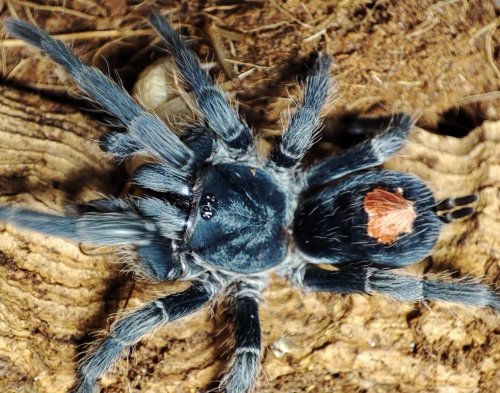
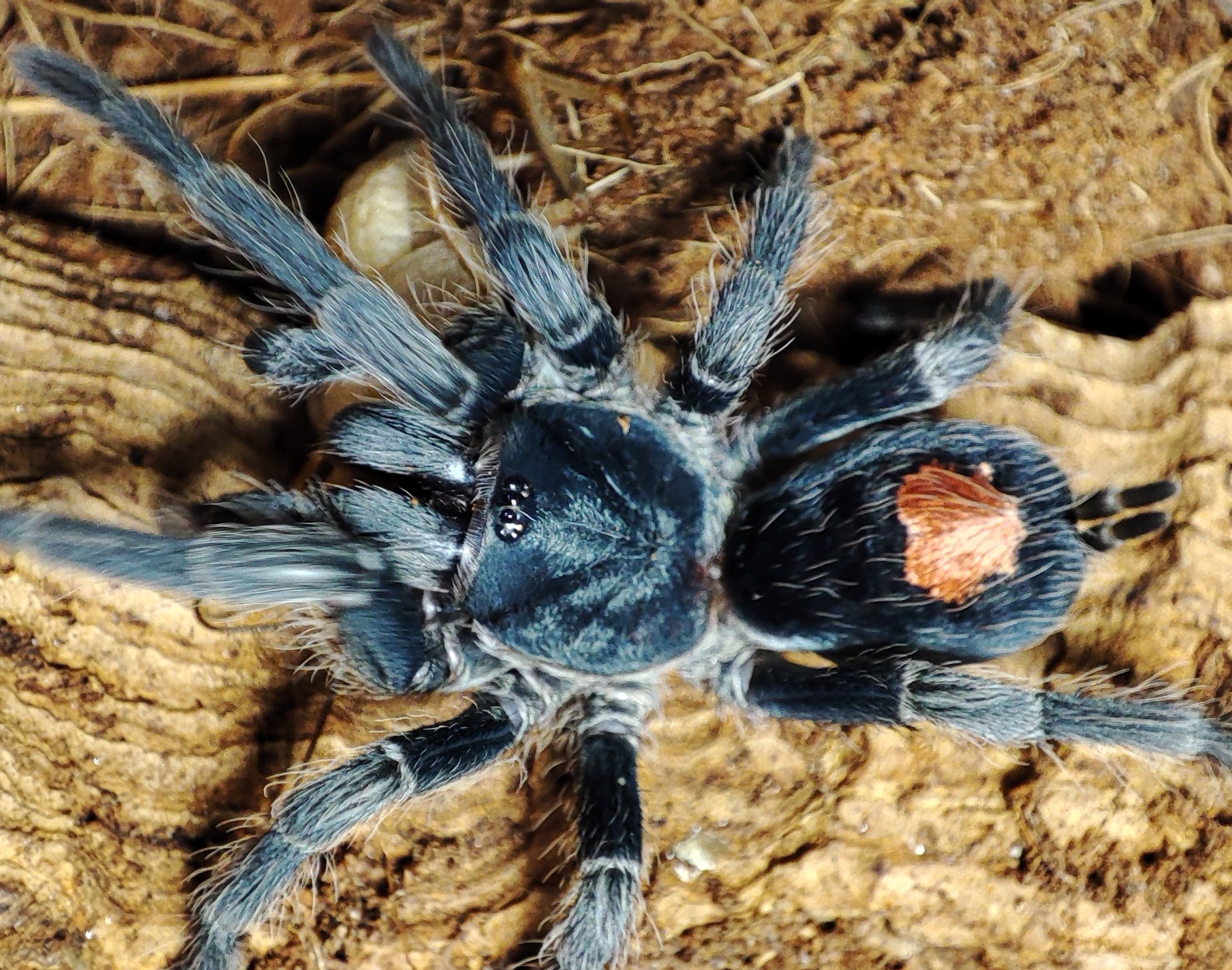
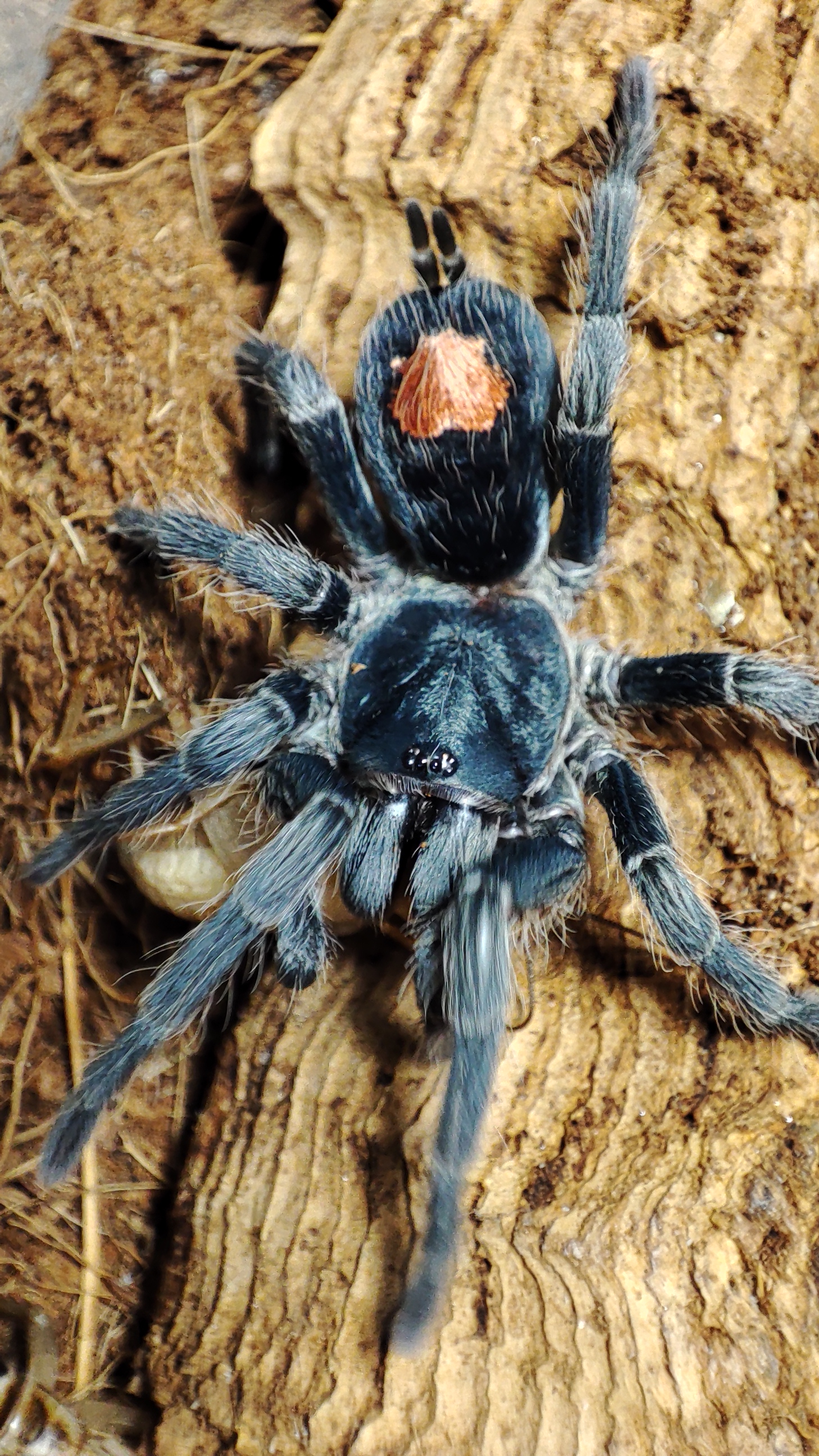
Species: Cyriocosmus sp. oronegro
Common name: -
Native range: Venezuela / Colombia
Temperature: 24–28°C
Humidity: 70–75%
Adult size: 2.5–3 cm BL
Lifestyle: Terrestrial
Speed: Moderate
Venom potency: Mild
Temperament: Calm
Recommended for: Suitable for all keepers
First spider: Yes
Notes: A miniature tarantula with metallic golden accents on a dark body. Well-suited to compact enclosures.
Cyriocosmus sp. oronegro
product unavailable
Description
Few tarantulas reward close inspection the way Cyriocosmus sp. oronegro does. The name means "black gold," and the spider earns it: a body dark enough to read as near-black, interrupted by metallic golden setae on the opisthosoma that catch light like inlaid enamel. At arm's length, the effect is subtle. In a well-lit enclosure, viewed up close, it is the kind of coloration that makes experienced keepers pause mid-task.
The species hails from the tropical lowland rainforests of Venezuela and Colombia — humid, canopied terrain that has quietly shaped one of the more visually arresting miniature genera in Theraphosidae. In captivity, Cyriocosmus sp. oronegro is calm and unhurried, a terrestrial species that moves through its enclosure with deliberate confidence rather than nervous speed. It makes steady use of any hide provided, spins light but structured silk around its retreat, and hunts with quiet efficiency, drawing prey in rather than pursuing it at distance. Because the enclosure itself is small, every element of the setup registers: a well-placed piece of cork bark, a clean water dish, a slightly damp corner — details that feel incidental in a larger setup become the whole landscape here.
A compact enclosure of roughly 15 × 15 cm serves an adult female without compromise. Coconut fibre substrate at around 5 cm depth, a hide, a water dish, and a damp area maintained through regular misting will cover the humidity requirement. Temperature sits comfortably at room level, provided the room runs around 24–28°C; no supplemental heating is typically needed in a temperate household. Scale feeder insects carefully to the spider's size — at adult dimensions, prey that would be trivial for a larger species is a proper meal for Cyriocosmus sp. oronegro, and overfeeding a small spider is a far more common mistake than underfeeding one.
This is a spider for the keeper who finds the miniature more interesting than the monumental — someone who understands that intensity of detail scales inversely with body size. Cyriocosmus sp. oronegro asks for very little space and returns something harder to quantify: the experience of watching a complete, finely wrought animal conduct its life in a footprint smaller than a hardback book. Once it settles into a collection, it tends to claim a permanent spot — usually the one where it can best be seen.