






 Choose language
- Spiders
- ANIMALS
- Arachnids (Arachnida)
- Spiders (Araneae)
- Tarantulas (Mygalomorphae)
- Psednocnemis spp.
- Diplura spp.
- Spinosatibiapalpus spp.
- Acanthogonatus spp.
- Acanthoscurria spp.
- Amazonius spp.
- Ami spp.
- Anquasha spp.
- Aphonopelma spp.
- Aspinochilus spp.
- Augacephalus spp.
- Avicularia spp.
- Birupes spp.
- Bonnetina spp.
- Brachypelma spp.
- Bumba spp.
- Caribena spp.
- Ceratogyrus spp.
- Chaetopelma spp.
- Chilobrachys spp.
- Chromatopelma spp.
- Cilantica spp.
- Citharacanthus spp.
- Coremiocnemis spp.
- Cyclosternum spp.
- Cyriocosmus spp.
- Cyriopagopus spp.
- Davus spp.
- Dolichothele spp.
- Encyocratella spp.
- Ephebopus spp.
- Euathlus spp.
- Eucratoscelus spp.
- Eupalaestrus spp.
- Fufius spp.
- Gorgyrella spp.
- Grammostola spp.
- Guyruita spp.
- Hapalopus spp.
- Haploclastus spp.
- Haplocosmia spp.
- Haplopelma spp.
- Harpactira spp.
- Heteroscodra spp.
- Heterothele spp.
- Holothele spp.
- Homoeomma spp.
- Hysterocrates spp.
- Idiothele spp.
- Iridopelma spp.
- Kochiana spp.
- Lampropelma spp.
- Lasiocyano spp.
- Lasiodora spp.
- Lasiodorides spp.
- Linothele spp.
- Lyrognathus spp.
- Megaphobema spp.
- Monocentropus spp.
- Neischnocolus spp.
- Neoholothele spp.
- Neostenotarsus spp.
- Nhandu spp.
- Omothymus spp.
- Ornithoctoninae spp.
- Ornithoctonus spp.
- Pamphobeteus spp.
- Pelinobius spp.
- Phormictopus spp.
- Phormingochilus spp.
- Phrixotrichus spp.
- Poecilotheria spp.
- Psalmopoeus spp.
- Pseudhapalopus spp.
- Pseudoclamoris spp.
- Pterinochilus spp.
- Selenocosmia spp.
- Sericopelma spp.
- Tapinauchenius spp.
- Taksinus spp.
- Tapinauchenius spp.
- Theraphosa spp.
- Theraphosidae spp.
- Theraphosinae spp.
- Thrigmopoeus spp.
- Thrixopelma spp.
- Tliltocatl spp.
- Typhochlaena spp.
- Urupelma spp.
- Vitalius spp.
- Xenesthis spp.
- Ybyrapora spp.
- True Spiders (Araneomorphae)
- Velvet Spiders (Eresidae)
- Macrothele spp.
- Liphistius spp.
- Tarantulas (Mygalomorphae)
- Scorpions (Scorpiones)
- Spiders (Araneae)
- Insects - for feeding
- Arachnids (Arachnida)
- Scorpions
- Accessories
- Books
- Centipede
- Millipede
- Cockroaches
- New products
- Products on sale
Currency

€32.00
Regular price:
€40.00

€42.50
Regular price:
€50.00
Species: Cyriocosmus sp. Cereza
Common name: -
Native range: South America
Temperature: 22-26°C with a 2-3°C drop at night; room temperature also suits it well
Humidity: 65-75%
Adult size: Dwarf species; females in this genus typically reach about 2-3 cm body length
Lifestyle: Terrestrial
Speed: Moderate
Venom potency: Mild
Temperament: Calm, shy
Recommended for: Beginners with some prior experience
Notes: Not listed under CITES; no captive-breeding certificate required
Cyriocosmus sp. Cereza
product unavailable
Description
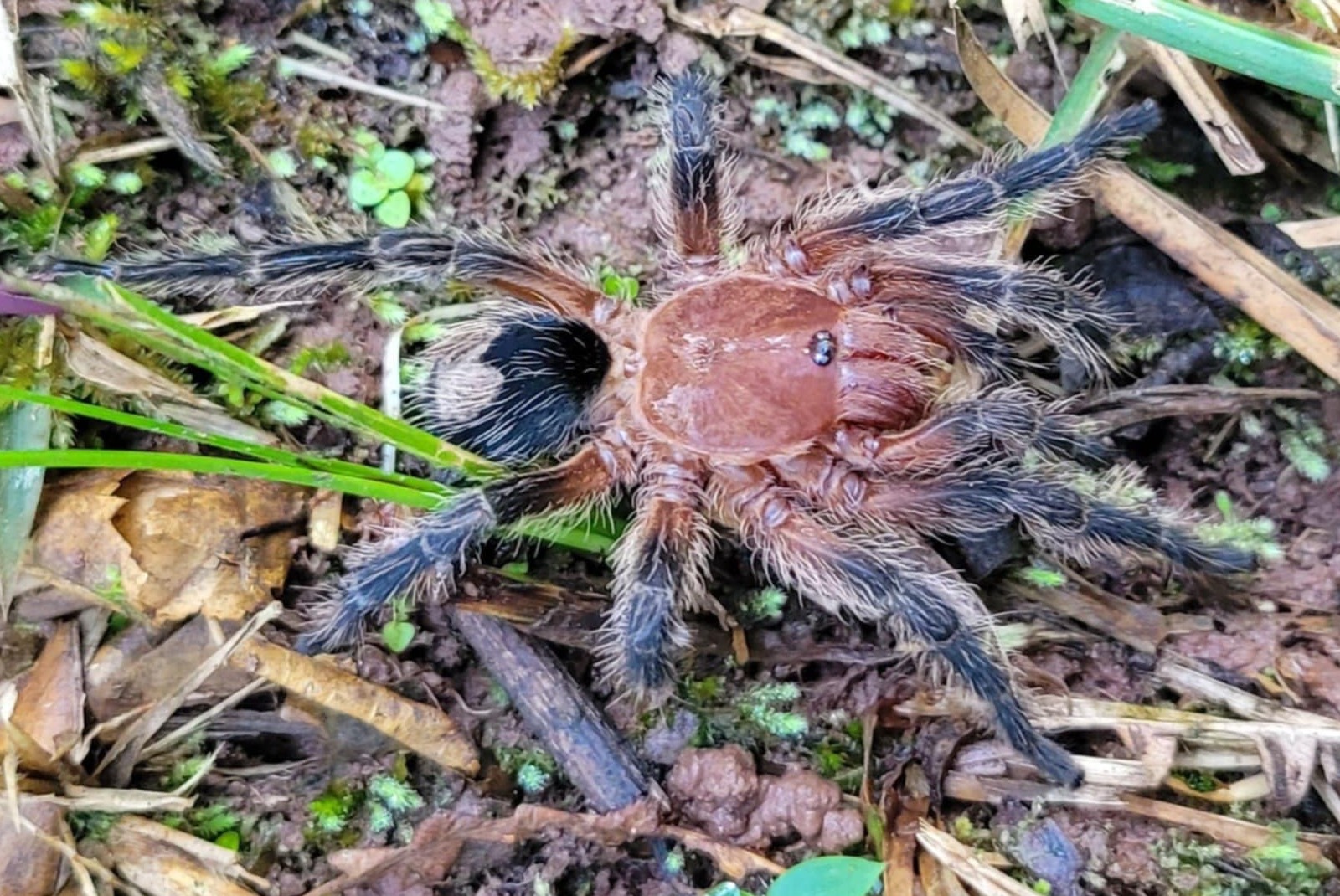
Cyriocosmus sp. Cereza is a species from the genus of South American dwarf tarantulas, among the smallest members of the whole family. "Cereza" is Spanish for cherry, and in the English-speaking hobby it is sometimes offered as the "Cherry Dwarf". Its exact origin is not documented in the literature, and like several Cyriocosmus that have entered the hobby in recent years, it has yet to be formally described. The name suits it: a grown specimen (pictured) shows a glossy cherry-copper carapace, a black abdomen with a pale patch and dark legs covered in long rusty hairs. The colours sharpen with each moult, so raising one from a 1st instar spiderling lets you follow the transformation.
In the enclosure, Cyriocosmus behave like scaled-down versions of larger terrestrial tarantulas. Spiderlings live a terrestrial life, make good use of a hide and dig their own tunnels, often along the container wall, so you can sometimes watch them in cross-section. Feeding time is the highlight: the tiny spider waits motionless, then seizes its prey in a single burst and retreats with it into cover. The genus is calm by nature, shy rather than defensive, and the venom is considered mild.
Keep 1st instar (L1) spiderlings in a small, well-ventilated container with a few centimetres of coconut fibre. Mist part of the substrate regularly and let the rest dry slightly, but never allow the whole substrate to dry out. Spiderlings drink from droplets on the container walls after misting; a water dish only becomes useful for larger specimens. Offer small prey matched to the spider's size, such as young crickets or cut mealworms. Room temperature is fine. Adults need only a modest terrestrial enclosure with 5-7 cm of substrate and a cork bark hide.
This is a spider for keepers who already have a few tarantulas behind them, or who are building a collection of dwarf species. Cyriocosmus sp. Cereza takes up very little shelf space and gives back what Cyriocosmus do best: movement, clever hunting and subtle changes in appearance with every moult. Species still carrying "sp." in their name are also a chance to follow a genus in which more discoveries await description.