






 Choose language
- Spiders
- ANIMALS
- Arachnids (Arachnida)
- Spiders (Araneae)
- Tarantulas (Mygalomorphae)
- Psednocnemis spp.
- Diplura spp.
- Spinosatibiapalpus spp.
- Acanthogonatus spp.
- Acanthoscurria spp.
- Amazonius spp.
- Ami spp.
- Anquasha spp.
- Aphonopelma spp.
- Aspinochilus spp.
- Augacephalus spp.
- Avicularia spp.
- Birupes spp.
- Bonnetina spp.
- Brachypelma spp.
- Bumba spp.
- Caribena spp.
- Ceratogyrus spp.
- Chaetopelma spp.
- Chilobrachys spp.
- Chromatopelma spp.
- Cilantica spp.
- Citharacanthus spp.
- Coremiocnemis spp.
- Cyclosternum spp.
- Cyriocosmus spp.
- Cyriopagopus spp.
- Davus spp.
- Dolichothele spp.
- Encyocratella spp.
- Ephebopus spp.
- Euathlus spp.
- Eucratoscelus spp.
- Eupalaestrus spp.
- Fufius spp.
- Gorgyrella spp.
- Grammostola spp.
- Guyruita spp.
- Hapalopus spp.
- Haploclastus spp.
- Haplocosmia spp.
- Haplopelma spp.
- Harpactira spp.
- Heteroscodra spp.
- Heterothele spp.
- Holothele spp.
- Homoeomma spp.
- Hysterocrates spp.
- Idiothele spp.
- Iridopelma spp.
- Kochiana spp.
- Lampropelma spp.
- Lasiocyano spp.
- Lasiodora spp.
- Lasiodorides spp.
- Linothele spp.
- Lyrognathus spp.
- Megaphobema spp.
- Monocentropus spp.
- Neischnocolus spp.
- Neoholothele spp.
- Neostenotarsus spp.
- Nhandu spp.
- Omothymus spp.
- Ornithoctoninae spp.
- Ornithoctonus spp.
- Pamphobeteus spp.
- Pelinobius spp.
- Phormictopus spp.
- Phormingochilus spp.
- Phrixotrichus spp.
- Poecilotheria spp.
- Psalmopoeus spp.
- Pseudhapalopus spp.
- Pseudoclamoris spp.
- Pterinochilus spp.
- Selenocosmia spp.
- Sericopelma spp.
- Tapinauchenius spp.
- Taksinus spp.
- Tapinauchenius spp.
- Theraphosa spp.
- Theraphosidae spp.
- Theraphosinae spp.
- Thrigmopoeus spp.
- Thrixopelma spp.
- Tliltocatl spp.
- Typhochlaena spp.
- Urupelma spp.
- Vitalius spp.
- Xenesthis spp.
- Ybyrapora spp.
- True Spiders (Araneomorphae)
- Velvet Spiders (Eresidae)
- Macrothele spp.
- Liphistius spp.
- Tarantulas (Mygalomorphae)
- Scorpions (Scorpiones)
- Spiders (Araneae)
- Insects - for feeding
- Arachnids (Arachnida)
- Scorpions
- Accessories
- Books
- Centipede
- Millipede
- Cockroaches
- New products
- Products on sale
Currency

€32.00
Regular price:
€40.00

€42.50
Regular price:
€50.00

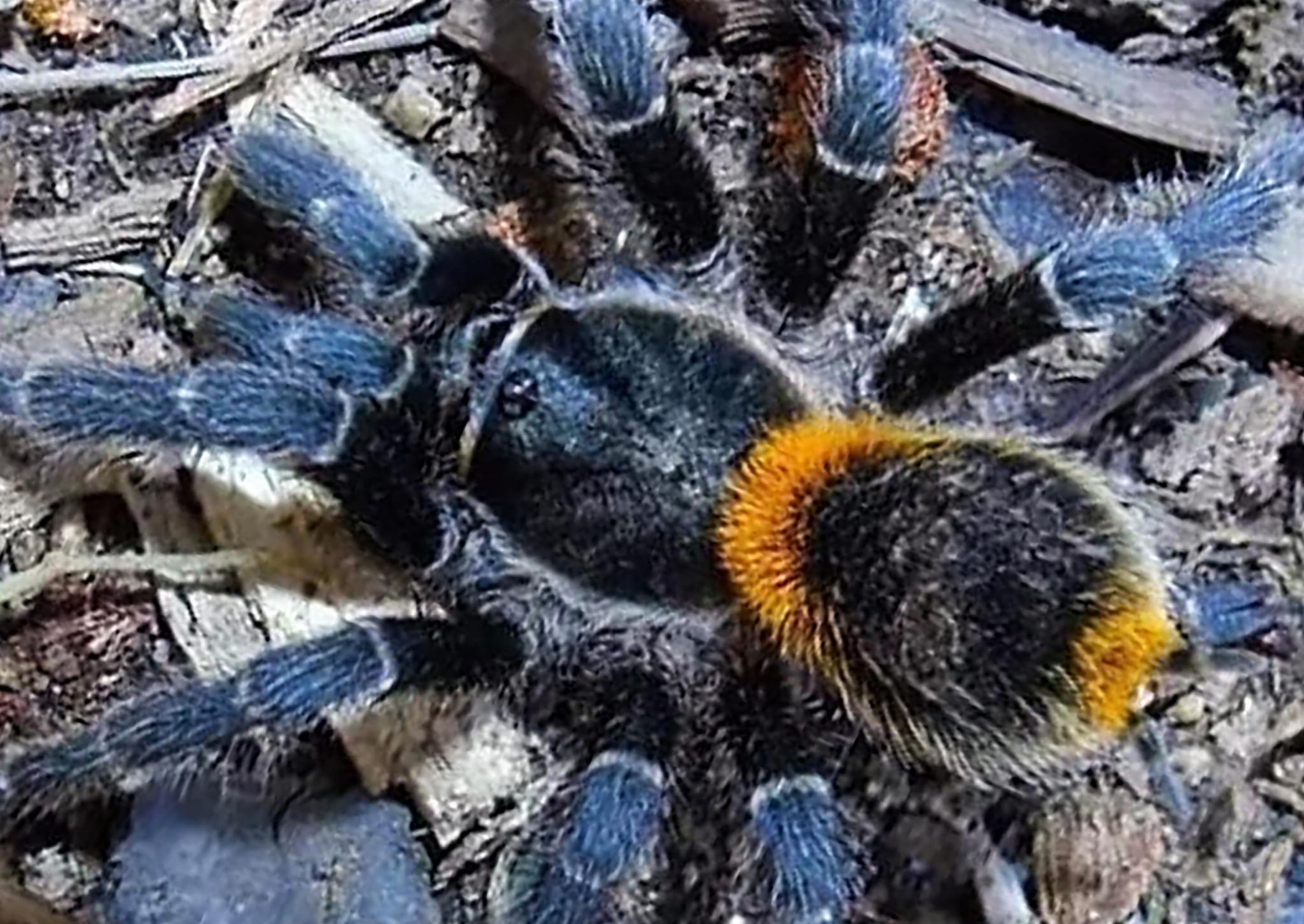
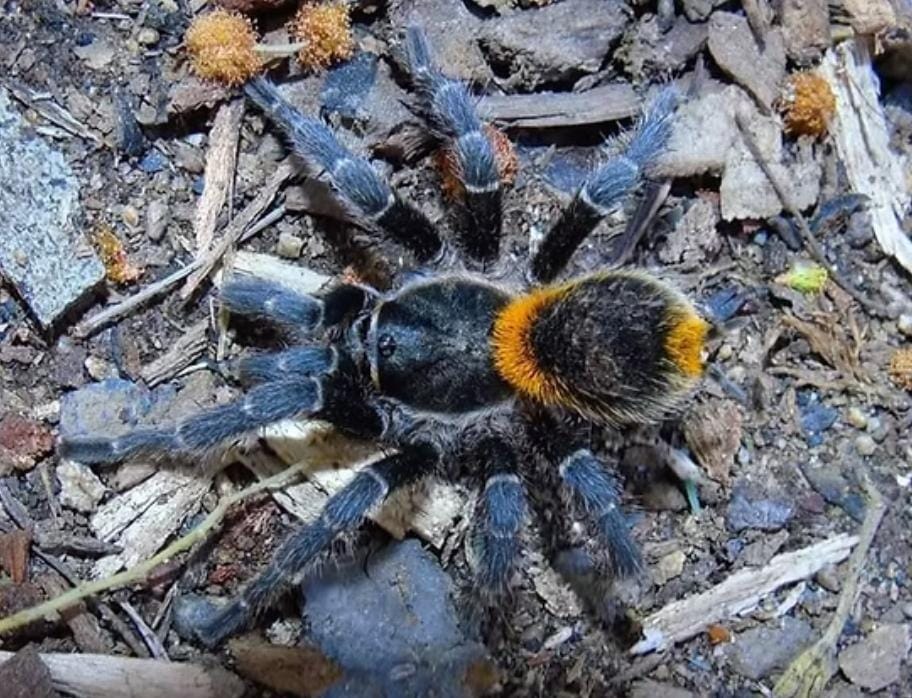
Species: Homoeomma orellanai
Common name: Chilean Yellow Flame
Native range: Chile
Temperature: 20–24°C, with a slight drop at night; tolerates cool room temperature well
Humidity: 60–70%
Adult size: Females reach 3–4 cm body length
Lifestyle: Terrestrial
Speed: Slow
Venom potency: Mild
Temperament: Calm
Recommended for: Suitable for all keepers
Notes: Not listed under CITES; no captive-bred documentation required
Homoeomma orellanai
product unavailable
Description
Homoeomma orellanai comes from the cool, dry landscapes of Chile — a dwarf species that carries a quiet intensity in its coloration. The common name Chilean Yellow Flame is well earned: a bright yellow-orange patch sits at the base of the opisthosoma, and golden setae trace along the walking legs, giving the whole animal a smouldering, low-lit quality. Against the darker body, these markings land with precision rather than flash — this is not a species that shouts, but one that rewards a second look. Anyone familiar with Homoeomma chilensis will notice immediately how the two sister species play against each other: where Homoeomma chilensis runs to copper-red, Homoeomma orellanai burns yellow-gold.
Temperament is calm and uncomplicated. Homoeomma orellanai is a terrestrial dwarf that goes about its life without drama — no sudden bolts, no elaborate threat postures, content to stay close to its substrate. The cooler temperatures it prefers naturally slow its metabolism, and that measured pace seems to extend to its entire character. Combined with its modest size, this makes it one of the easier dwarves to settle in with, even for keepers still finding their feet with smaller species.
An enclosure with 5–7 cm of mixed coconut fibre and sand substrate suits Homoeomma orellanai well. A hide, a shallow water dish, and a largely dry substrate with one slightly dampened corner are all this species asks for. Room temperature on the cooler side fits its Chilean origin without requiring any additional equipment — in fact, the warm end of typical tarantula husbandry is the one thing to avoid. Appropriately sized prey offered at intervals matched to its body size rounds out care that is genuinely undemanding.
Homoeomma orellanai is, at its core, a collector's piece for anyone drawn to Chilean theraphosids or to the genus Homoeomma specifically. Placed beside Homoeomma chilensis, the two form a natural pairing — yellow flame against copper-red — and once you have one on the shelf, the other tends to follow within the same season. Years on, that quiet pair of dwarves often becomes the corner of the collection a keeper points to first.