






 Choose language
- Spiders
- ANIMALS
- Arachnids (Arachnida)
- Spiders (Araneae)
- Tarantulas (Mygalomorphae)
- Psednocnemis spp.
- Diplura spp.
- Spinosatibiapalpus spp.
- Acanthogonatus spp.
- Acanthoscurria spp.
- Amazonius spp.
- Ami spp.
- Anquasha spp.
- Aphonopelma spp.
- Aspinochilus spp.
- Augacephalus spp.
- Avicularia spp.
- Birupes spp.
- Bonnetina spp.
- Brachypelma spp.
- Bumba spp.
- Caribena spp.
- Ceratogyrus spp.
- Chaetopelma spp.
- Chilobrachys spp.
- Chromatopelma spp.
- Cilantica spp.
- Citharacanthus spp.
- Coremiocnemis spp.
- Cyclosternum spp.
- Cyriocosmus spp.
- Cyriopagopus spp.
- Davus spp.
- Dolichothele spp.
- Encyocratella spp.
- Ephebopus spp.
- Euathlus spp.
- Eucratoscelus spp.
- Eupalaestrus spp.
- Fufius spp.
- Gorgyrella spp.
- Grammostola spp.
- Guyruita spp.
- Hapalopus spp.
- Haploclastus spp.
- Haplocosmia spp.
- Haplopelma spp.
- Harpactira spp.
- Heteroscodra spp.
- Heterothele spp.
- Holothele spp.
- Homoeomma spp.
- Hysterocrates spp.
- Idiothele spp.
- Iridopelma spp.
- Kochiana spp.
- Lampropelma spp.
- Lasiocyano spp.
- Lasiodora spp.
- Lasiodorides spp.
- Linothele spp.
- Lyrognathus spp.
- Megaphobema spp.
- Monocentropus spp.
- Neischnocolus spp.
- Neoholothele spp.
- Neostenotarsus spp.
- Nhandu spp.
- Omothymus spp.
- Ornithoctoninae spp.
- Ornithoctonus spp.
- Pamphobeteus spp.
- Pelinobius spp.
- Phormictopus spp.
- Phormingochilus spp.
- Phrixotrichus spp.
- Poecilotheria spp.
- Psalmopoeus spp.
- Pseudhapalopus spp.
- Pseudoclamoris spp.
- Pterinochilus spp.
- Selenocosmia spp.
- Sericopelma spp.
- Tapinauchenius spp.
- Taksinus spp.
- Tapinauchenius spp.
- Theraphosa spp.
- Theraphosidae spp.
- Theraphosinae spp.
- Thrigmopoeus spp.
- Thrixopelma spp.
- Tliltocatl spp.
- Typhochlaena spp.
- Urupelma spp.
- Vitalius spp.
- Xenesthis spp.
- Ybyrapora spp.
- True Spiders (Araneomorphae)
- Velvet Spiders (Eresidae)
- Macrothele spp.
- Liphistius spp.
- Tarantulas (Mygalomorphae)
- Scorpions (Scorpiones)
- Spiders (Araneae)
- Insects - for feeding
- Arachnids (Arachnida)
- Scorpions
- Accessories
- Books
- Centipede
- Millipede
- Cockroaches
- New products
- Products on sale
Currency

€32.00
Regular price:
€40.00

€42.50
Regular price:
€50.00
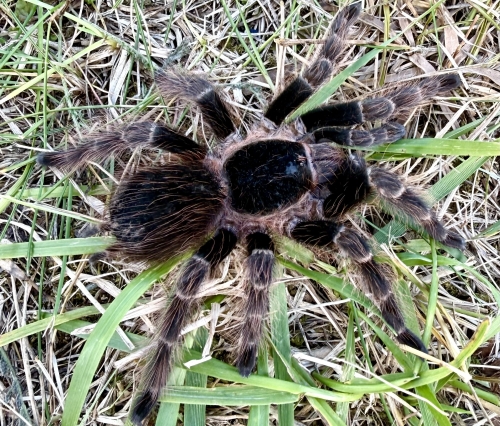

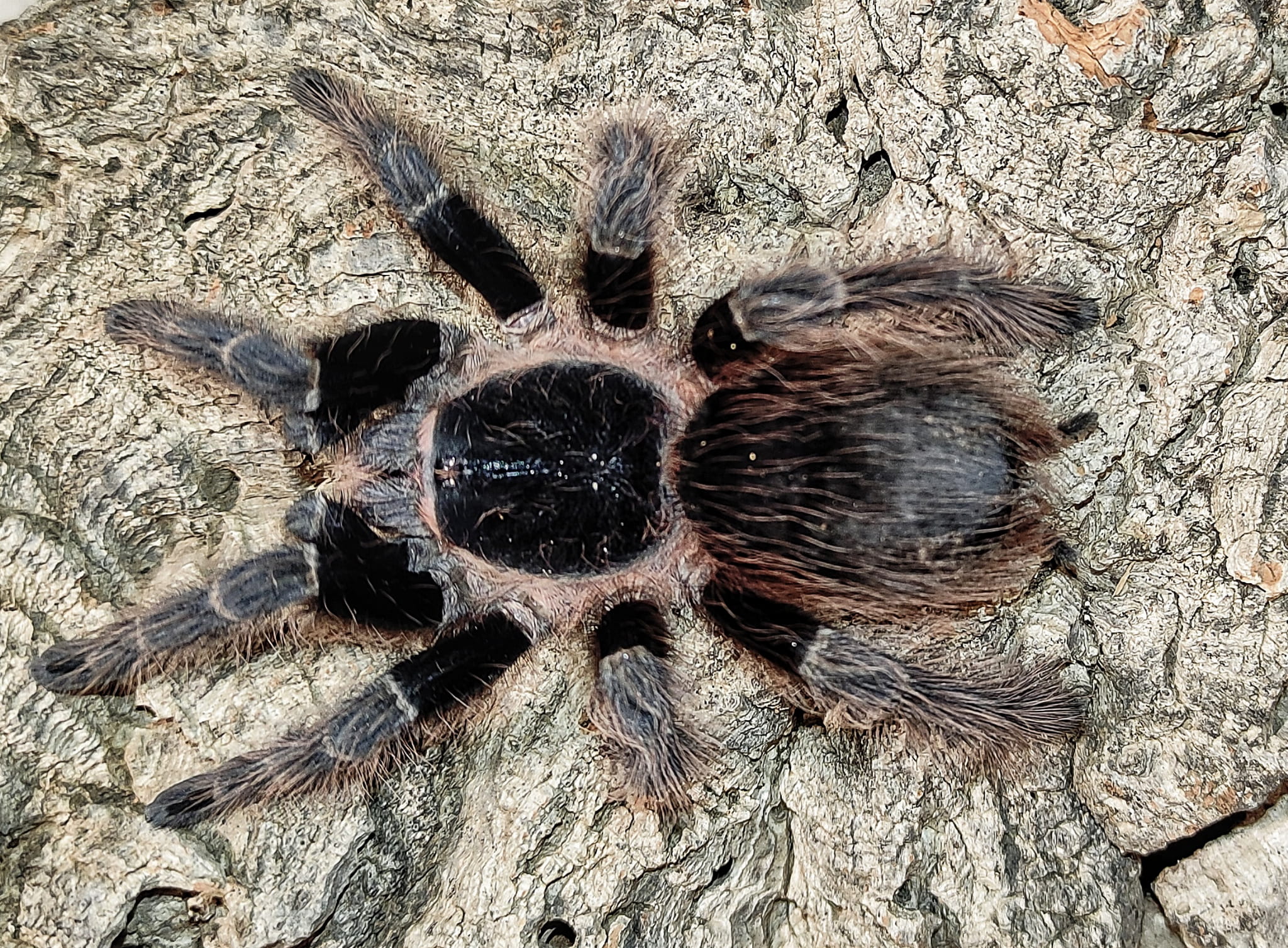
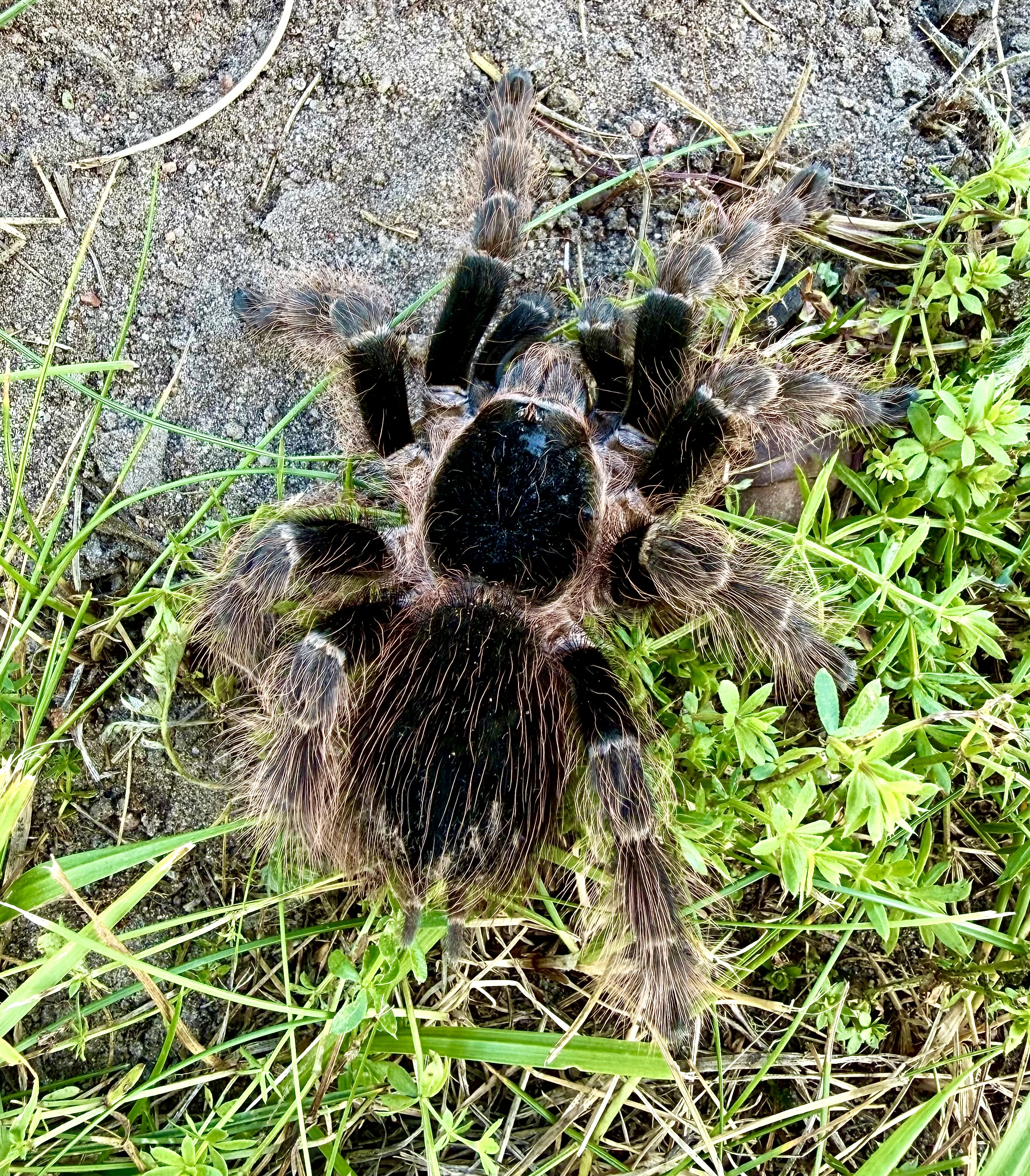
Species: Nhandu carapoensis
Common name: Brazilian Red
Native range: Brazil (Cerrado and transitional forests)
Temperature: 25–28°C with a 2–3°C drop at night; room temperature is also well tolerated
Humidity: 70–80%
Adult size: Females reach up to 6 cm in body length (around 15 cm leg span)
Lifestyle: Terrestrial
Speed: Moderate, with quick bursts when disturbed
Venom potency: Mild
Temperament: Nervous and defensive; quick to kick urticating setae
Recommended for: Intermediate keepers
Notes: Not listed under CITES; no captive-bred documentation required
Nhandu carapoensis
product unavailable
Description
Nhandu carapoensis comes from Brazil's Cerrado and the transitional forests that fringe it — open, sun-baked country that has shaped a spider built for presence rather than subtlety. Heavy-bodied and unmistakably terrestrial, it carries a dark base colour set against the warm rust of the urticating setae blanketing its opisthosoma, a contrast that reads less like camouflage and more like a posted notice. The genus Nhandu represents some of Brazil's most assertive theraphosids, and Nhandu carapoensis carries that lineage forward without apology.
The temperament here is lively in a way that demands attention. Nhandu carapoensis moves with intent, startles readily, and reaches for its opisthosoma at the first hint of a threat — and the urticating setae of this genus are noticeably more irritating than what most New World species produce. Opening the enclosure calls for deliberate, unhurried movements; this is not a spider that rewards carelessness with indifference. In exchange you get an appetite that rarely falters and a growth rate that makes progress visible from one season to the next.
Husbandry is straightforward for a keeper who reads the animal correctly. A terrestrial enclosure with 5–7 cm of coconut fibre substrate, a hide and a water dish covers the essentials. Room temperature is sufficient. A damp corner maintained through occasional misting provides the moisture gradient the species appreciates without pushing humidity to extremes. Cross-ventilation matters. Appropriately sized prey is taken reliably and with enthusiasm.
Nhandu carapoensis suits the keeper who wants a large Brazilian tarantula that actually behaves like one. It is not a display animal that sits still and poses; it is a species with opinions, and it expresses them clearly. Keepers who have spent years with calmer New World terrestrials often find that Nhandu carapoensis quietly redraws the map — less observation of stillness, more ongoing dialogue with something genuinely alive.