






 Choose language
- Spiders
- ANIMALS
- Arachnids (Arachnida)
- Spiders (Araneae)
- Tarantulas (Mygalomorphae)
- Psednocnemis spp.
- Diplura spp.
- Spinosatibiapalpus spp.
- Acanthogonatus spp.
- Acanthoscurria spp.
- Amazonius spp.
- Ami spp.
- Anquasha spp.
- Aphonopelma spp.
- Aspinochilus spp.
- Augacephalus spp.
- Avicularia spp.
- Birupes spp.
- Bonnetina spp.
- Brachypelma spp.
- Bumba spp.
- Caribena spp.
- Ceratogyrus spp.
- Chaetopelma spp.
- Chilobrachys spp.
- Chromatopelma spp.
- Cilantica spp.
- Citharacanthus spp.
- Coremiocnemis spp.
- Cyclosternum spp.
- Cyriocosmus spp.
- Cyriopagopus spp.
- Davus spp.
- Dolichothele spp.
- Encyocratella spp.
- Ephebopus spp.
- Euathlus spp.
- Eucratoscelus spp.
- Eupalaestrus spp.
- Fufius spp.
- Gorgyrella spp.
- Grammostola spp.
- Guyruita spp.
- Hapalopus spp.
- Haploclastus spp.
- Haplocosmia spp.
- Haplopelma spp.
- Harpactira spp.
- Heteroscodra spp.
- Heterothele spp.
- Holothele spp.
- Homoeomma spp.
- Hysterocrates spp.
- Idiothele spp.
- Iridopelma spp.
- Kochiana spp.
- Lampropelma spp.
- Lasiocyano spp.
- Lasiodora spp.
- Lasiodorides spp.
- Linothele spp.
- Lyrognathus spp.
- Megaphobema spp.
- Monocentropus spp.
- Neischnocolus spp.
- Neoholothele spp.
- Neostenotarsus spp.
- Nhandu spp.
- Omothymus spp.
- Ornithoctoninae spp.
- Ornithoctonus spp.
- Pamphobeteus spp.
- Pelinobius spp.
- Phormictopus spp.
- Phormingochilus spp.
- Phrixotrichus spp.
- Poecilotheria spp.
- Psalmopoeus spp.
- Pseudhapalopus spp.
- Pseudoclamoris spp.
- Pterinochilus spp.
- Selenocosmia spp.
- Sericopelma spp.
- Tapinauchenius spp.
- Taksinus spp.
- Tapinauchenius spp.
- Theraphosa spp.
- Theraphosidae spp.
- Theraphosinae spp.
- Thrigmopoeus spp.
- Thrixopelma spp.
- Tliltocatl spp.
- Typhochlaena spp.
- Urupelma spp.
- Vitalius spp.
- Xenesthis spp.
- Ybyrapora spp.
- True Spiders (Araneomorphae)
- Velvet Spiders (Eresidae)
- Macrothele spp.
- Liphistius spp.
- Tarantulas (Mygalomorphae)
- Scorpions (Scorpiones)
- Spiders (Araneae)
- Insects - for feeding
- Arachnids (Arachnida)
- Scorpions
- Accessories
- Books
- Centipede
- Millipede
- Cockroaches
- New products
- Products on sale
Currency

€32.00
Regular price:
€40.00

€42.50
Regular price:
€50.00
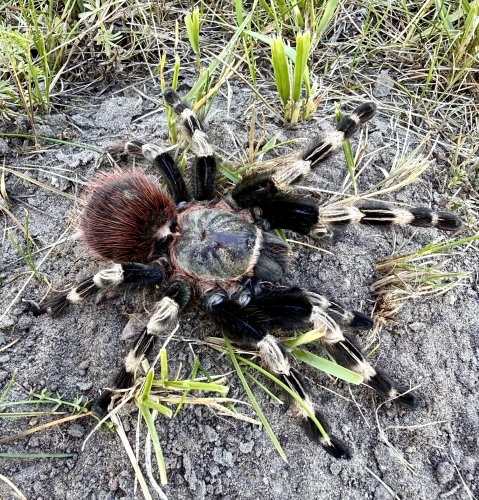
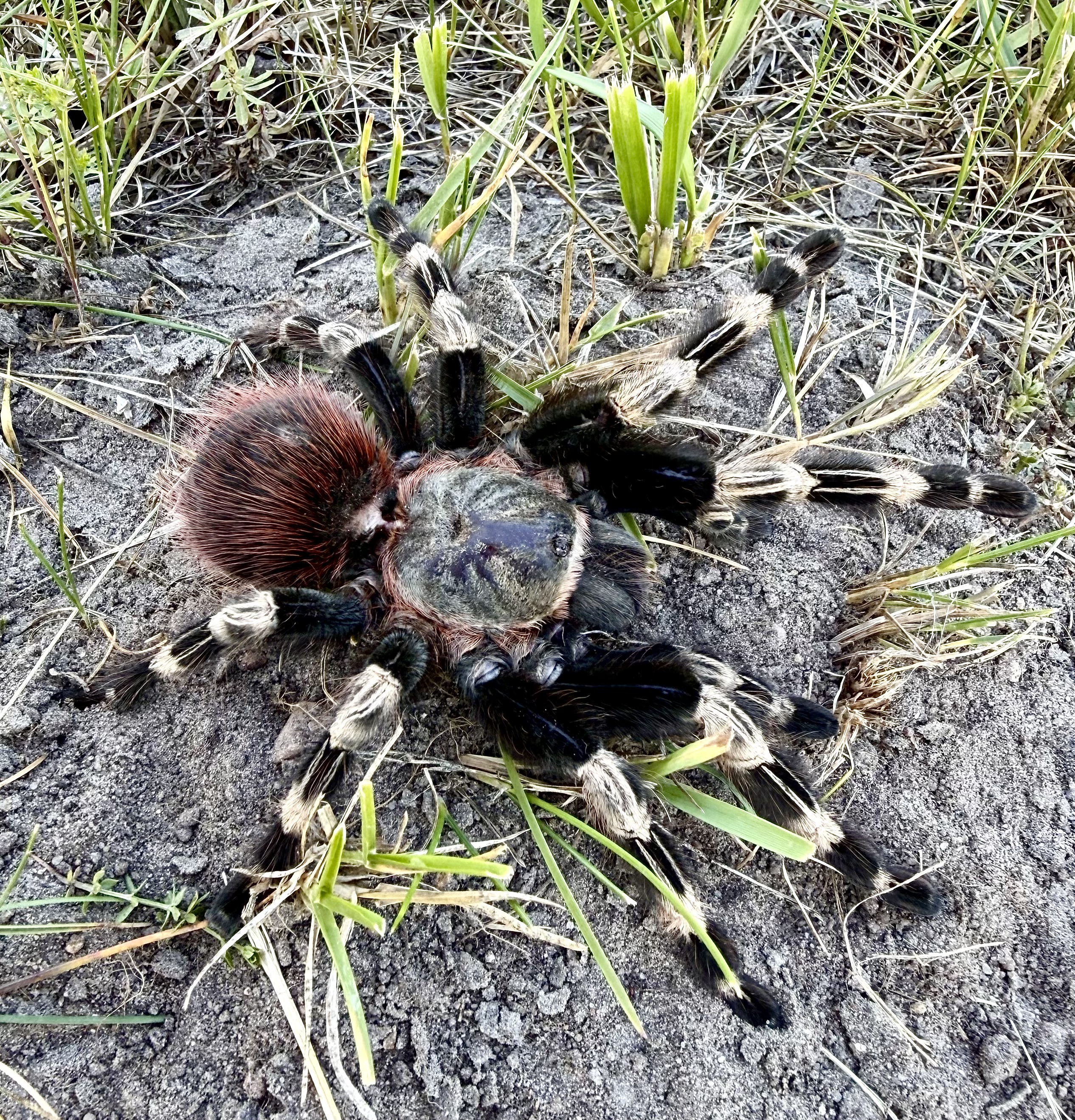

Species: Nhandu chromatus
Common name: Brazilian Red and White
Native range: Brazil
Temperature: 25–28°C with a 2–3°C drop at night; room temperature is generally sufficient
Humidity: 70–80%
Adult size: Females reach up to 8 cm BL
Lifestyle: Terrestrial
Speed: Moderate
Venom potency: Mild
Temperament: Skittish, will kick urticating setae
Recommended for: Keepers with some prior experience
Notes: Not CITES-listed; no captive-bred documentation required
Nhandu chromatus
product unavailable
Description
Nhandu chromatus carries itself like an animal that has never needed camouflage — and never bothered to develop any. Dark chelicerae and a heavy-bodied frame are set against cream-white banding across the patellae of each walking leg, the contrast sharp enough to read from across the room. Rust-coloured setae across the opisthosoma round out the palette behind its common name, Brazilian Red and White — a name that, for once, actually earns its keep.
Where many large South American species invite a slower, more contemplative rhythm, Nhandu chromatus pushes back. It is quicker on its feet and more decisive than the Grammostola species that share its continent, with a temperament that keeps you attentive at the enclosure door. This is a terrestrial spider that will kick urticating setae when it judges the moment right, and it does so without hesitation. A strong feeding response and a solid growth rate mean there is rarely a period when the animal feels static — each moult brings a visible step forward.
Housing is straightforward: a terrestrial setup with 7–10 cm of coconut fibre substrate, a cork hide, and a shallow water dish. Keep one corner of the substrate lightly damp and allow the rest to dry between mistings. Room temperature suits Nhandu chromatus across most of the year, and no supplemental heating is needed under normal household conditions.
Nhandu chromatus is the right pick for a keeper who wants a large, characterful Brazilian species without waiting years for the colour to come in. The white-on-dark banding catches the light with every deliberate step, and after a few months you start to recognise the cadence of a particular individual — the way it patrols, the corner it favours, the moult intervals you begin to anticipate. It tends to settle into the front of a collection and hold that spot for the long haul.