






 Choose language
- Spiders
- ANIMALS
- Arachnids (Arachnida)
- Spiders (Araneae)
- Tarantulas (Mygalomorphae)
- Psednocnemis spp.
- Diplura spp.
- Spinosatibiapalpus spp.
- Acanthogonatus spp.
- Acanthoscurria spp.
- Amazonius spp.
- Ami spp.
- Anquasha spp.
- Aphonopelma spp.
- Aspinochilus spp.
- Augacephalus spp.
- Avicularia spp.
- Birupes spp.
- Bonnetina spp.
- Brachypelma spp.
- Bumba spp.
- Caribena spp.
- Ceratogyrus spp.
- Chaetopelma spp.
- Chilobrachys spp.
- Chromatopelma spp.
- Cilantica spp.
- Citharacanthus spp.
- Coremiocnemis spp.
- Cyclosternum spp.
- Cyriocosmus spp.
- Cyriopagopus spp.
- Davus spp.
- Dolichothele spp.
- Encyocratella spp.
- Ephebopus spp.
- Euathlus spp.
- Eucratoscelus spp.
- Eupalaestrus spp.
- Fufius spp.
- Gorgyrella spp.
- Grammostola spp.
- Guyruita spp.
- Hapalopus spp.
- Haploclastus spp.
- Haplocosmia spp.
- Haplopelma spp.
- Harpactira spp.
- Heteroscodra spp.
- Heterothele spp.
- Holothele spp.
- Homoeomma spp.
- Hysterocrates spp.
- Idiothele spp.
- Iridopelma spp.
- Kochiana spp.
- Lampropelma spp.
- Lasiocyano spp.
- Lasiodora spp.
- Lasiodorides spp.
- Linothele spp.
- Lyrognathus spp.
- Megaphobema spp.
- Monocentropus spp.
- Neischnocolus spp.
- Neoholothele spp.
- Neostenotarsus spp.
- Nhandu spp.
- Omothymus spp.
- Ornithoctoninae spp.
- Ornithoctonus spp.
- Pamphobeteus spp.
- Pelinobius spp.
- Phormictopus spp.
- Phormingochilus spp.
- Phrixotrichus spp.
- Poecilotheria spp.
- Psalmopoeus spp.
- Pseudhapalopus spp.
- Pseudoclamoris spp.
- Pterinochilus spp.
- Selenocosmia spp.
- Sericopelma spp.
- Tapinauchenius spp.
- Taksinus spp.
- Tapinauchenius spp.
- Theraphosa spp.
- Theraphosidae spp.
- Theraphosinae spp.
- Thrigmopoeus spp.
- Thrixopelma spp.
- Tliltocatl spp.
- Typhochlaena spp.
- Urupelma spp.
- Vitalius spp.
- Xenesthis spp.
- Ybyrapora spp.
- True Spiders (Araneomorphae)
- Velvet Spiders (Eresidae)
- Macrothele spp.
- Liphistius spp.
- Tarantulas (Mygalomorphae)
- Scorpions (Scorpiones)
- Spiders (Araneae)
- Insects - for feeding
- Arachnids (Arachnida)
- Scorpions
- Accessories
- Books
- Centipede
- Millipede
- Cockroaches
- New products
- Products on sale
Currency

€32.00
Regular price:
€40.00

€42.50
Regular price:
€50.00

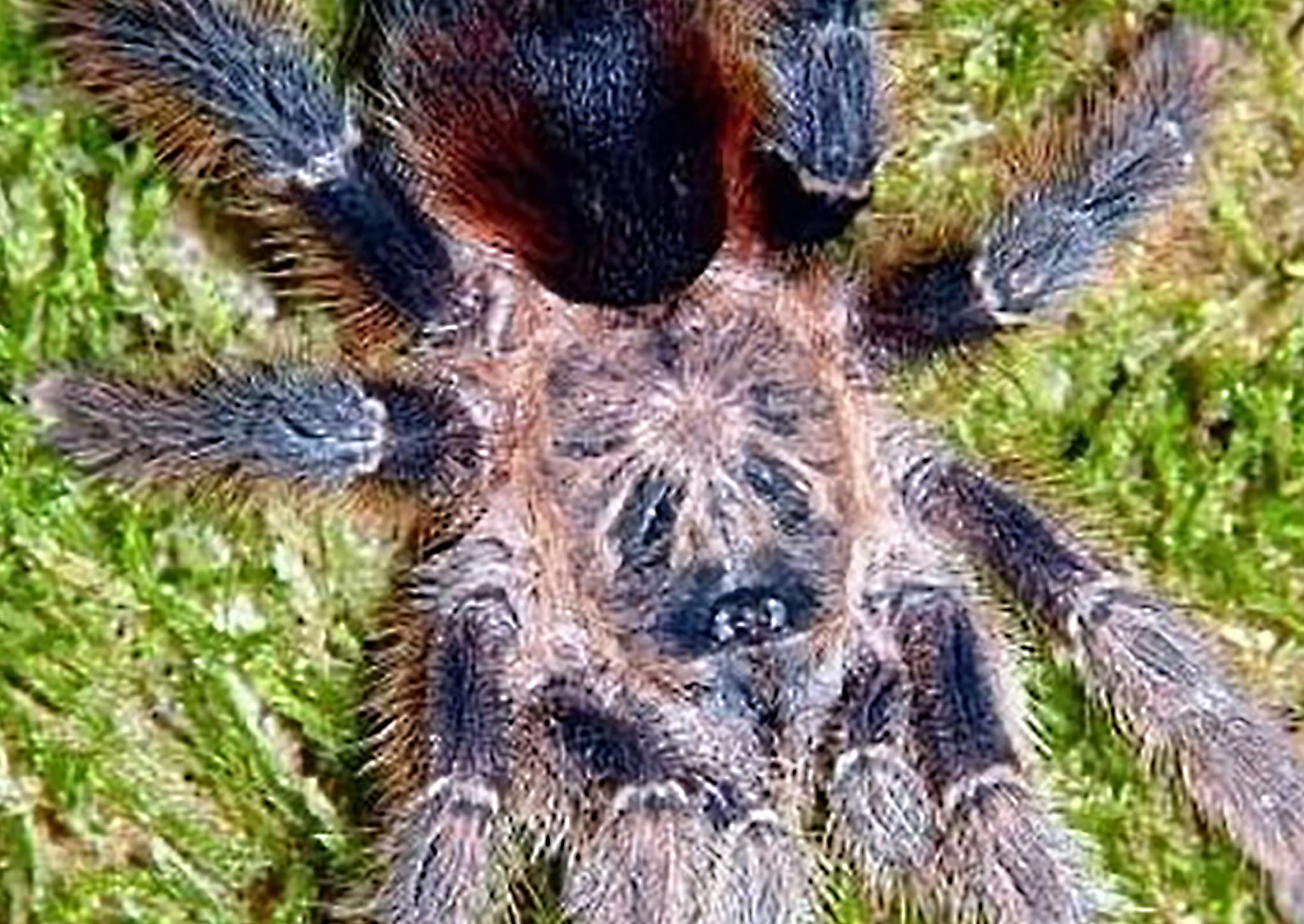
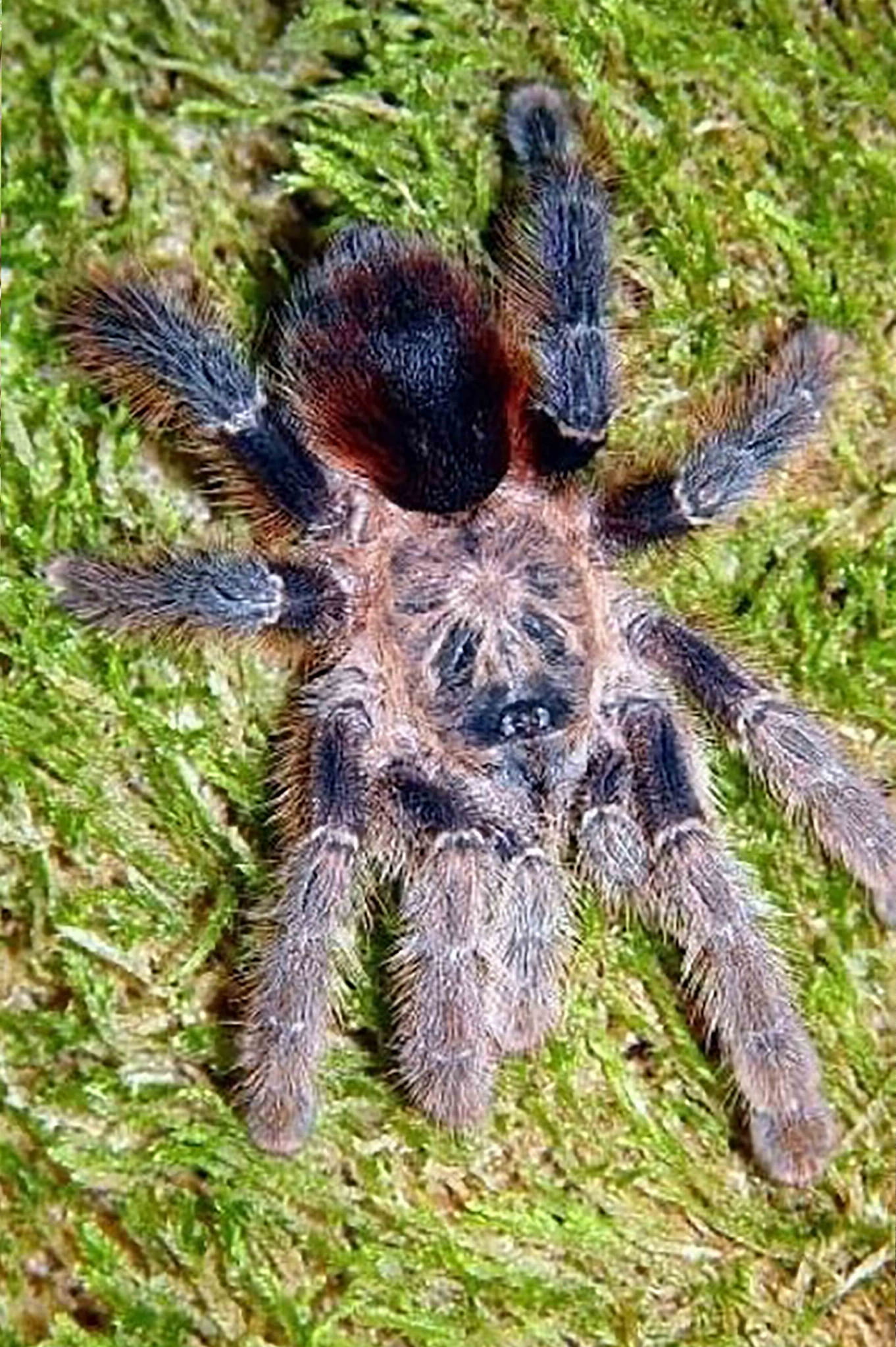
Species: Avicularia merianae
Common name: -
Native range: French Guiana, Suriname
Temperature: 24–27°C with a 2–3°C drop at night
Humidity: 65–70%
Adult size: Females reach up to 5 cm body length
Lifestyle: Arboreal
Speed: Moderate
Venom potency: Mild
Temperament: Calm
Recommended for: Beginner and intermediate keepers
Notes: No CITES documentation required
An excellent choice as a first arboreal tarantula
Avicularia merianae
product unavailable
Description
From the coastal lowland forests of French Guiana and Suriname comes a spider whose name carries more history than almost any other in the family. Avicularia merianae honours Maria Sibylla Merian, a seventeenth-century German artist and naturalist who, at a time when few European women travelled at all, sailed to Suriname to document its insects and spiders firsthand. Her 1705 engravings of tarantulas are among the earliest scientific illustrations of these animals in existence — and every time a visitor notices the nameplate on the enclosure, you have a story worth telling. The animal itself lives up to the legacy: a darkly elegant arboreal whose prosoma shifts between deep green and faint blue iridescence, set against a body clothed in dense, velvety setae. The iridescence is restrained rather than flashy, and it suits the spider perfectly.
In temperament, Avicularia merianae is exactly what the genus is known for: calm, unhurried, and gently retiring. It builds a dense silken tube retreat among branches or cork bark and spends most of the day tucked inside, emerging after dark to hunt. It is neither especially fast nor prone to dramatic threat postures, and a keeper who wants an animal that tolerates a steady, contemplative gaze will find this species obliging. Adults carry a quiet elegance that differs from the more vivid members of the genus — there is something genuinely appealing about a spider that rewards patience rather than spectacle.
Care follows the standard Avicularia framework, with one priority worth flagging clearly: good cross-flow ventilation needs to be designed into the enclosure from the start. The setup itself is vertical — a tall enclosure furnished with cork bark, branches, and live or artificial plants that give the spider anchor points for its silken tube retreat. Humidity stays moderate, maintained by misting one wall regularly and allowing areas to dry between sessions. A water dish on the substrate is appropriate for adults. Room temperature suits most households, and appropriately sized prey is taken with calm, deliberate strikes.
Avicularia merianae is a species for the keeper who wants more than a handsome enclosure — someone who finds that the organism and its story are inseparable. Straightforward enough to serve as a first arboreal, rewarding enough to hold a permanent place in a mature collection, and named for a woman whose curiosity about the natural world reshaped how Europeans understood it. Years from now, when this spider is occupying her tube retreat in the corner of your room, the story will still be worth telling.