






 Choose language
- Spiders
- ANIMALS
- Arachnids (Arachnida)
- Spiders (Araneae)
- Tarantulas (Mygalomorphae)
- Psednocnemis spp.
- Diplura spp.
- Spinosatibiapalpus spp.
- Acanthogonatus spp.
- Acanthoscurria spp.
- Amazonius spp.
- Ami spp.
- Anquasha spp.
- Aphonopelma spp.
- Aspinochilus spp.
- Augacephalus spp.
- Avicularia spp.
- Birupes spp.
- Bonnetina spp.
- Brachypelma spp.
- Bumba spp.
- Caribena spp.
- Ceratogyrus spp.
- Chaetopelma spp.
- Chilobrachys spp.
- Chromatopelma spp.
- Cilantica spp.
- Citharacanthus spp.
- Coremiocnemis spp.
- Cyclosternum spp.
- Cyriocosmus spp.
- Cyriopagopus spp.
- Davus spp.
- Dolichothele spp.
- Encyocratella spp.
- Ephebopus spp.
- Euathlus spp.
- Eucratoscelus spp.
- Eupalaestrus spp.
- Fufius spp.
- Gorgyrella spp.
- Grammostola spp.
- Guyruita spp.
- Hapalopus spp.
- Haploclastus spp.
- Haplocosmia spp.
- Haplopelma spp.
- Harpactira spp.
- Heteroscodra spp.
- Heterothele spp.
- Holothele spp.
- Homoeomma spp.
- Hysterocrates spp.
- Idiothele spp.
- Iridopelma spp.
- Kochiana spp.
- Lampropelma spp.
- Lasiocyano spp.
- Lasiodora spp.
- Lasiodorides spp.
- Linothele spp.
- Lyrognathus spp.
- Megaphobema spp.
- Monocentropus spp.
- Neischnocolus spp.
- Neoholothele spp.
- Neostenotarsus spp.
- Nhandu spp.
- Omothymus spp.
- Ornithoctoninae spp.
- Ornithoctonus spp.
- Pamphobeteus spp.
- Pelinobius spp.
- Phormictopus spp.
- Phormingochilus spp.
- Phrixotrichus spp.
- Poecilotheria spp.
- Psalmopoeus spp.
- Pseudhapalopus spp.
- Pseudoclamoris spp.
- Pterinochilus spp.
- Selenocosmia spp.
- Sericopelma spp.
- Tapinauchenius spp.
- Taksinus spp.
- Tapinauchenius spp.
- Theraphosa spp.
- Theraphosidae spp.
- Theraphosinae spp.
- Thrigmopoeus spp.
- Thrixopelma spp.
- Tliltocatl spp.
- Typhochlaena spp.
- Urupelma spp.
- Vitalius spp.
- Xenesthis spp.
- Ybyrapora spp.
- True Spiders (Araneomorphae)
- Velvet Spiders (Eresidae)
- Macrothele spp.
- Liphistius spp.
- Tarantulas (Mygalomorphae)
- Scorpions (Scorpiones)
- Spiders (Araneae)
- Insects - for feeding
- Arachnids (Arachnida)
- Scorpions
- Accessories
- Books
- Centipede
- Millipede
- Cockroaches
- New products
- Products on sale
Currency

€32.00
Regular price:
€40.00

€42.50
Regular price:
€50.00

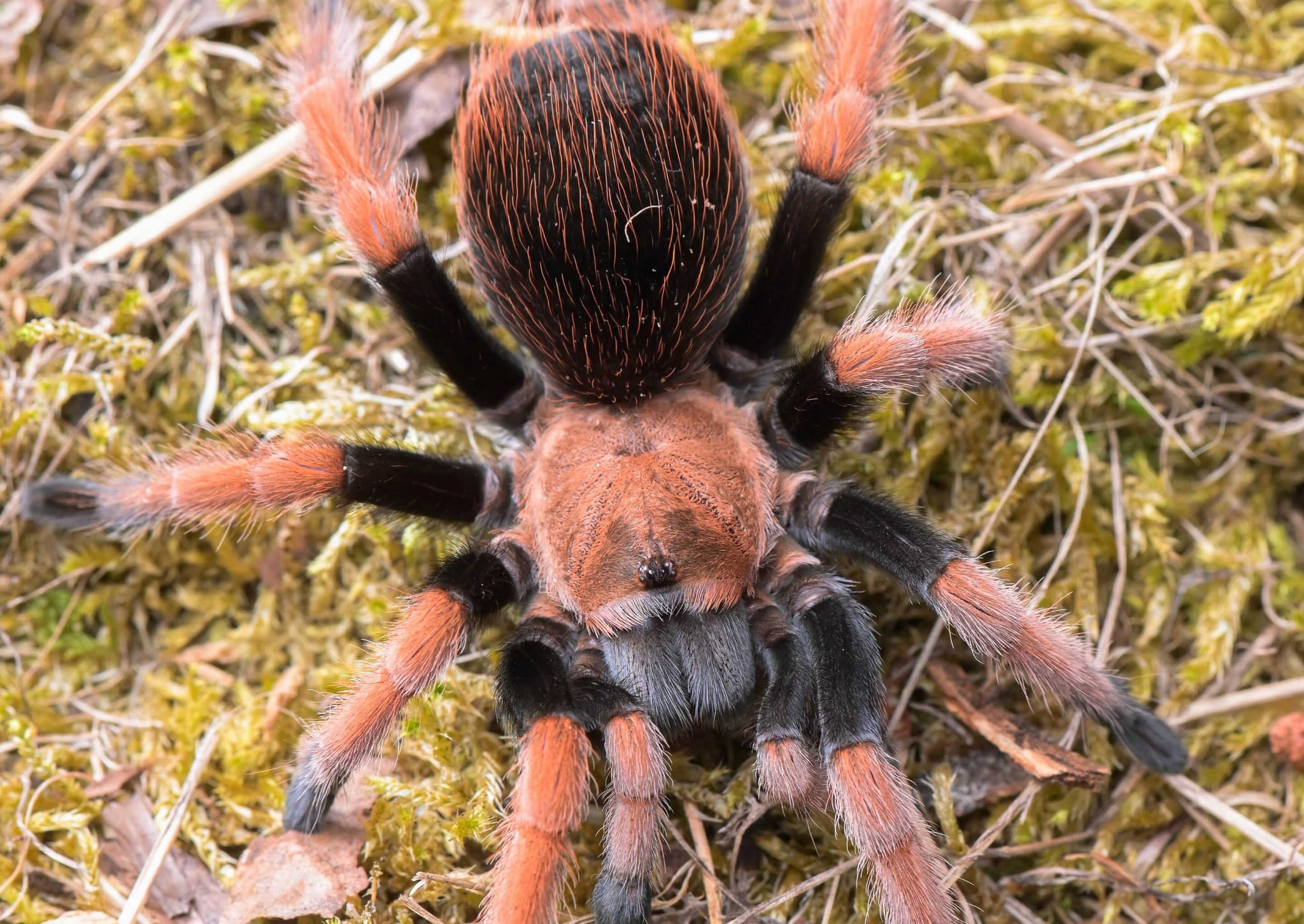
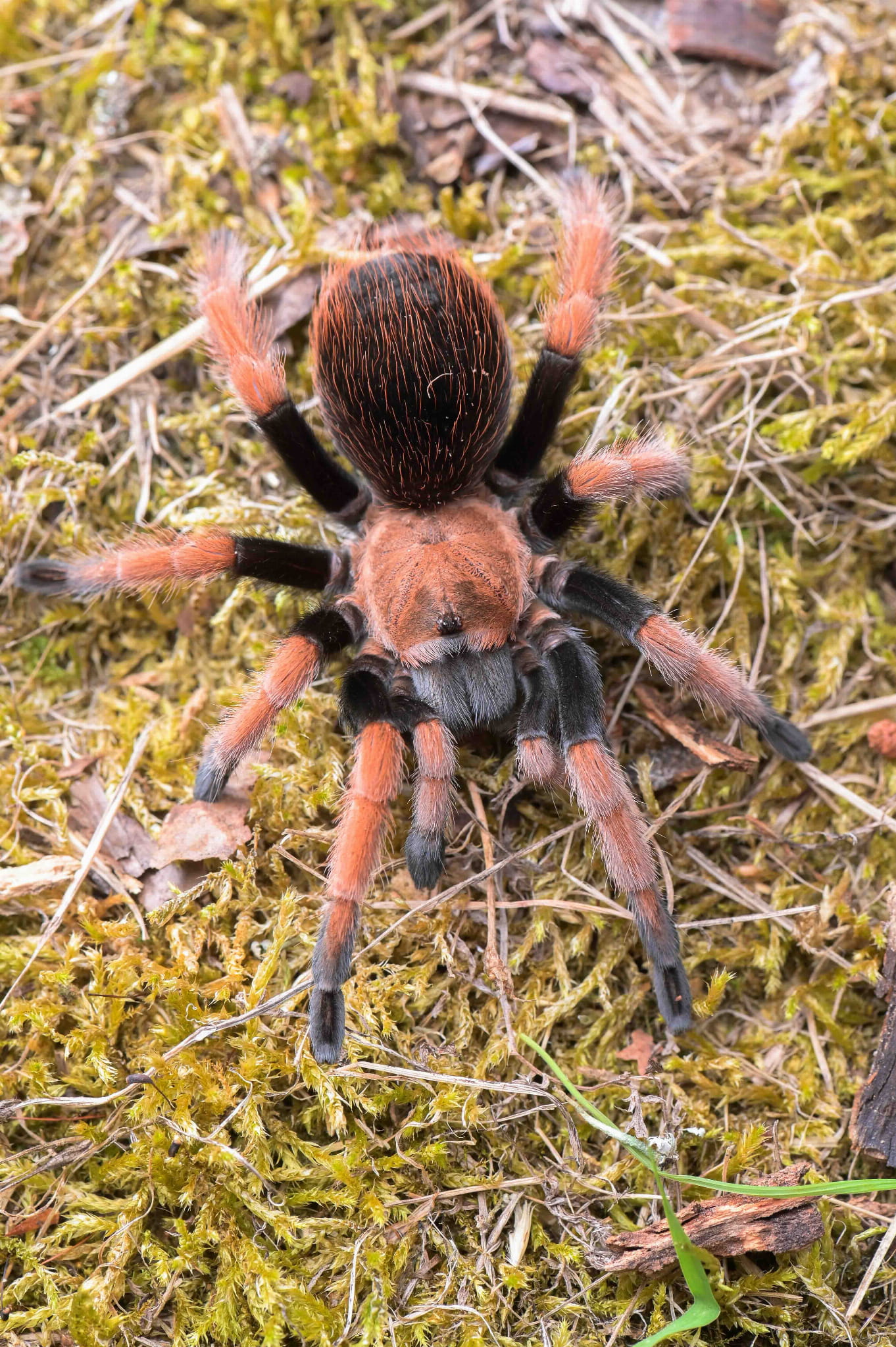
Species: Aphonopelma bicoloratum
Common name: -
Native range: Mexico
Temperature: Room temperature (20–26°C)
Humidity: 40–50%
Adult size: Females reach up to 6–7 cm BL
Lifestyle: Terrestrial
Speed: Slow
Venom potency: Mild
Temperament: Calm
Recommended for: Suitable for all keepers
Notes: This species does NOT require captive-bred documentation (CITES)
Suitable as a first spider
Aphonopelma bicoloratum
product unavailable
Description
The dry, rocky hillsides of Guerrero and Oaxaca bake under a sun that rarely relents — and it is there, in rock crevices and beneath stones, that *Aphonopelma bicoloratum* makes its home. The name says it plainly: two colors, each working against the other. A body of deep, unreflective black set against flame-orange setae on the opisthosoma — the contrast reads almost like a warning sign that nature placed there for effect rather than function. What makes the coloration worth noting beyond the obvious is that it sharpens with every molt, each successive instar rendering the pattern a little more precise, a little more deliberate. Adult females are among the most visually coherent spiders in the genus.
The temperament is the other half of the story. *Aphonopelma bicoloratum* is calm in the way that genuinely unhurried animals are calm — not sluggish, but unbothered. It does not kick urticating setae without provocation, does not posture dramatically at a water dish, does not treat a feeding tong as a threat. In a genus already known for docility, this species sits toward the composed end of that spectrum. Growth is slow, as it is across virtually all *Aphonopelma*, but the trade is straightforward: females may live over 20 years, a timescale that puts most of the hobby's fast-maturing imports in a different category entirely.
Husbandry follows the landscape this species comes from. The enclosure should be dry: a sandy substrate mixed with coconut fiber, kept largely arid, with one corner near the water dish allowed to receive occasional light misting — enough to give the spider a choice of humidity gradient without turning the setup into something it was never designed for. Room temperature is sufficient; no supplemental heating is needed. A cork bark hide, a flat stone for resting on top of the substrate, and minimal interference will satisfy every requirement. Feed with appropriately sized prey at intervals that match the animal's metabolism, which is to say infrequently.
*Aphonopelma bicoloratum* is a species that rewards patience as a practice, not just as a coping mechanism for slow growth. A keeper who can sit with an animal for years — watching it settle into its stone, tracking the subtle shift in color from one molt to the next — will find that this spider has a way of becoming less like a display piece and more like a presence. Twenty years is a long time to share space with anything. This one makes it feel like a reasonable arrangement.