






 Choose language
- Spiders
- ANIMALS
- Arachnids (Arachnida)
- Spiders (Araneae)
- Tarantulas (Mygalomorphae)
- Psednocnemis spp.
- Diplura spp.
- Spinosatibiapalpus spp.
- Acanthogonatus spp.
- Acanthoscurria spp.
- Amazonius spp.
- Ami spp.
- Anquasha spp.
- Aphonopelma spp.
- Aspinochilus spp.
- Augacephalus spp.
- Avicularia spp.
- Birupes spp.
- Bonnetina spp.
- Brachypelma spp.
- Bumba spp.
- Caribena spp.
- Ceratogyrus spp.
- Chaetopelma spp.
- Chilobrachys spp.
- Chromatopelma spp.
- Cilantica spp.
- Citharacanthus spp.
- Coremiocnemis spp.
- Cyclosternum spp.
- Cyriocosmus spp.
- Cyriopagopus spp.
- Davus spp.
- Dolichothele spp.
- Encyocratella spp.
- Ephebopus spp.
- Euathlus spp.
- Eucratoscelus spp.
- Eupalaestrus spp.
- Fufius spp.
- Gorgyrella spp.
- Grammostola spp.
- Guyruita spp.
- Hapalopus spp.
- Haploclastus spp.
- Haplocosmia spp.
- Haplopelma spp.
- Harpactira spp.
- Heteroscodra spp.
- Heterothele spp.
- Holothele spp.
- Homoeomma spp.
- Hysterocrates spp.
- Idiothele spp.
- Iridopelma spp.
- Kochiana spp.
- Lampropelma spp.
- Lasiocyano spp.
- Lasiodora spp.
- Lasiodorides spp.
- Linothele spp.
- Lyrognathus spp.
- Megaphobema spp.
- Monocentropus spp.
- Neischnocolus spp.
- Neoholothele spp.
- Neostenotarsus spp.
- Nhandu spp.
- Omothymus spp.
- Ornithoctoninae spp.
- Ornithoctonus spp.
- Pamphobeteus spp.
- Pelinobius spp.
- Phormictopus spp.
- Phormingochilus spp.
- Phrixotrichus spp.
- Poecilotheria spp.
- Psalmopoeus spp.
- Pseudhapalopus spp.
- Pseudoclamoris spp.
- Pterinochilus spp.
- Selenocosmia spp.
- Sericopelma spp.
- Tapinauchenius spp.
- Taksinus spp.
- Tapinauchenius spp.
- Theraphosa spp.
- Theraphosidae spp.
- Theraphosinae spp.
- Thrigmopoeus spp.
- Thrixopelma spp.
- Tliltocatl spp.
- Typhochlaena spp.
- Urupelma spp.
- Vitalius spp.
- Xenesthis spp.
- Ybyrapora spp.
- True Spiders (Araneomorphae)
- Velvet Spiders (Eresidae)
- Macrothele spp.
- Liphistius spp.
- Tarantulas (Mygalomorphae)
- Scorpions (Scorpiones)
- Spiders (Araneae)
- Insects - for feeding
- Arachnids (Arachnida)
- Scorpions
- Accessories
- Books
- Centipede
- Millipede
- Cockroaches
- New products
- Products on sale
Currency

€32.00
Regular price:
€40.00

€42.50
Regular price:
€50.00

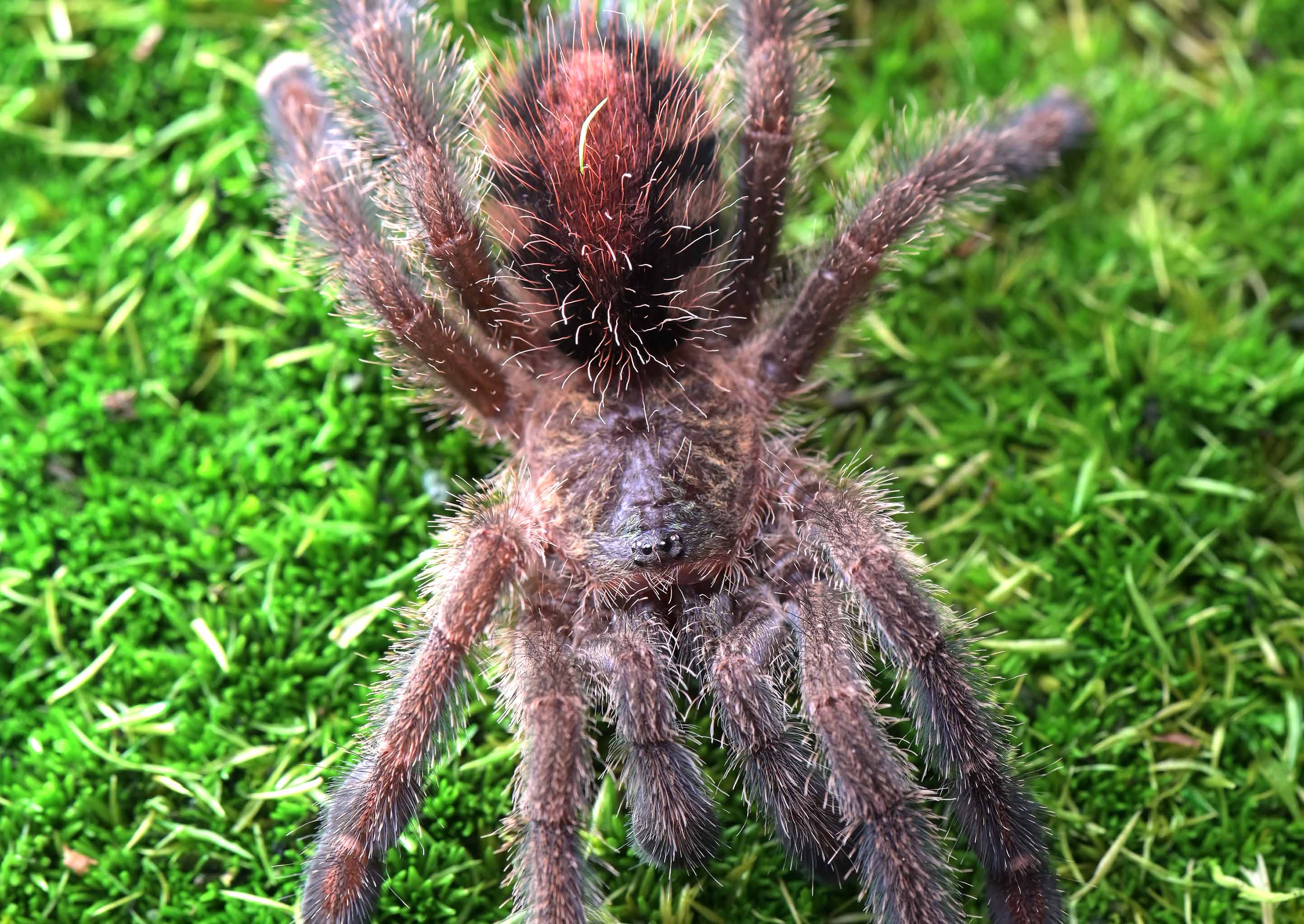
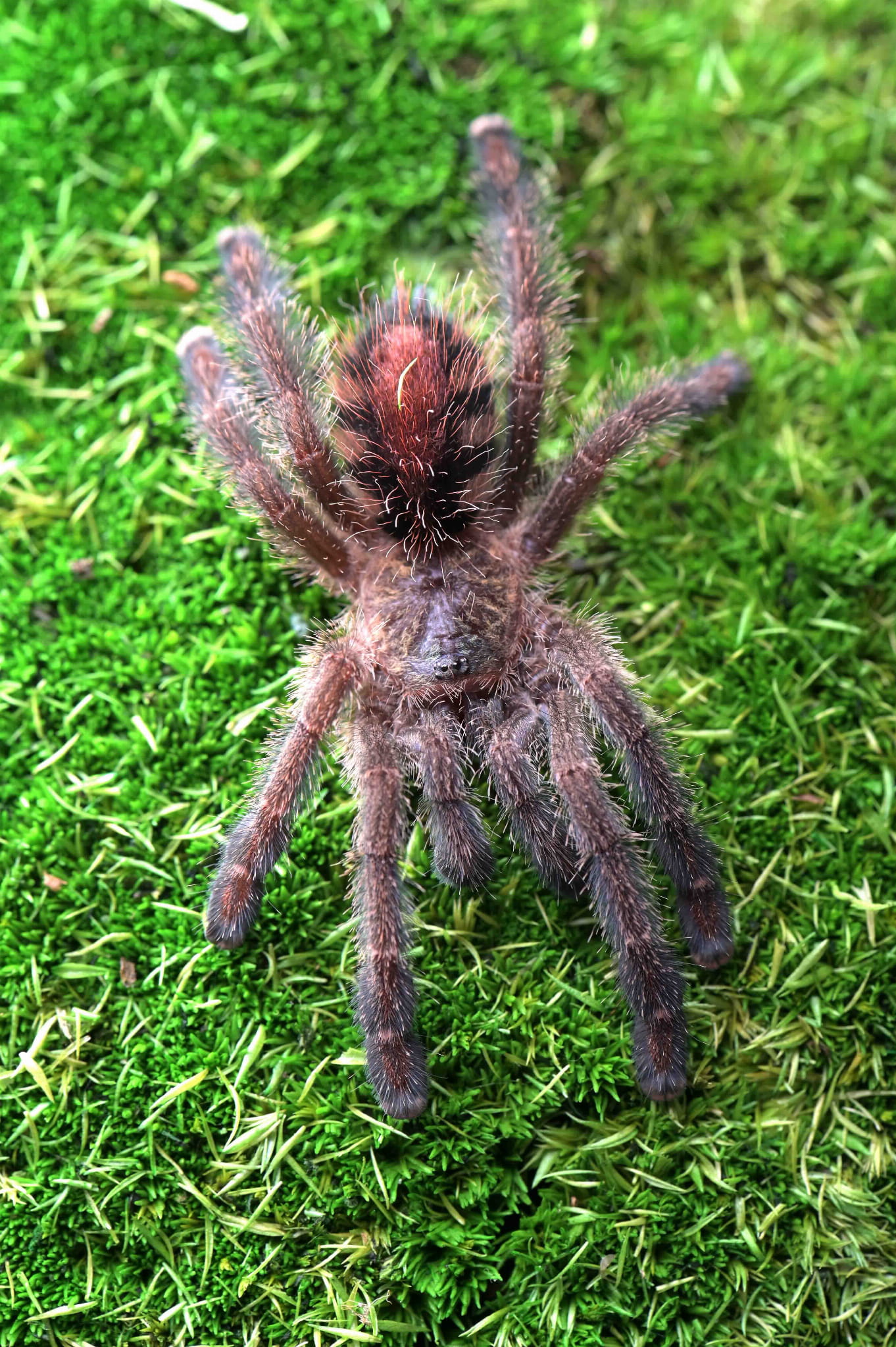
Species: Ybyrapora diversipes
Common name: Amazon Sapphire Pinktoe
Native range: Brazil (Atlantic Forest)
Temperature: room temperature (20–25 °C)
Humidity: 70–85%
Adult size: Female 6 cm BL, male 3.5–4 cm BL
Lifestyle: arboreal
Speed: fast
Venom potency: mild
Temperament: skittish, defensive when disturbed
Recommended for: intermediate keepers
Notes: Not CITES listed; no documentation required.
Ybyrapora diversipes
product unavailable
Description
Ybyrapora diversipes hatches the colour of a struck match held against a sapphire — an electric, almost improbable blue that makes experienced keepers stop mid-sentence. Over the following years that blue drifts through metallic green and finally settles into warm yellow-green accents, a transformation that plays out across many molts. No other New World arboreal offers quite this chromatic arc, and watching a single specimen change is less like keeping a pet and more like observing a slow, living pigment study unfold on your shelf.
Fast and alert, Ybyrapora diversipes rewards the keeper who actually watches. It builds tubular silk retreats in the upper reaches of the enclosure and uses them actively — retreating, emerging, redecorating — so there is always something happening. The species carries no urticating setae, so its defensive repertoire leans on speed and posture rather than bombardment; it can be assertive when startled, but it does not spend its life in threat posture. Feeding responses are eager and unmistakable.
Keep the enclosure oriented vertically, with cork tube or cork bark anchored toward the upper half to give the spider attachment points for its silk. Humidity should run on the higher side — misting one wall regularly, paired with generous cross-ventilation, holds the microclimate without inviting mould. Stagnant air is the main husbandry risk here, so airflow matters more than the exact reading on a hygrometer. Room temperature suits year-round keeping, and a shallow water dish on the floor should always be available.
For the keeper who has moved past terrestrials and wants an animal that genuinely evolves on the shelf, Ybyrapora diversipes is a compelling answer. The shift from blue spiderling to green-gold adult is the entire arc of the keeping experience — a slow reveal most tarantulas simply do not offer. Years from now, what you'll remember is not the specimen you bought, but the different animal it quietly became.