





 Choose language
Currency

€32.00
Regular price:
€40.00

€42.50
Regular price:
€50.00
Species: Platythomisus octomaculatus
Common name: Pikachu spider
Native range: Southeast Asia
Temperature: 24-28°C
Humidity: moderate to higher; light misting every 1-2 days, good ventilation
Adult size: females approx. 20-25 mm, males much smaller
Lifestyle: crab spider (Thomisidae), ambush hunter on leaves, vertical enclosure
Speed: usually motionless, very fast strike
Venom potency: harmless to humans
Temperament: calm, a display species
Recommended for: intermediate keepers
Notes: eats less often than jumping spiders; yellow body with eight black spots
Pająk Pikachu
product unavailable
Description
Pikachu spider: a spider you do not expect to see
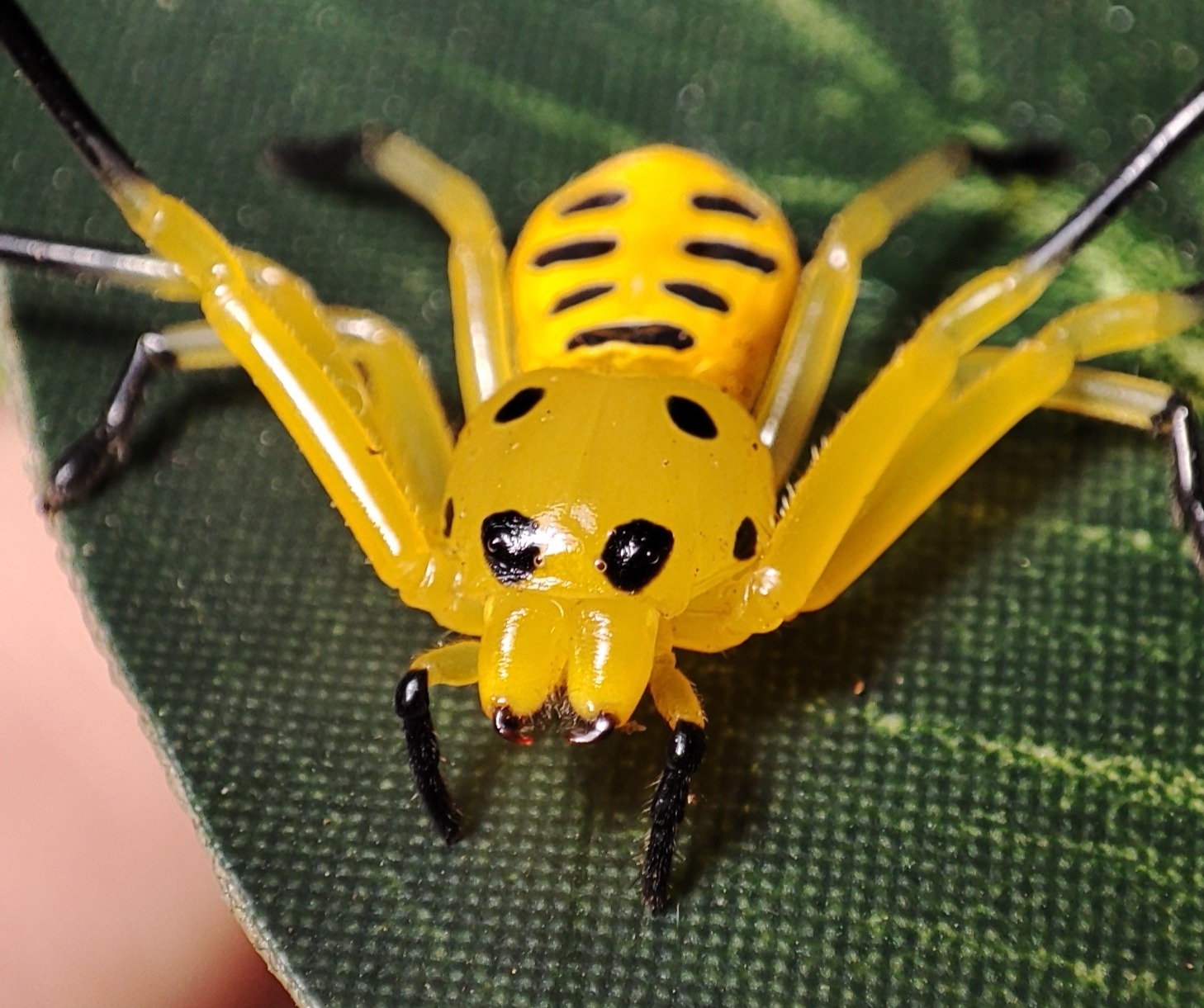
Platythomisus octomaculatus is a crab spider (family Thomisidae), a completely different story from jumping spiders or tarantulas. "Octomaculatus" literally means "eight-spotted", and that describes it perfectly: a bright yellow body with eight black spots. It is best known as the Pikachu spider.
This is not a spider that chases its prey. It is a patient ambush hunter. It sits motionless on a leaf or flower, perfectly blended in, and waits until an insect comes close enough. One fast strike and it is over.
Appearance
Platythomisus octomaculatus is one of the most recognisable spiders in the world. Its body is wide and flattened, typical of crab spiders. The colour is an intense yellow (sometimes orange-yellow) with bold black spots arranged symmetrically on the abdomen and cephalothorax. The legs are held out to the sides, ready to grab prey.
Females are larger and more colourful than males.
Adult females reach about 20-25 mm in body length. Males are much smaller.
Care
- Enclosure: a vertical enclosure with good ventilation. Artificial plants with large leaves, as the spider likes to sit on leaves and wait. Add twigs for climbing
- Temperature: 24-28°C. A tropical species that needs warmth
- Humidity: moderate to higher. Lightly mist the walls every 1-2 days. Keep the substrate moist, never wet. Ventilation must work
- Feeding: fruit flies, crickets, small flies. It can take prey larger than itself. Feed every 3-4 days, larger prey less often. Crab spiders eat less often than jumping spiders thanks to a slower metabolism. Do not panic if it does not hunt straight away: it is an ambush hunter and eats when prey "comes to it"
- Difficulty: intermediate. It needs stable tropical conditions and some patience. It is not as active as a jumping spider: this is a spider to observe
Who is it for?
For anyone looking for something visually unique. Platythomisus octomaculatus catches everyone's eye: rainforest colours and behaviour straight out of a nature documentary. Ideal for collectors and fans of unusual species.
If you already keep jumping spiders and tarantulas and want something completely different, this is the spider.