






 Choose language
- Spiders
- ANIMALS
- Arachnids (Arachnida)
- Spiders (Araneae)
- Tarantulas (Mygalomorphae)
- Psednocnemis spp.
- Diplura spp.
- Spinosatibiapalpus spp.
- Acanthogonatus spp.
- Acanthoscurria spp.
- Amazonius spp.
- Ami spp.
- Anquasha spp.
- Aphonopelma spp.
- Aspinochilus spp.
- Augacephalus spp.
- Avicularia spp.
- Birupes spp.
- Bonnetina spp.
- Brachypelma spp.
- Bumba spp.
- Caribena spp.
- Ceratogyrus spp.
- Chaetopelma spp.
- Chilobrachys spp.
- Chromatopelma spp.
- Cilantica spp.
- Citharacanthus spp.
- Coremiocnemis spp.
- Cyclosternum spp.
- Cyriocosmus spp.
- Cyriopagopus spp.
- Davus spp.
- Dolichothele spp.
- Encyocratella spp.
- Ephebopus spp.
- Euathlus spp.
- Eucratoscelus spp.
- Eupalaestrus spp.
- Fufius spp.
- Gorgyrella spp.
- Grammostola spp.
- Guyruita spp.
- Hapalopus spp.
- Haploclastus spp.
- Haplocosmia spp.
- Haplopelma spp.
- Harpactira spp.
- Heteroscodra spp.
- Heterothele spp.
- Holothele spp.
- Homoeomma spp.
- Hysterocrates spp.
- Idiothele spp.
- Iridopelma spp.
- Kochiana spp.
- Lampropelma spp.
- Lasiocyano spp.
- Lasiodora spp.
- Lasiodorides spp.
- Linothele spp.
- Lyrognathus spp.
- Megaphobema spp.
- Monocentropus spp.
- Neischnocolus spp.
- Neoholothele spp.
- Neostenotarsus spp.
- Nhandu spp.
- Omothymus spp.
- Ornithoctoninae spp.
- Ornithoctonus spp.
- Pamphobeteus spp.
- Pelinobius spp.
- Phormictopus spp.
- Phormingochilus spp.
- Phrixotrichus spp.
- Poecilotheria spp.
- Psalmopoeus spp.
- Pseudhapalopus spp.
- Pseudoclamoris spp.
- Pterinochilus spp.
- Selenocosmia spp.
- Sericopelma spp.
- Tapinauchenius spp.
- Taksinus spp.
- Tapinauchenius spp.
- Theraphosa spp.
- Theraphosidae spp.
- Theraphosinae spp.
- Thrigmopoeus spp.
- Thrixopelma spp.
- Tliltocatl spp.
- Typhochlaena spp.
- Urupelma spp.
- Vitalius spp.
- Xenesthis spp.
- Ybyrapora spp.
- True Spiders (Araneomorphae)
- Velvet Spiders (Eresidae)
- Macrothele spp.
- Liphistius spp.
- Tarantulas (Mygalomorphae)
- Scorpions (Scorpiones)
- Spiders (Araneae)
- Insects - for feeding
- Arachnids (Arachnida)
- Scorpions
- Accessories
- Books
- Centipede
- Millipede
- Cockroaches
- New products
- Products on sale
Currency

€32.00
Regular price:
€40.00

€42.50
Regular price:
€50.00
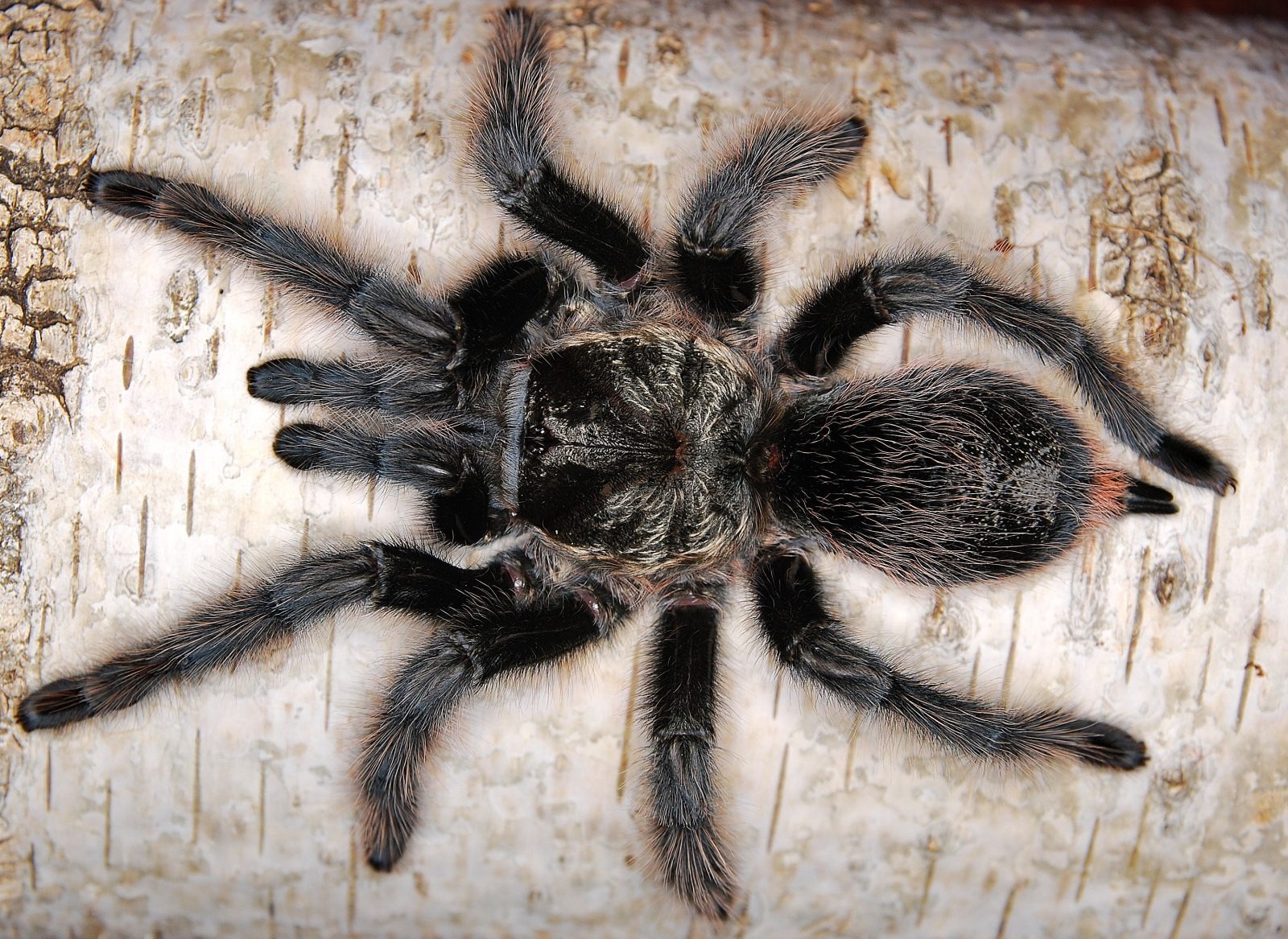
Species: Grammostola grossa
Common name: -
Native range: Southern Brazil, Paraguay, Uruguay, Argentina
Temperature: 22-26°C with a 2-3°C drop at night; room temperature also suits it well
Humidity: 60-70%
Adult size: Females reach about 7-8 cm body length
Lifestyle: Terrestrial
Speed: Slow
Venom potency: Mild
Temperament: Calm
Recommended for: Everyone, including beginners
Notes: Not listed under CITES, no captive-breeding certificate required
Grammostola grossa
product unavailable
Description
The grasslands and forest margins where Brazil, Paraguay, Uruguay and Argentina meet are home to Grammostola grossa, one of the larger members of its genus. An adult female is a heavy, thickset spider in black-brown, with dense brownish hairs, a pale silvery sheen on the carapace and reddish hairs on the abdomen. It does not rely on bright colour; its appeal lies in its proportions and the quiet presence of a large terrestrial tarantula.
In the wild it shelters under roots, stones, bark and leaf litter, retreating into silk-lined burrows during the cooler months, before a moult and while guarding an egg sac. It is even found on cattle pastures. Grammostola has a reputation for an easy-going nature, and G. grossa fits that picture well. If disturbed it may flick urticating hairs from its abdomen, but it usually just withdraws to its hide. Like the rest of the genus it grows slowly, and females are long-lived, capable of passing 20 years.
An L2 spiderling needs only a small container with a few centimetres of coconut fibre and a little hide. Keep most of the substrate on the drier side, with one section misted regularly so it is never fully dry; the spiderling drinks from droplets on the walls, and a water dish only comes in once it is larger. Room temperature is fine, as this species comes from a subtropical to temperate climate. An adult needs a terrestrial enclosure with 5-7 cm of substrate, a cork hide and good ventilation. Feed crickets or roaches sized to the spider.
Grammostola grossa is a long-term companion that asks for little and rewards you with a steady presence in the enclosure. It makes an excellent first tarantula, especially for someone patient enough to enjoy slow growth and watch a tiny spiderling become an impressive female over the years. Seasoned keepers will appreciate it as a less familiar Grammostola than the usual suspects.