






 Choose language
- Spiders
- ANIMALS
- Arachnids (Arachnida)
- Spiders (Araneae)
- Tarantulas (Mygalomorphae)
- Spinosatibiapalpus spp.
- Psednocnemis spp.
- Diplura spp.
- Acanthogonatus spp.
- Acanthoscurria spp.
- Amazonius spp.
- Ami spp.
- Anquasha spp.
- Aphonopelma spp.
- Aspinochilus spp.
- Augacephalus spp.
- Avicularia spp.
- Birupes spp.
- Bonnetina spp.
- Brachypelma spp.
- Bumba spp.
- Caribena spp.
- Ceratogyrus spp.
- Chaetopelma spp.
- Chilobrachys spp.
- Chromatopelma spp.
- Cilantica spp.
- Citharacanthus spp.
- Coremiocnemis spp.
- Cyclosternum spp.
- Cyriocosmus spp.
- Cyriopagopus spp.
- Davus spp.
- Dolichothele spp.
- Encyocratella spp.
- Ephebopus spp.
- Euathlus spp.
- Eucratoscelus spp.
- Eupalaestrus spp.
- Fufius spp.
- Gorgyrella spp.
- Grammostola spp.
- Guyruita spp.
- Hapalopus spp.
- Haploclastus spp.
- Haplocosmia spp.
- Haplopelma spp.
- Harpactira spp.
- Heteroscodra spp.
- Heterothele spp.
- Holothele spp.
- Homoeomma spp.
- Hysterocrates spp.
- Idiothele spp.
- Iridopelma spp.
- Kochiana spp.
- Lampropelma spp.
- Lasiocyano spp.
- Lasiodora spp.
- Lasiodorides spp.
- Linothele spp.
- Lyrognathus spp.
- Megaphobema spp.
- Monocentropus spp.
- Neischnocolus spp.
- Neoholothele spp.
- Neostenotarsus spp.
- Nhandu spp.
- Omothymus spp.
- Ornithoctoninae spp.
- Ornithoctonus spp.
- Pamphobeteus spp.
- Pelinobius spp.
- Phormictopus spp.
- Phormingochilus spp.
- Phrixotrichus spp.
- Poecilotheria spp.
- Psalmopoeus spp.
- Pseudhapalopus spp.
- Pseudoclamoris spp.
- Pterinochilus spp.
- Selenocosmia spp.
- Sericopelma spp.
- Tapinauchenius spp.
- Taksinus spp.
- Tapinauchenius spp.
- Theraphosa spp.
- Theraphosidae spp.
- Theraphosinae spp.
- Thrigmopoeus spp.
- Thrixopelma spp.
- Tliltocatl spp.
- Typhochlaena spp.
- Urupelma spp.
- Vitalius spp.
- Xenesthis spp.
- Ybyrapora spp.
- True Spiders (Araneomorphae)
- Velvet Spiders (Eresidae)
- Macrothele spp.
- Liphistius spp.
- Tarantulas (Mygalomorphae)
- Scorpions (Scorpiones)
- Spiders (Araneae)
- Insects - for feeding
- Arachnids (Arachnida)
- Scorpions
- Accessories
- Books
- Centipede
- Millipede
- Cockroaches
- New products
- Products on sale
Currency
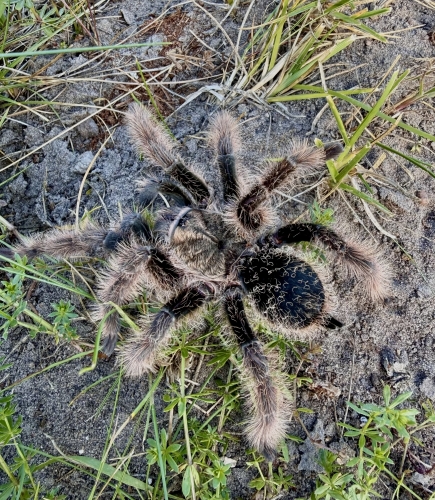
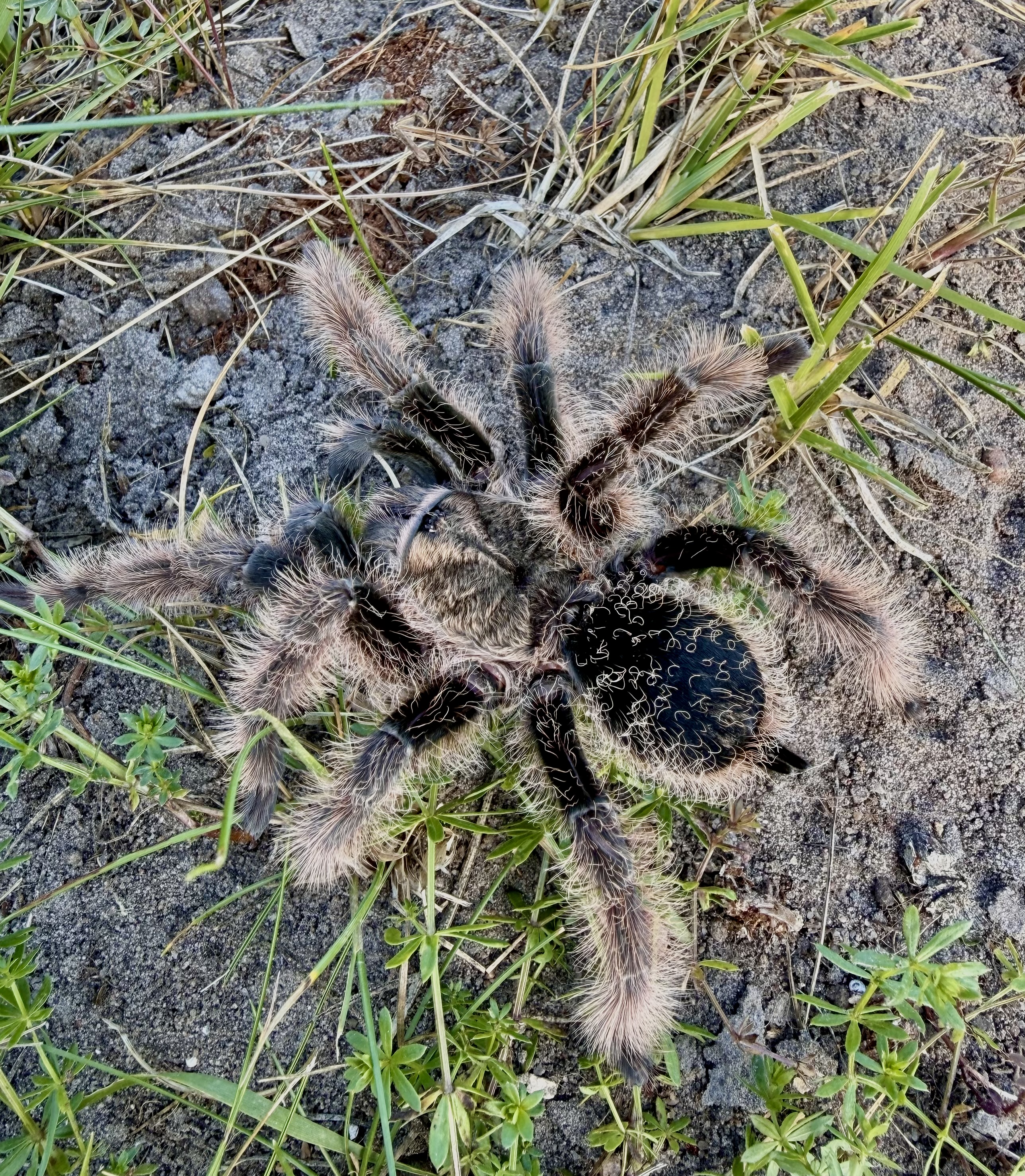
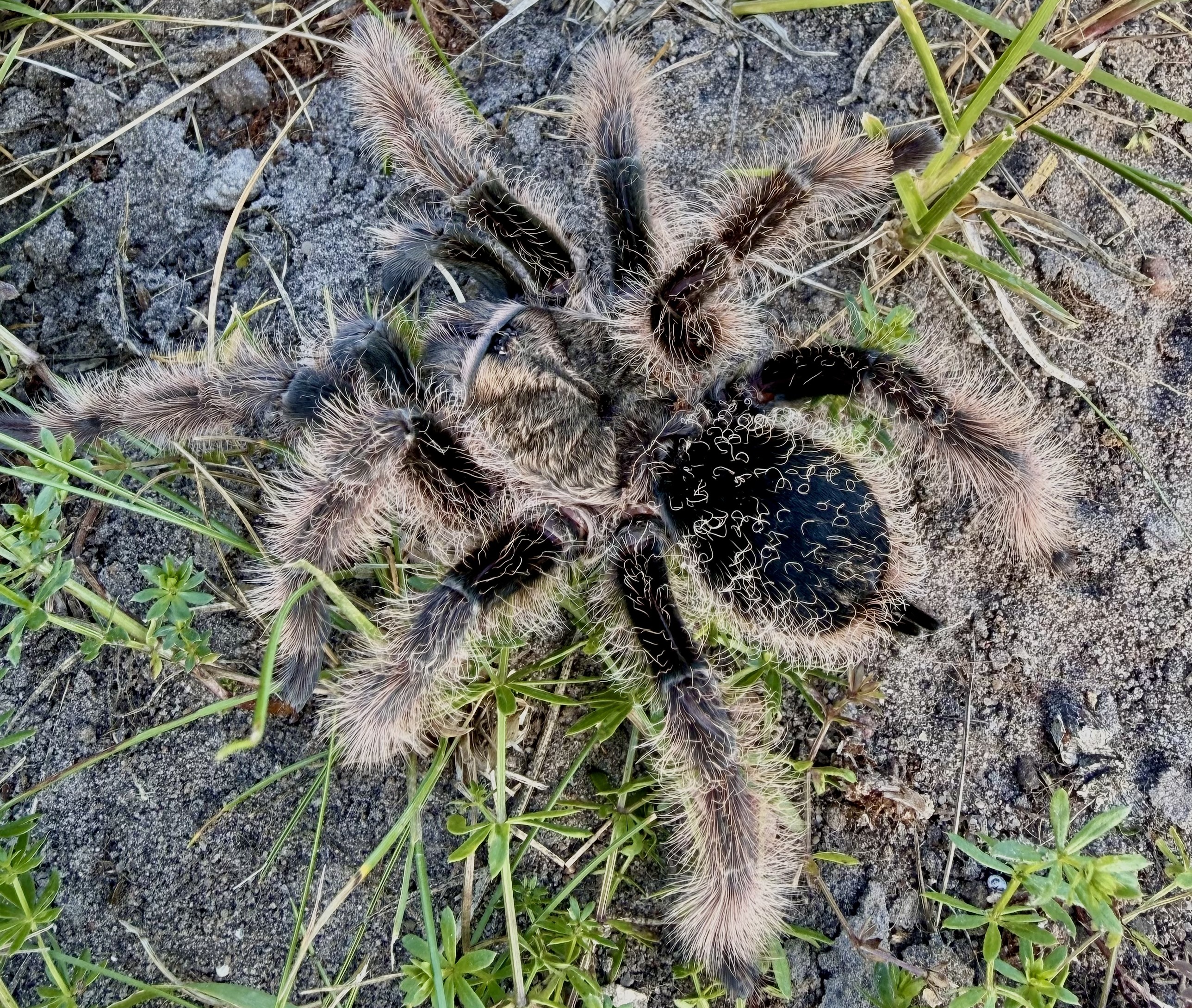

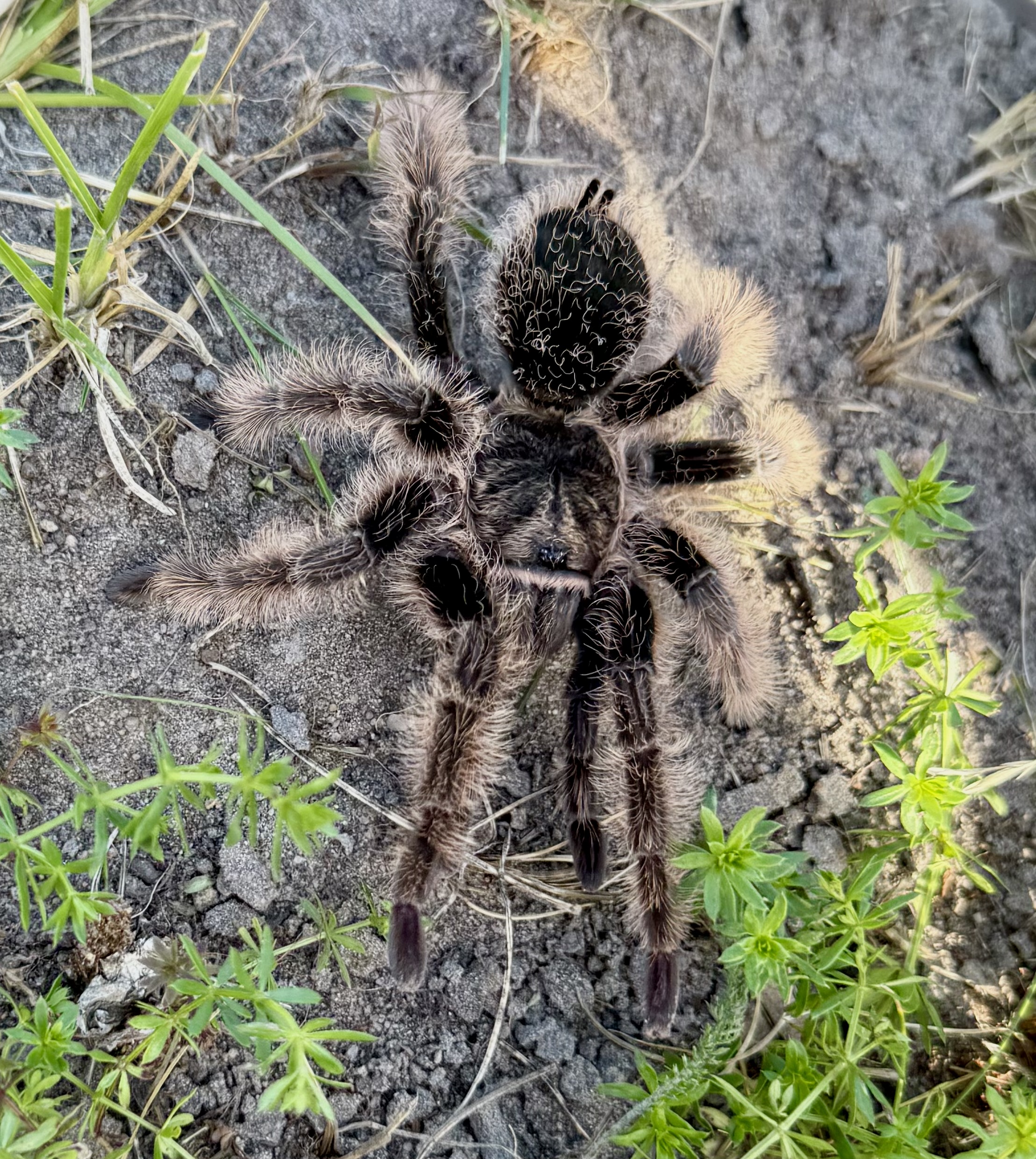
Species: Tliltocatl albopilosus "Nicaragua"
Common name: Curly Hair Tarantula
Native range: Nicaragua, Honduras
Temperature: 22–26°C
Humidity: 50–60%
Adult size: 7 cm BL
Lifestyle: terrestrial
Speed: slow
Venom potency: mild
Temperament: calm
Recommended for: all keepers, including beginners
Notes: CITES Appendix II listed. Every Tliltocatl specimen we offer is captive-bred (CB) and ships with an official captive-bred certificate alongside your receipt.
Tliltocatl albopilosus "Nicaragua"
product unavailable
Description
From the dry forests and scrublands of Nicaragua and Honduras comes a tarantula that looks as though a natural history illustrator dreamed it up on a generous afternoon: Tliltocatl albopilosus, the Curly Hair. Its dark body is wrapped in long, loosely spiralled golden setae that catch the light and lend the animal a warm, burnished quality no photograph quite captures. The Nicaragua locality expresses this beautifully — the setae are dense enough that the gold reads across the entire prosoma and opisthosoma at once, a single coherent coat rather than scattered highlights. It is among the most recognisable tarantulas in the hobby, and the reputation is earned.
What makes Tliltocatl albopilosus exceptional as a first tarantula is not merely its tolerant temperament — it is the consistency of that temperament. This is a slow, deliberate animal that meets disturbance with patience rather than alarm. It feeds reliably, grows at a steady if unhurried pace, and asks very little in return for years of quiet, rewarding observation. Keepers who have worked through dozens of species still keep one on the shelf.
Care is genuinely uncomplicated. A substrate of coconut fibre roughly 5–7 cm deep suits the species well; a hide and a water dish complete the setup. Keep most of the substrate dry, with a slightly damp area in one corner. Room temperature is sufficient — no specialist heating equipment required. Offer appropriately sized prey at a cadence that keeps the opisthosoma well-rounded but not distended, and the animal will do the rest.
As a member of the genus Tliltocatl (formerly placed within Brachypelma), Tliltocatl albopilosus is CITES Appendix II listed; every specimen we offer is captive-bred and ships with the appropriate documentation. Most keepers who begin with Tliltocatl albopilosus don't move on from it so much as build outward around it — five years later, the curly-haired animal in the corner enclosure is often still the one they reach for first when guests visit. It is, quietly, the spider that turns a curious purchase into a long hobby.